How Agentic AI and AIoT Are Turning Restaurant Kitchens
into Smart, Self-Running Systems
Walk into most restaurant kitchens today and you’ll still find the same picture: cooks racing against the clock, managers eyeballing stock levels, and servers running back and forth during the dinner rush. It works, but it’s fragile — one busy Friday night and everything from wait times to food waste starts to slip.
That’s starting to change. A new wave of Agentic AIoT systems — where multiple AI “agents” work together with sensors, robotics, and cloud platforms — is quietly turning commercial kitchens into something closer to a self-managing operation. Here’s what that actually looks like, and how it works under the hood.
What Makes It "Agentic"?
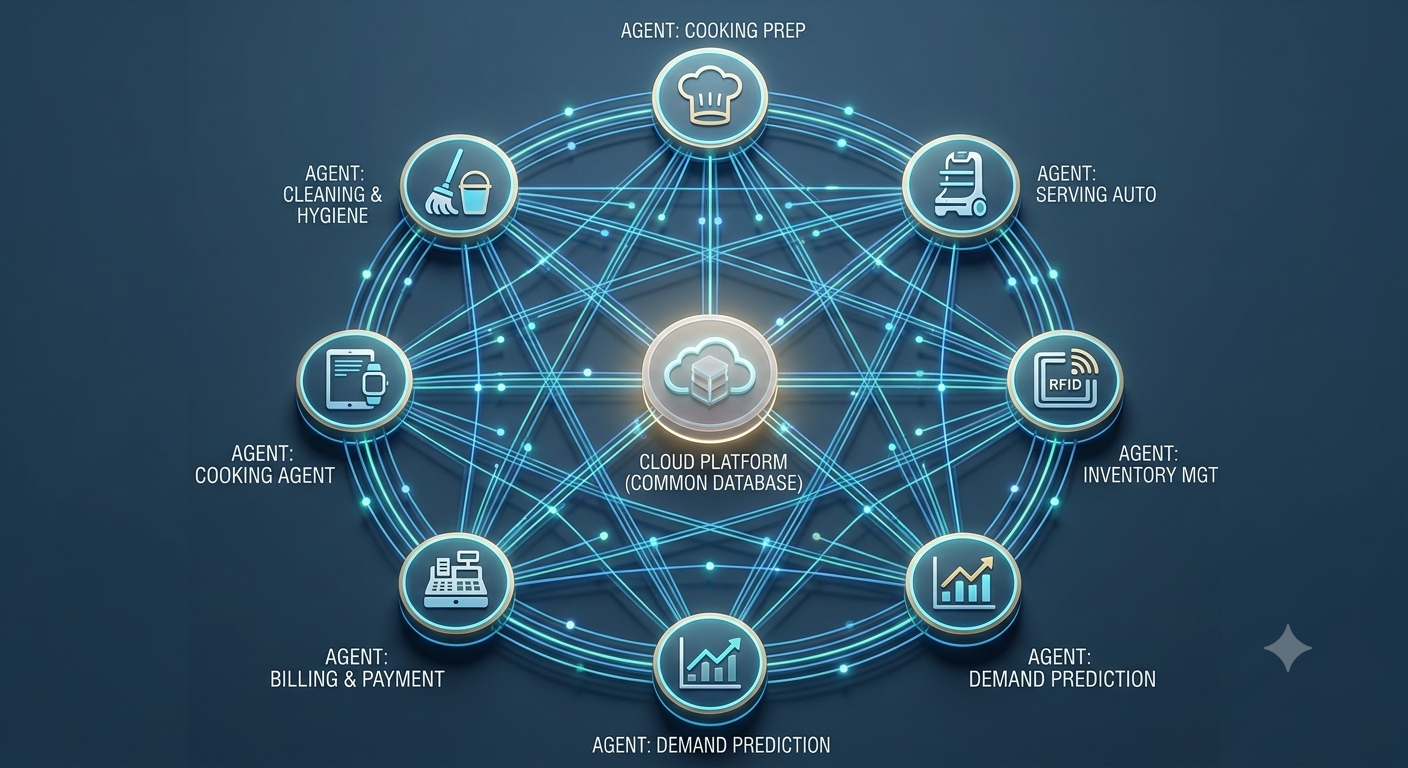
Most kitchen automation you’ve heard of is single-purpose: a smart oven, a POS system, a delivery robot. Agentic AIoT is different because it’s a team of specialized AI agents, each responsible for one part of the operation, all talking to each other in real time.
Instead of one central brain trying to do everything, you get separate agents handling:
Predicting customer demand
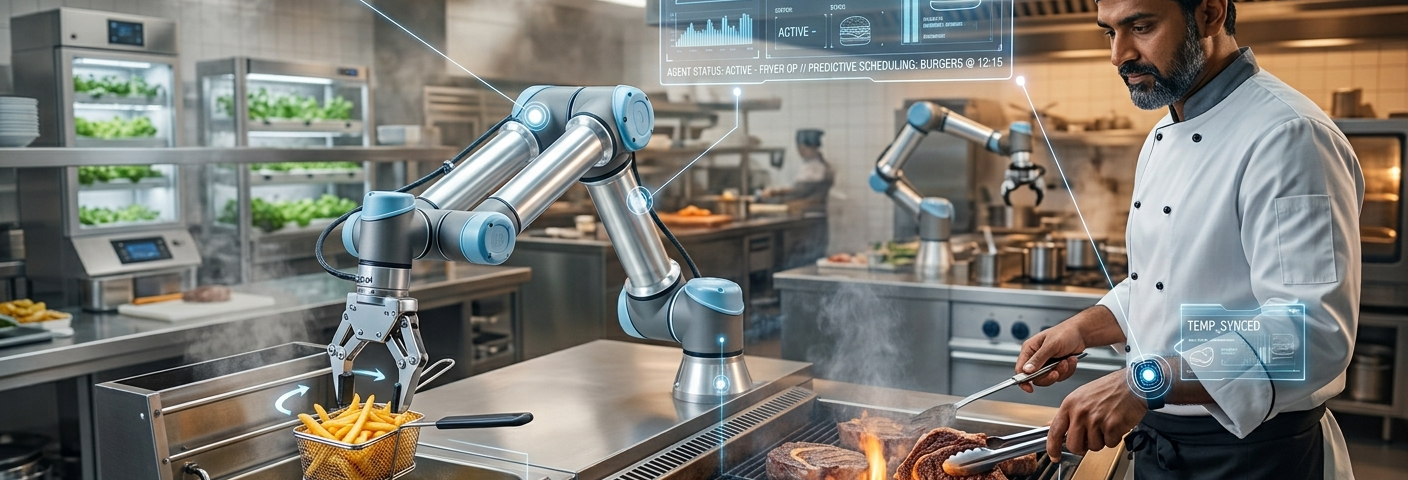
Preparing and cooking food
Managing inventory
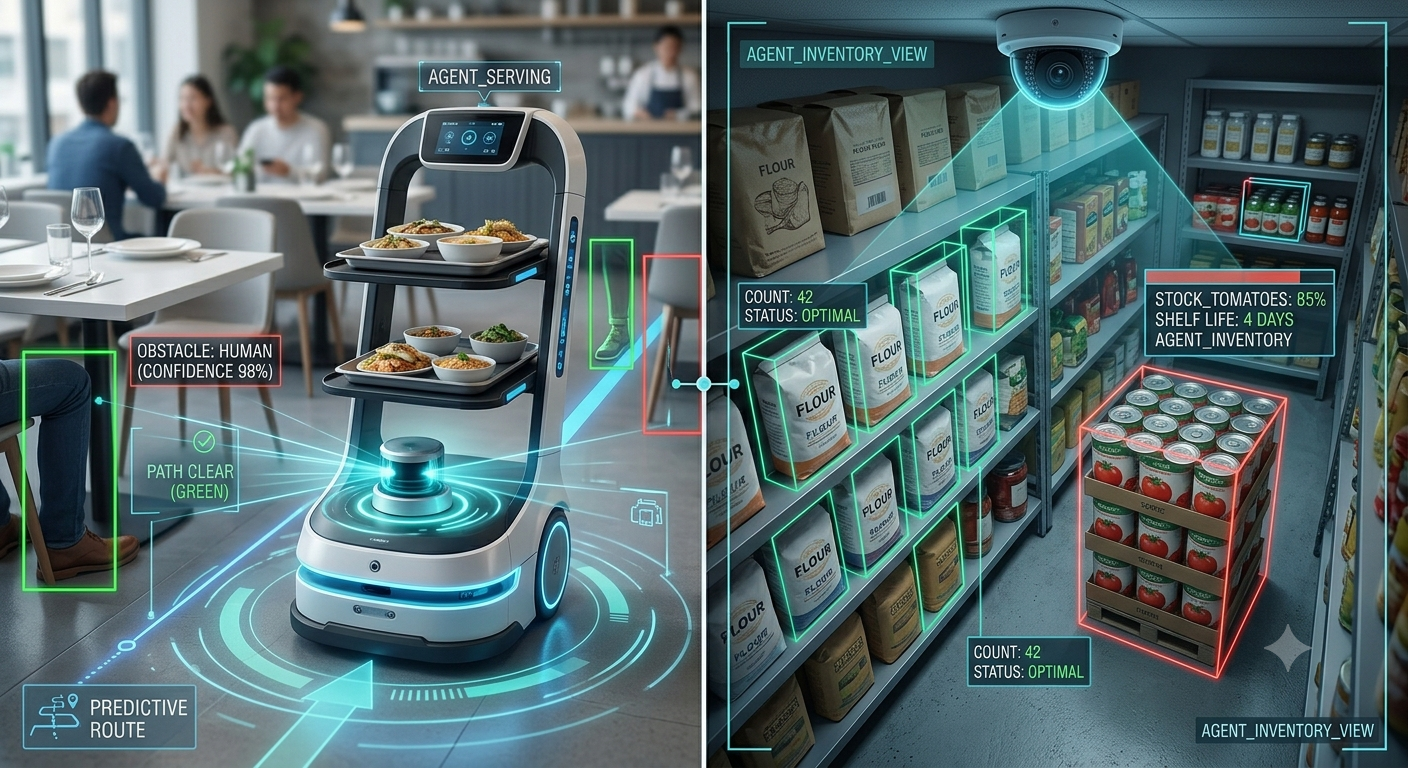
Serving tables
Billing customers
Cleaning and hygiene
Each agent uses live data from sensors around the restaurant, and importantly, the whole system keeps learning. If Friday nights consistently spike in burger orders, the system starts anticipating that instead of just reacting to it.
The Four Layers That Make It Work
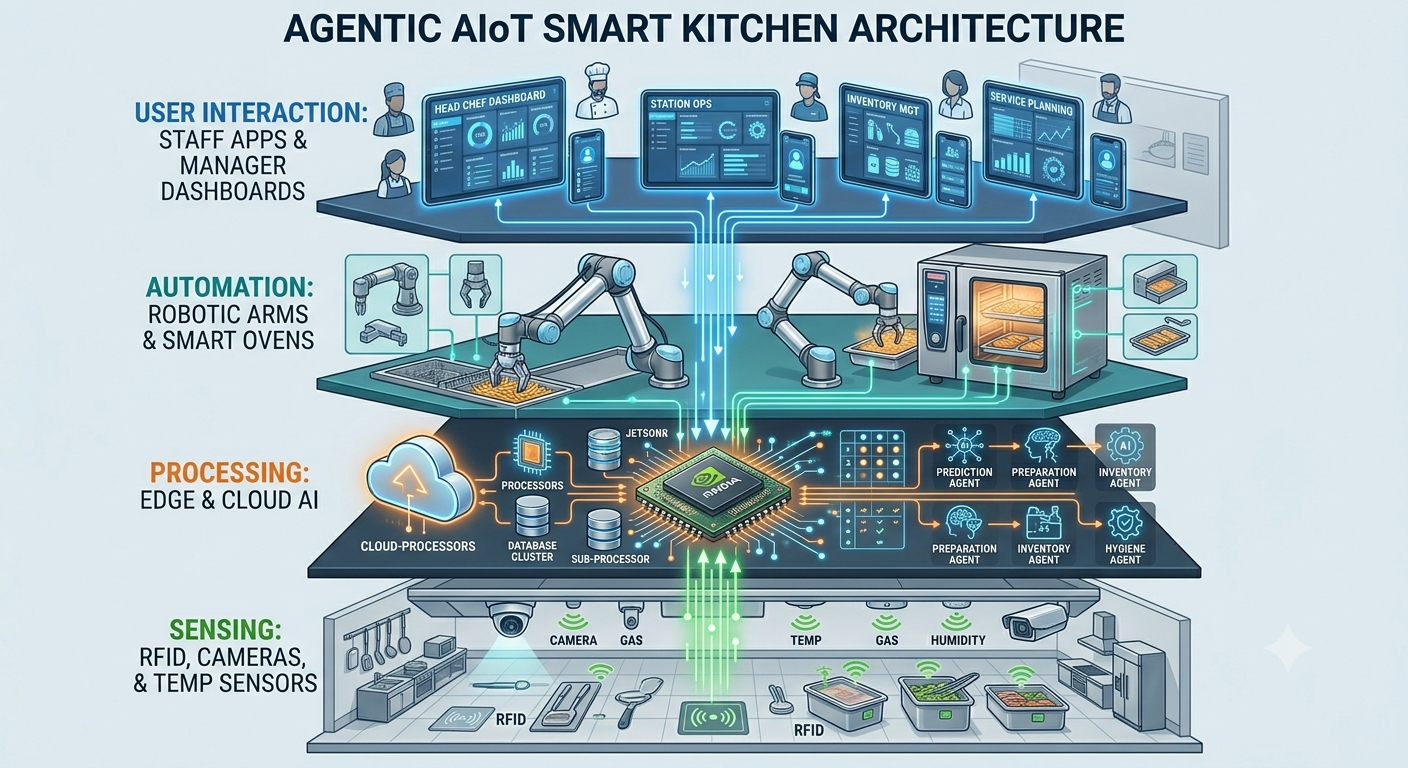
Think of the system as a stack, with each layer feeding the one above it:
1. Sensing layer — This is the kitchen’s nervous system: RFID inventory trackers, occupancy sensors, smart cameras, gas and temperature sensors, and smart dining tables that quietly collect data on everything happening in the restaurant.
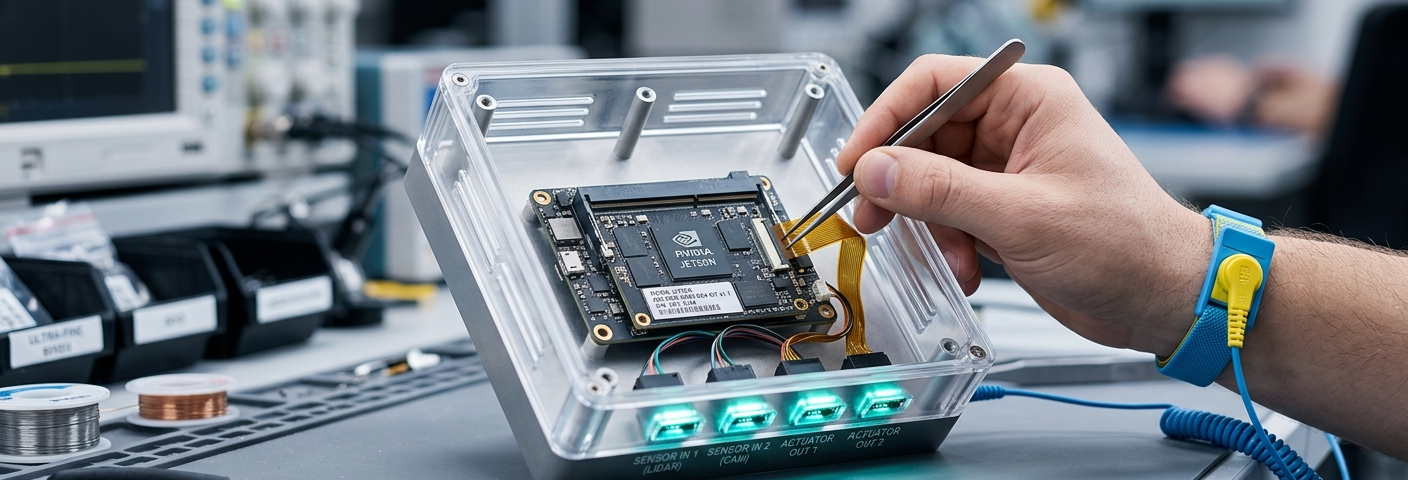
2. Processing layer — The intelligence hub. Machine learning models running on edge devices (like Raspberry Pi or NVIDIA Jetson boards) and in the cloud analyze that sensor data and make decisions — how much food to prep, which robot goes where, when to reorder ingredients.
3. Automation layer — Where decisions become action: robotic chefs, smart ovens, conveyor systems, serving robots, automated dishwashers, and cleaning robots physically carry out the plan.
4. User interaction layer — How humans stay in the loop, through staff apps, manager dashboards, digital ordering systems, and voice assistants.
Meet the Agents
The Demand Prediction Agent looks at occupancy trends, time of day, seasons, even local events like a cricket match, to forecast what’s about to get busy — so the kitchen can start prepping high-demand items before the rush hits, not during it.
The Cooking Preparation Agent runs the robotic arms, smart stoves, and ovens, adjusting temperature and timing automatically and learning from past batches to keep food quality consistent.
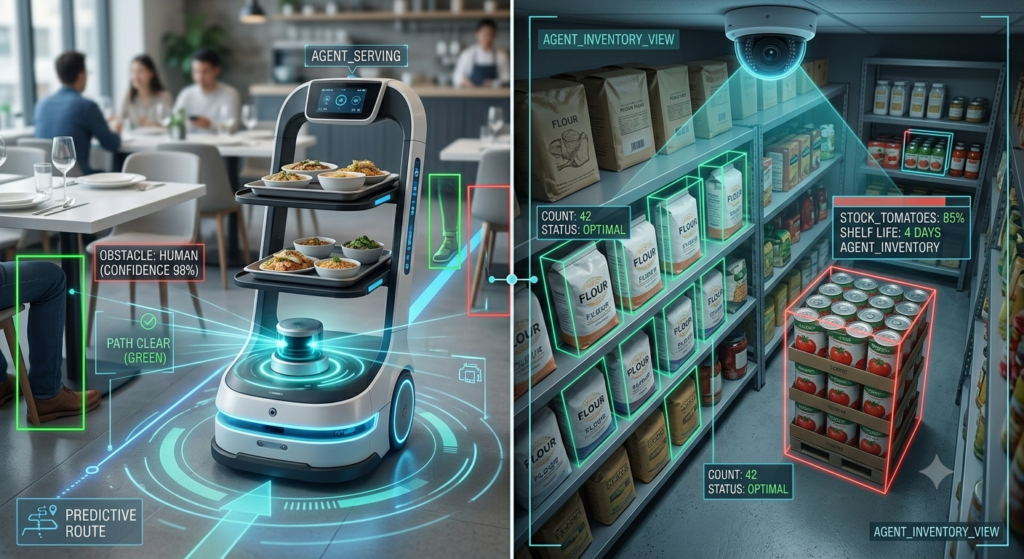
The Inventory Management Agent watches stock levels using RFID tags, weight sensors, and computer vision. When something’s running low or close to expiry, it automatically flags suppliers or generates a purchase order — no more finding out you’re out of an ingredient mid-shift.
The Serving Automation Agent directs autonomous delivery robots using LiDAR and computer vision to navigate the restaurant floor, prioritizing tables based on occupancy and order urgency.
The Billing and Payment Agent calculates bills dynamically based on table type, occupancy time, and items ordered, then handles the transaction through QR codes or mobile wallets — fast, contactless, and less error-prone than manual billing.
The Cleaning and Hygiene Agent schedules cleaning robots and dishwashers for the quietest hours, and manages waste sorting between biodegradable and non-biodegradable, keeping hygiene standards up without pulling staff off other tasks.
The Tech Behind It
None of this runs on magic — it’s built from tools that already exist and are maturing fast:
Area
Examples
AI / ML
TensorFlow, PyTorch
Edge computing
Raspberry Pi, NVIDIA Jetson
Robotics
ROS, Arduino
Computer vision
OpenCV, YOLO
Cloud
AWS IoT, Azure IoT
Databases
Firebase, MongoDB
Apps & dashboards
Flutter, React Native, Streamlit
A lot of the pieces are already in use individually — robotic fryers, AI-adjusted ovens, delivery robots in hotels, demand-forecasting tools in cloud kitchens. The shift now is connecting them into one coordinated system rather than running them as isolated gadgets.
What Restaurants Actually Gain
Faster prep and shorter customer wait times
Less food waste through smarter inventory tracking
More consistent food quality
Better hygiene, without extra staff hours
Lower long-term operational costs
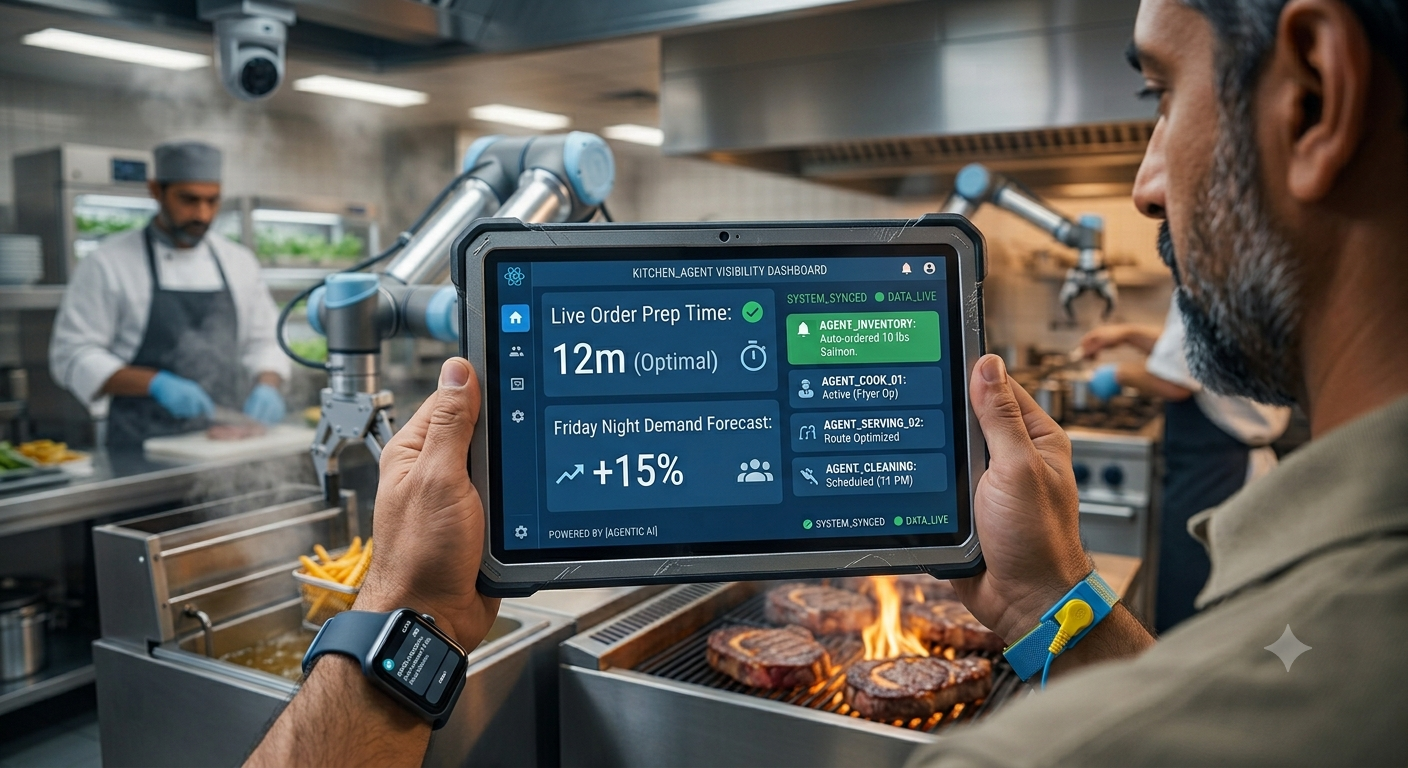
Real-time visibility for managers through live dashboards
The Catch
It’s not a plug-and-play fix. Setting up an Agentic AIoT kitchen means dealing with:
High upfront installation and maintenance costs
Complex integration between robotics, AI, and existing kitchen equipment
Data privacy and cybersecurity considerations
Heavy reliance on stable internet connectivity
Ongoing sensor calibration and technical upkeep
The need for skilled staff who can manage and troubleshoot the system
These are real barriers, especially for smaller restaurants. But as AI models get cheaper to run and edge hardware gets more affordable, the cost of entry keeps dropping.
Where This Is Headed
As smart city infrastructure and Industry 4.0 technologies keep advancing, autonomous kitchens like this are likely to become a standard part of hospitality tech — not a novelty. The restaurants that get there early won’t just be faster; they’ll be running on data instead of guesswork.
Credits
Research & Development: Aditya Dass, Electronics and Communication Engineering, Methodist College of Engineering and Technology (Autonomous), Hyderabad.