The Wearable That Sees for You: How Agentic AI Is Reimagining Independence for Blind Users
A white cane can tell you there’s an obstacle in front of you. It can’t tell you what it is, who’s approaching, or whether the milk in your fridge has gone bad. For millions of people living with visual impairment worldwide, that gap between basic mobility aid and genuine environmental awareness has stayed largely unsolved — until recently.
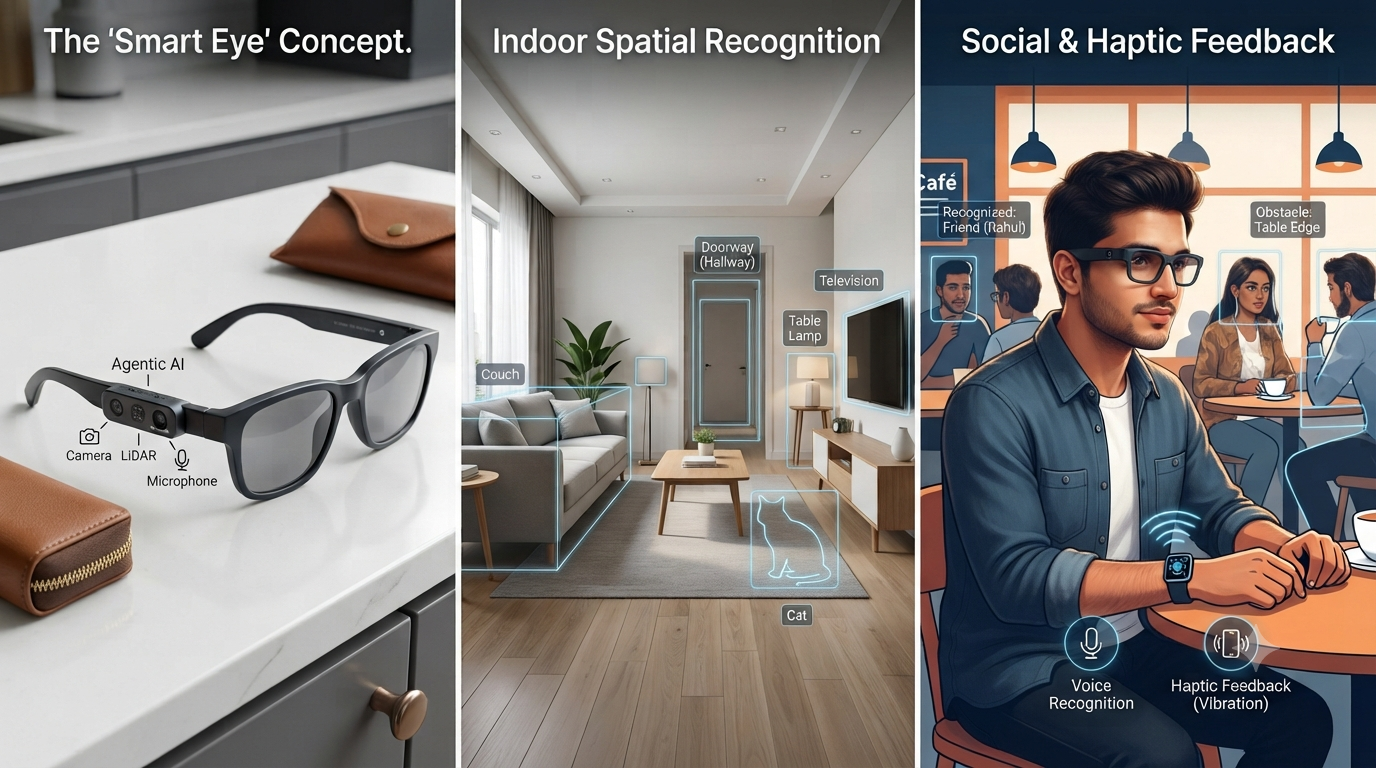
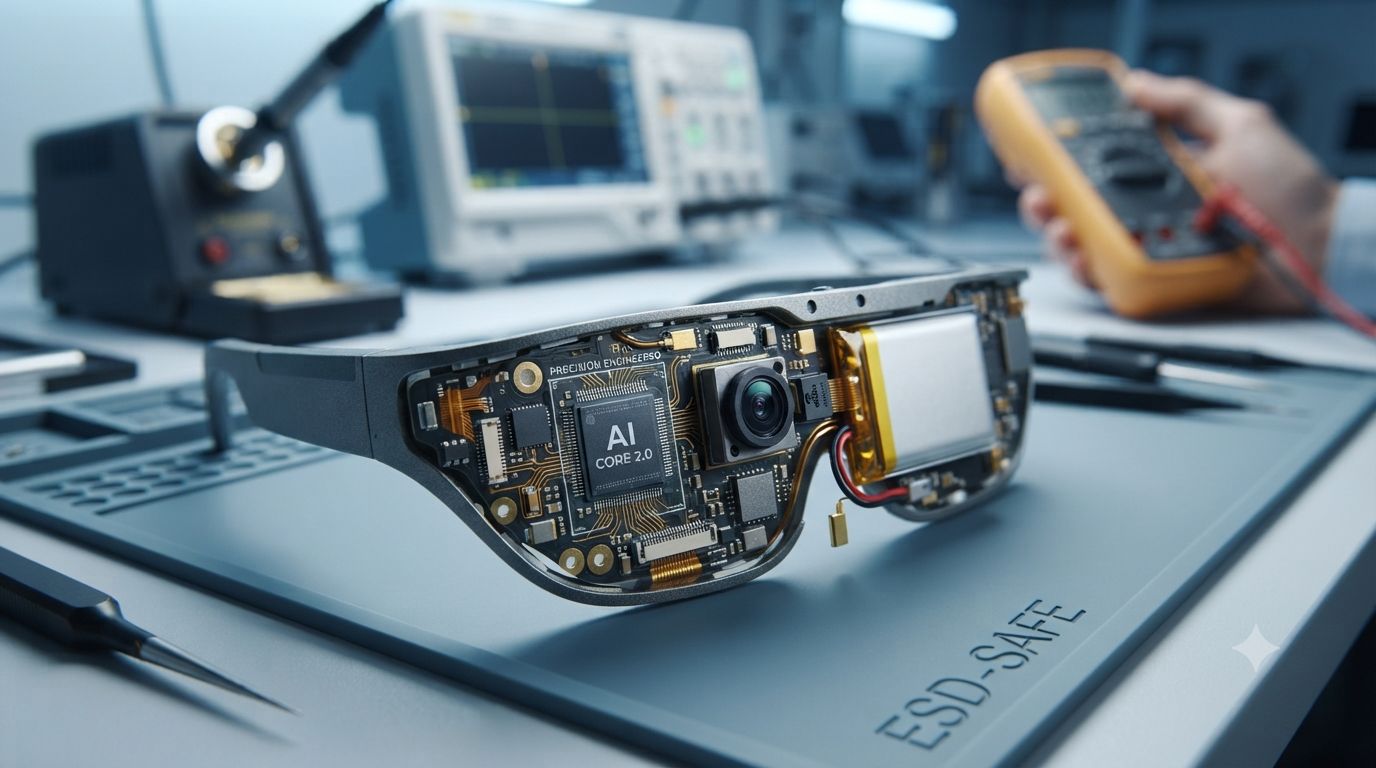
A new generation of Agentic AIoT wearables is closing that gap, combining AI that can reason and make decisions with the sensing power of cameras, GPS, and biometric sensors, all built into glasses, earphones, or smart bands.
What Makes This Different From Existing Assistive Tech
White canes and guide dogs are proven, but limited — they can’t identify objects, read text, recognize a face, or explain what’s happening around someone in real time. Even most existing “smart” assistive devices just relay sensor data without actually reasoning about it.
Agentic AI changes that. Instead of just detecting “object nearby,” the system can understand context, learn a person’s habits over time, and proactively offer help — like noticing someone’s in the kitchen at breakfast time and suggesting what’s available to eat, without being asked.
What the Device Actually Needs to Do
The functional wishlist for a system like this is genuinely broad:
Identify items in wardrobes, cabinets, and drawers
Recognize objects in the kitchen and guide cooking
Support both indoor and outdoor navigation
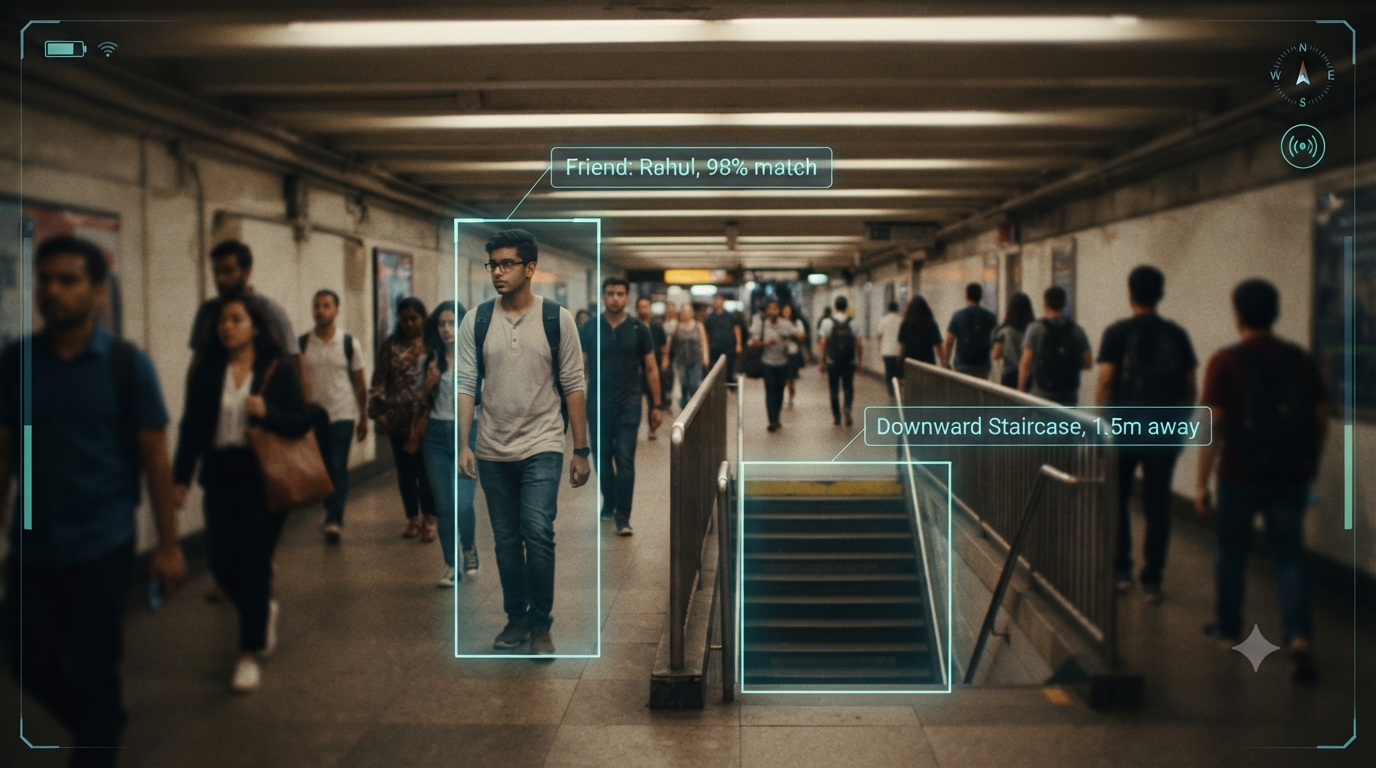
Detect staircases and help with safely crossing roads
Spot moving obstacles before they become a hazard
Recognize and interact with people nearby
Tell family members apart from friends and strangers
Monitor health and flag emergencies
Provide access to news and general information
Respond naturally through voice, in real time
How It's Built
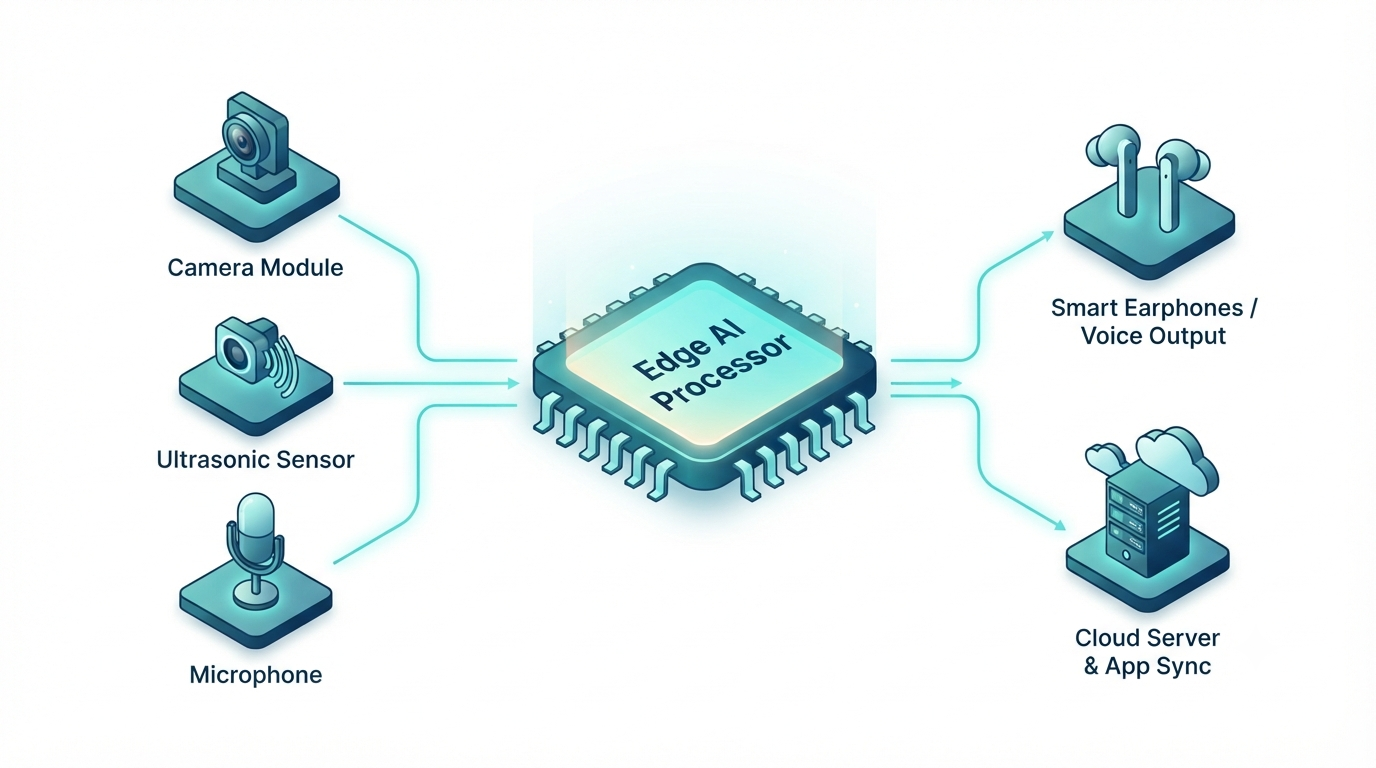
The system runs across camera modules, ultrasonic and LiDAR sensors, a GPS module, and health sensors, all feeding into an edge AI processor (something like a Raspberry Pi or Jetson Nano) that does the actual reasoning. From there, results get delivered back to the user as voice output through smart earphones, while IoT connectivity keeps a cloud server and companion mobile app in sync for data storage, remote monitoring, and emergency alerts.
The basic flow looks like this: a voice command comes in → speech recognition interprets it → the AI decision engine figures out what’s needed → computer vision processes the surroundings if necessary → a voice response gets generated → audio plays back to the user.
The Core Components
Camera module — the main sensing tool for computer vision tasks: object detection, face recognition, text reading, staircase detection, road analysis. Example: asked “what’s inside the drawer?”, the camera captures the scene and the AI identifies clothes, medicine boxes, or accessories inside.
Ultrasonic sensors — detect nearby obstacles using sound waves, typically mounted on glasses or a smart belt. Example: if something’s within a meter, the system says “Obstacle ahead. Move slightly left.”
GPS module — powers outdoor navigation and location tracking, giving turn-by-turn guidance like “Turn right after 20 meters” and sharing location during emergencies.
Health monitoring sensors — track heart rate, temperature, and oxygen saturation, generating alerts and detecting falls. Example: an abnormal heart rate automatically triggers an alert sent to family members.
The AI Doing the Thinking
Computer vision (YOLO, OpenCV, TensorFlow Lite) handles object recognition, cabinet item detection, human identification, and road analysis — announcing things like “milk packet on the left shelf.”
Face recognition (FaceNet, Haar Cascade, DeepFace) compares a captured face against stored data to identify who’s nearby — “Your friend Rahul is standing in front of you.”
Speech recognition (Google Speech API, Whisper, Vosk) lets users interact naturally with commands like “Open kitchen mode” or “Who is near me?”
Text-to-speech (Google TTS, pyttsx3, Amazon Polly) converts the system’s output into spoken instructions — “The staircase is downward. Please move carefully.”
Kitchen Assistance: A Closer Look
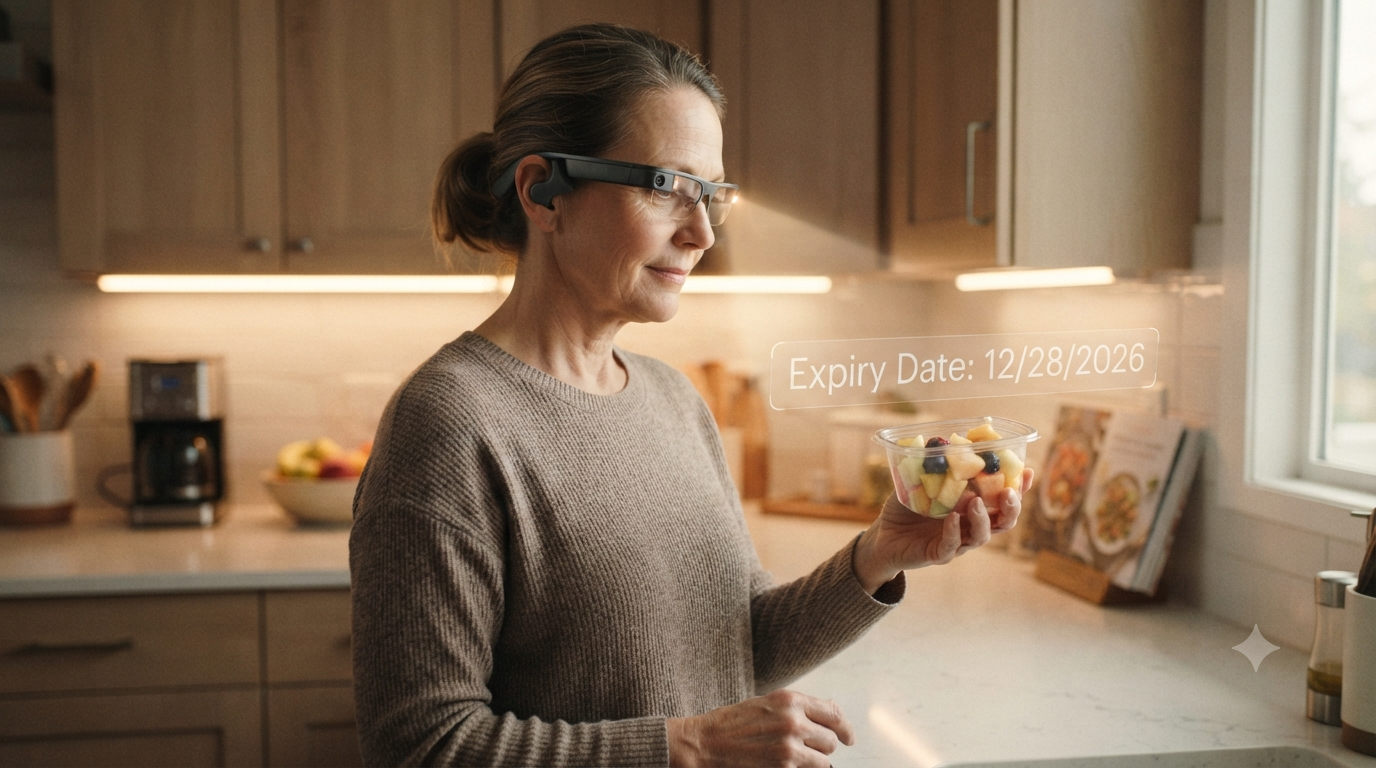
One of the more practical applications is helping with cooking safely and independently. Using OCR and computer vision, the system can identify food items, read expiry dates, guide someone through a recipe step by step, and monitor the gas stove for safety. Ask “tell me ingredients available,” and it might respond: “Rice, onions, tomatoes, and cooking oil detected.”
Getting Around Safely
Outdoor navigation is arguably the highest-stakes feature. Using LiDAR, ultrasonic sensors, GPS, and AI-based object tracking, the system can warn in real time — “Vehicle approaching from the right side” or “Crosswalk detected ahead” — giving users the situational awareness a cane simply can’t provide.
The Technology Stack
Layer
Technologies / Components
Hardware
Raspberry Pi, ESP32, Jetson Nano
Sensors
Ultrasonic, camera, GPS, pulse sensor
AI Models
YOLO, FaceNet, speech recognition
Communication
Wi-Fi, BLE, MQTT
Programming
Python, C++, Embedded C
Cloud Services
Firebase, AWS IoT
Voice Assistant
Google Speech API, Whisper
Mobile Interface
Flutter, Android Studio
Why This Goes Beyond Convenience
he value here isn’t just gadgetry — it’s independence. Being able to walk outside without relying entirely on another person, cook a meal safely, recognize who’s approaching, and get help automatically during a health emergency are the kinds of things that meaningfully change quality of life, confidence, and social participation for someone who’s visually impaired.
What Stands in the Way
Battery life — continuous AI processing is power-hungry, and wearables have limited room for battery capacity
Real-time performance — navigation and safety features need genuinely fast inference, not just accurate inference
Privacy — face recognition and cloud-connected health data require careful, secure handling
Cost — advanced sensors and AI processors still add up, which limits accessibility for many who’d benefit most
Where This Is Headed
Future versions of this kind of system could bring 5G-based ultra-low-latency communication, multilingual conversational AI, smart contact lens integration, and even early brain-computer interface concepts. As semiconductor costs drop and AI models get more efficient, what’s described here is likely to move from research prototype to something genuinely deployable at scale.
The Bigger Picture
This isn’t about replacing human support — it’s about giving visually impaired individuals a layer of real-time environmental understanding that simply wasn’t possible with a cane or guide dog alone. As AI, IoT, and wearable hardware keep converging, systems like this stand to make independent living, safety, and social connection dramatically more accessible for blind and visually impaired communities worldwide.