

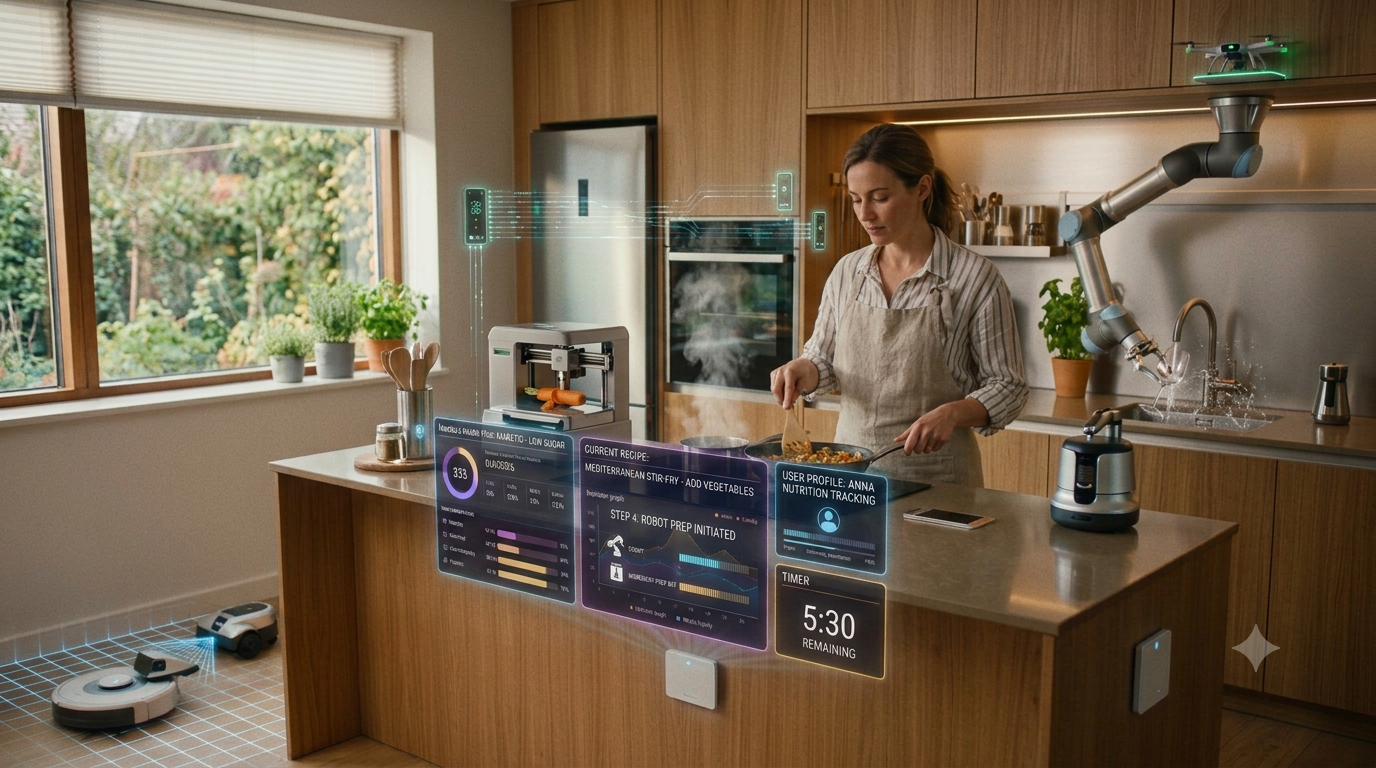
The Smart Kitchen That Actually Understands Who's Cooking: Agentic AI at Home
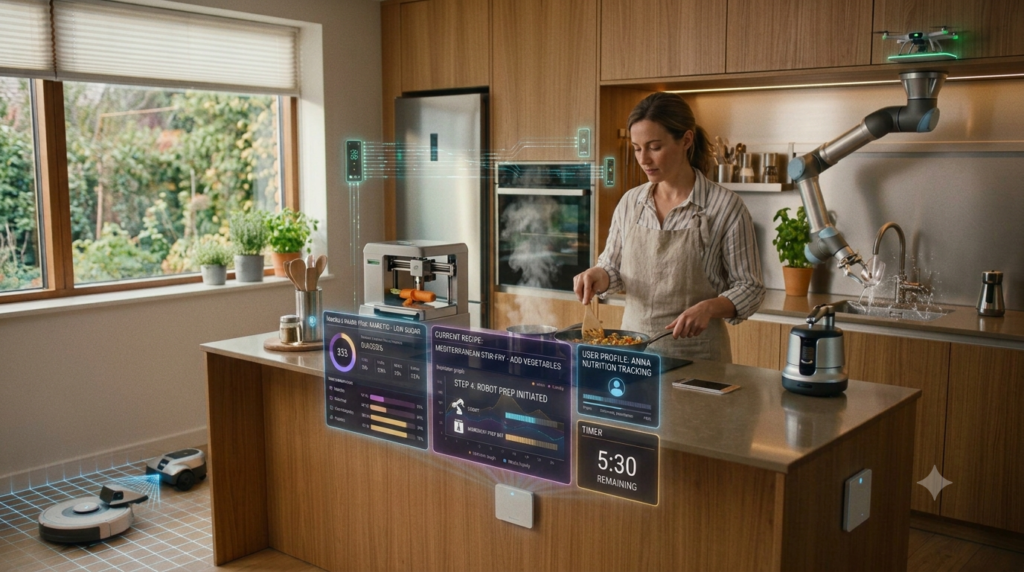
Most “smart kitchens” today are really just connected kitchens — an app that turns on the oven, a fridge that sends a notification. Useful, but not exactly intelligent. It still doesn’t know that grandma needs a low-sugar breakfast, that a toddler shouldn’t be near a hot stove, or that dad’s blood pressure means today’s dinner needs less salt.
That’s the gap Agentic AIoT kitchens are built to close — a home kitchen made up of specialized AI agents that don’t just connect appliances, but actually reason about who’s in the house and what they need.
Why One Kitchen Needs to Serve Very Different People
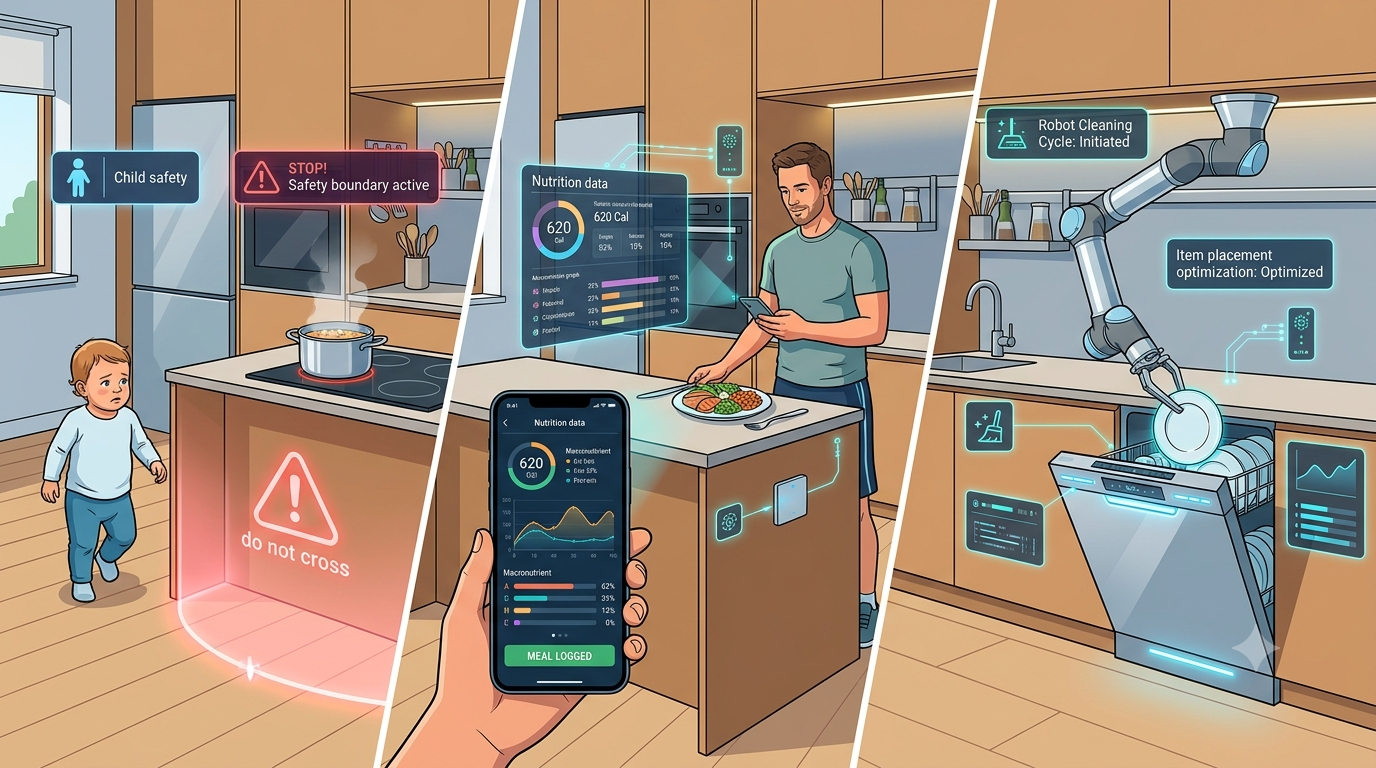
A single household often has to accommodate wildly different needs at once: elderly family members who may struggle with cooking or cleaning tasks, patients who need their diet actively managed, kids who need a genuinely safe environment, and working professionals who just don’t have time to spare. A traditional smart kitchen treats everyone the same. An agentic one doesn’t — it adapts to age, health condition, daily routine, and personal food preferences, and coordinates appliances accordingly with minimal input needed from anyone.
What the System Is Trying to Achieve
At a high level, the goals are straightforward:
- Cut down the manual effort involved in cooking and cleanup
- Help elderly or disabled family members cook and move around the kitchen safely
- Offer diet recommendations based on actual health conditions
- Keep an eye on the kitchen autonomously, even when no one’s watching
- Improve energy efficiency and reduce food waste
- Catch dangerous situations early — gas leaks, fire risk — before they become emergencies
- Let family members check in remotely through a mobile app
How the System Is Structured
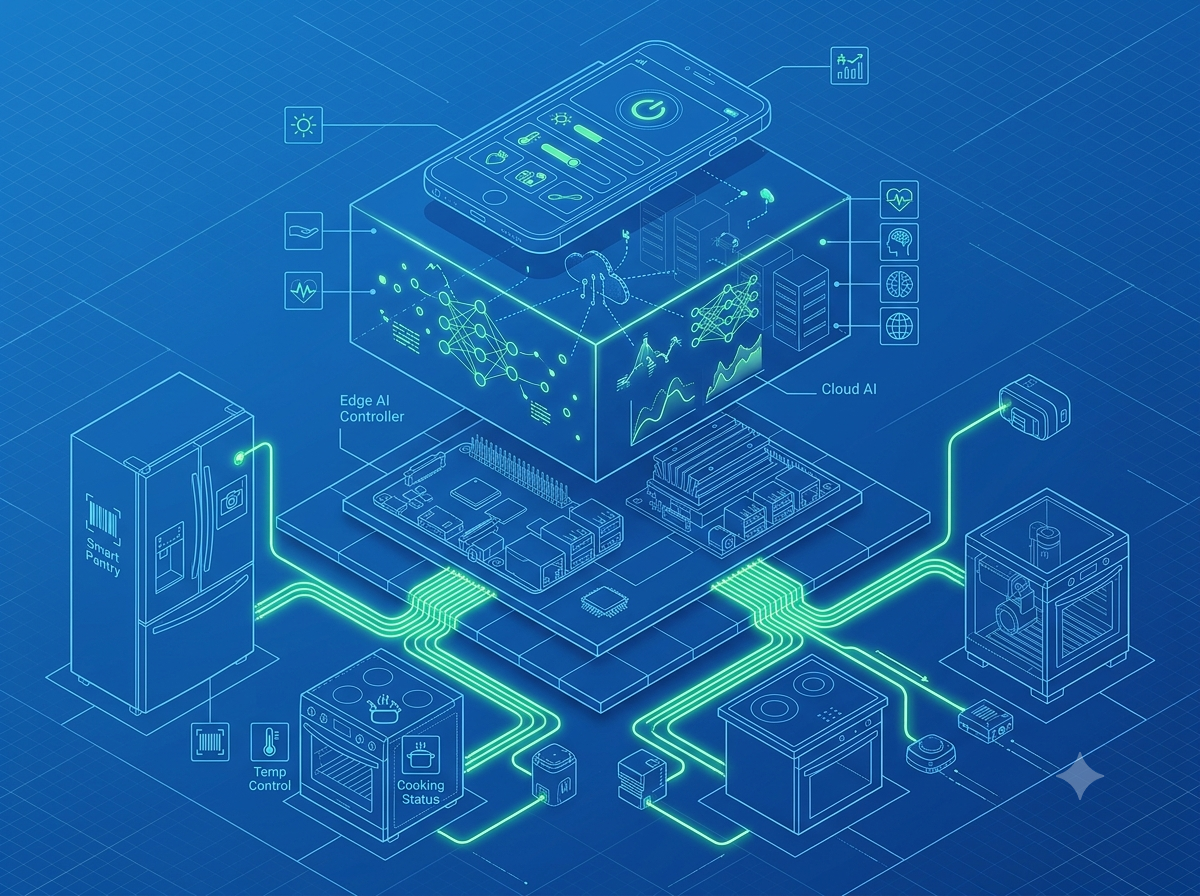
The architecture stacks from the user interface down to the physical hardware:
- User mobile app — control, monitoring, notifications, recipes, and meal plans
- Cloud AI & data analytics — health analytics, a diet recommendation engine, and the user profile database
- Multi-agent coordination layer — six specialized agents (more on these below) that handle the actual decision-making
- Edge AI controller (Raspberry Pi or NVIDIA Jetson) — local processing, real-time decisions, device control, and security policies
- Physical devices — sensors, smart oven, robotic arm, smart fridge, and safety hardware
Meet the Six Agents Running the Kitchen
The Cooking Agent handles meal prep and appliance control — executing recipes, managing temperature, optimizing cooking time, and responding to voice commands. Example: an elderly diabetic patient asks for breakfast by voice. The agent checks their diet plan and automatically prepares low-sugar oatmeal using the smart induction system.
The Diet and Health Monitoring Agent acts like a personal nutritionist — calculating calories, analyzing nutrition, scheduling meals, integrating medicine reminders, and recommending food based on specific health conditions. Example: a heart patient gets steered toward low-sodium meals, and the system actively blocks preparation of anything that conflicts with their condition.
The Kitchen Cleaning Agent takes care of sanitation — automatic dishwashing, floor cleaning, countertop sanitizing, and garbage monitoring. Example: once cooking wraps up, the kitchen automatically runs robotic cleaning and sanitizes countertops with UV light.
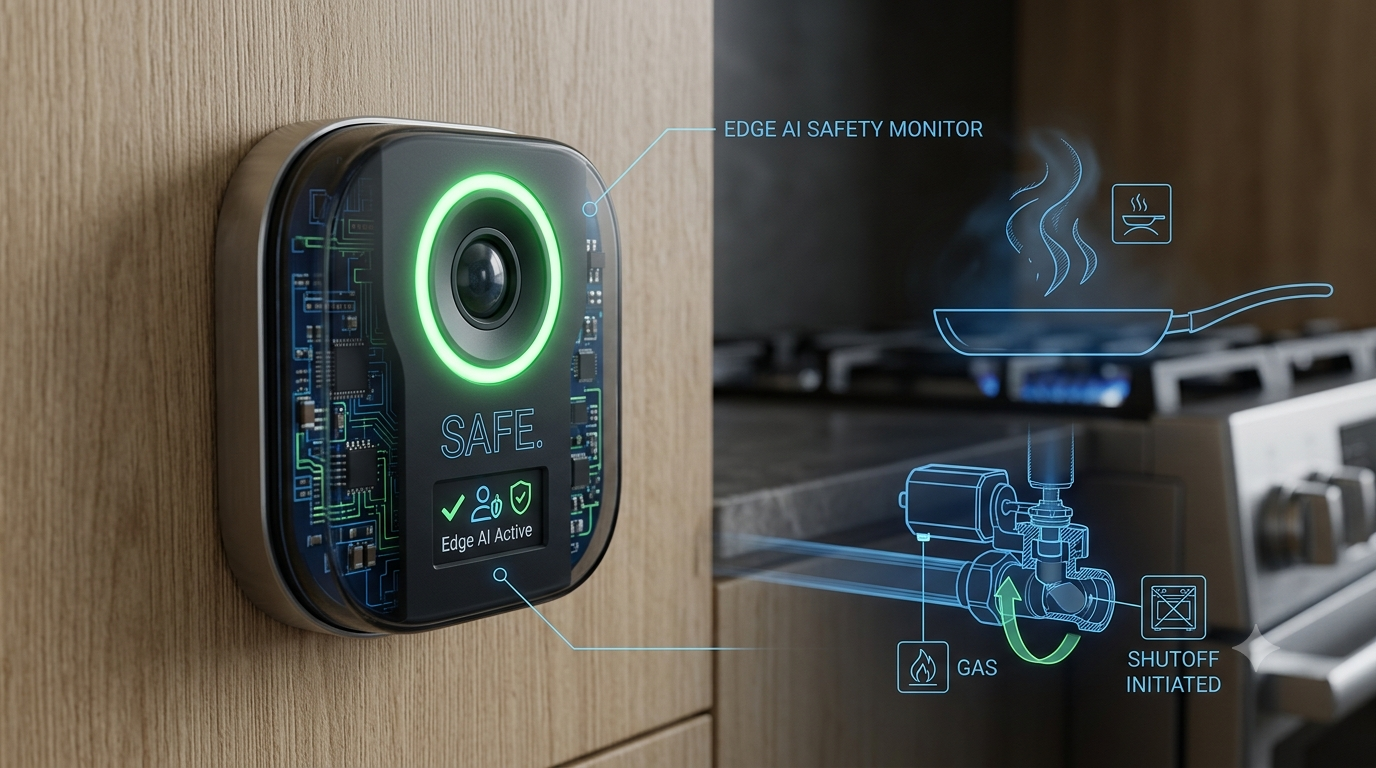
The Safety Monitoring Agent is the kitchen’s guardian — watching for gas leaks, fire risk, child safety issues, and triggering automatic appliance shutdowns with emergency alerts when needed. Example: if a gas leak is detected, the system shuts off the valve immediately and notifies family members.
The Inventory Management Agent keeps track of what’s actually in the kitchen — stock levels, expiry dates, and automatic grocery ordering. Example: the fridge notices you’re low on milk and adds it to the shopping list without being asked.
The Energy Optimization Agent manages power use — scheduling appliances, monitoring consumption, and integrating with renewable energy where available. Example: heavy appliances like the dishwasher get scheduled to run during low-tariff electricity hours automatically.
The Technology Behind Each Agent
| Agent | Key Components | Core Technologies |
| Cooking | Edge controller, voice assistant, sensors | Raspberry Pi/Jetson Nano, TensorFlow Lite, MQTT, Google Assistant/Alexa |
| Diet & Health | Database, AI models, health APIs | Firebase/MongoDB, Scikit-Learn, AWS IoT/Google Cloud |
| Cleaning | Robotics, navigation, sensors | Arduino, SLAM algorithms, ultrasonic/IR sensors, Python |
| Safety | Gas/smoke sensors, alerting | MQ-2 gas sensor, IoT smoke sensor, GSM module, edge AI |
| Inventory | RFID, database, vision | RC522 RFID reader, MySQL, OpenCV, Flutter app |
| Energy | Smart metering, analytics | IoT energy meter, machine learning, Node-RED dashboard |
Why This Actually Matters
The value here isn’t just convenience — it’s the layering of care into an everyday space. An elderly person living alone gets a kitchen that quietly keeps them safe and fed properly. A patient managing a chronic condition gets a kitchen that enforces their diet without them having to think about it constantly. Parents get a kitchen where accidents involving kids and hot appliances are far less likely. And busy professionals get real time back, without sacrificing food quality or safety.
The Bigger Picture
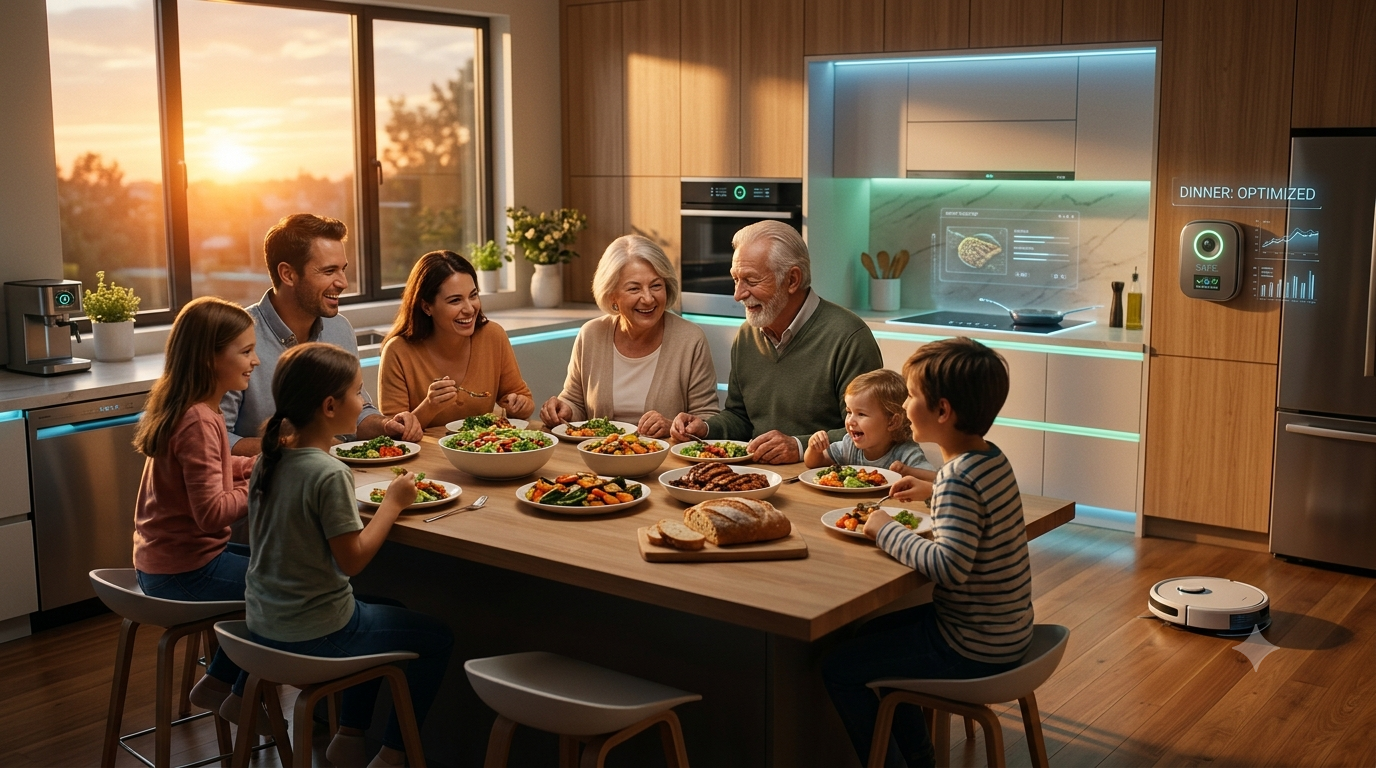
This isn’t about replacing cooking with robots — it’s about making the kitchen understand its people well enough to actively look out for them. As edge AI hardware gets cheaper and more capable, kitchens like this move from novelty projects to a realistic upgrade path for ordinary households, especially ones caring for elderly relatives, managing a health condition, or simply trying to get dinner on the table with less friction.