

AIoT Battery Manufacturing: Inside the Systems Built for Desert and Arctic Extremes
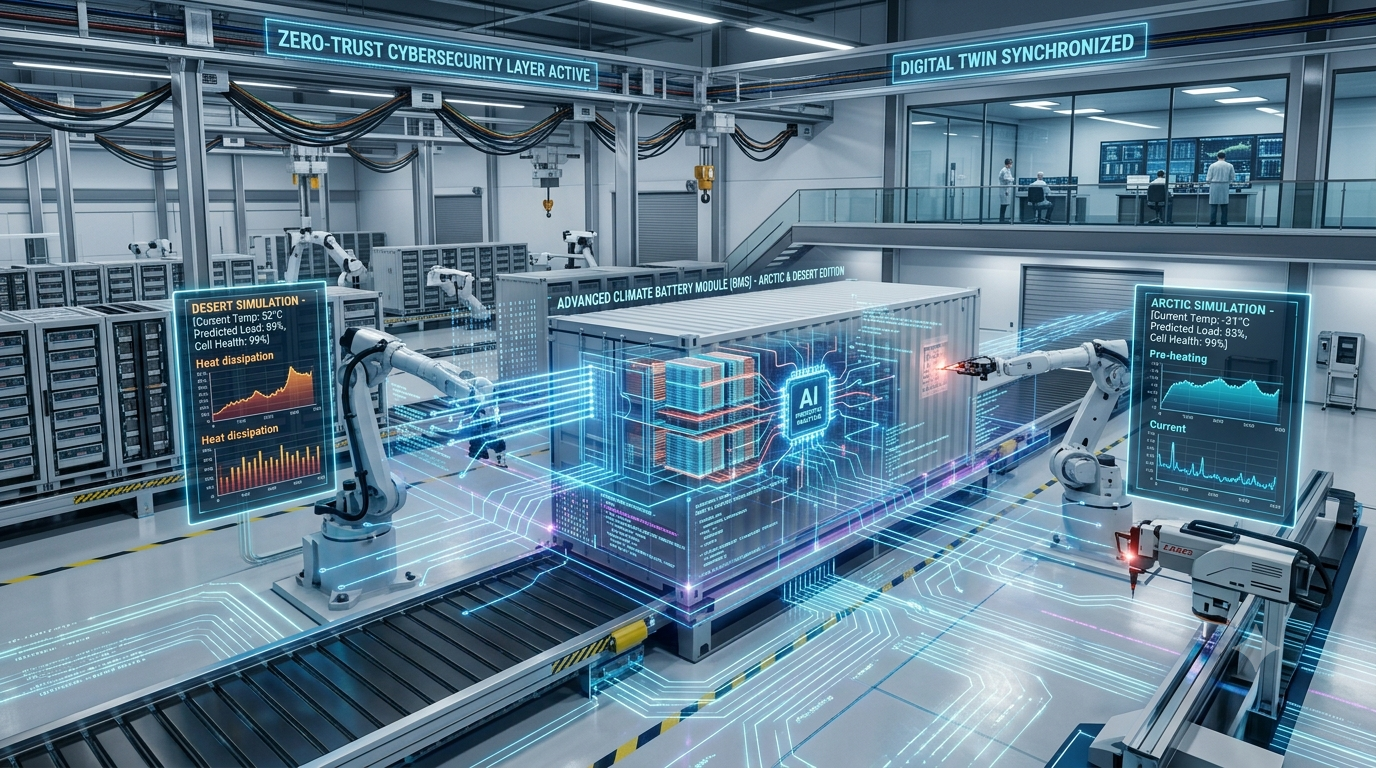
An EV battery that performs beautifully in a mild climate can behave very differently baking in desert heat or freezing on an arctic supply run. As lithium-ion batteries push into more extreme environments — electric vehicles, aerospace, defense, industrial robotics — manufacturers can no longer rely on standard production lines and hope for the best.
That’s why modern AIoT battery manufacturing is going through an intelligent transformation, powered by Agentic AIoT: autonomous AI systems paired with IoT sensors, industrial automation, and robust cybersecurity, all working together across the factory floor. Here’s how it actually comes together, from raw material to finished cell.
The Core Stages of AIoT Battery Manufacturing
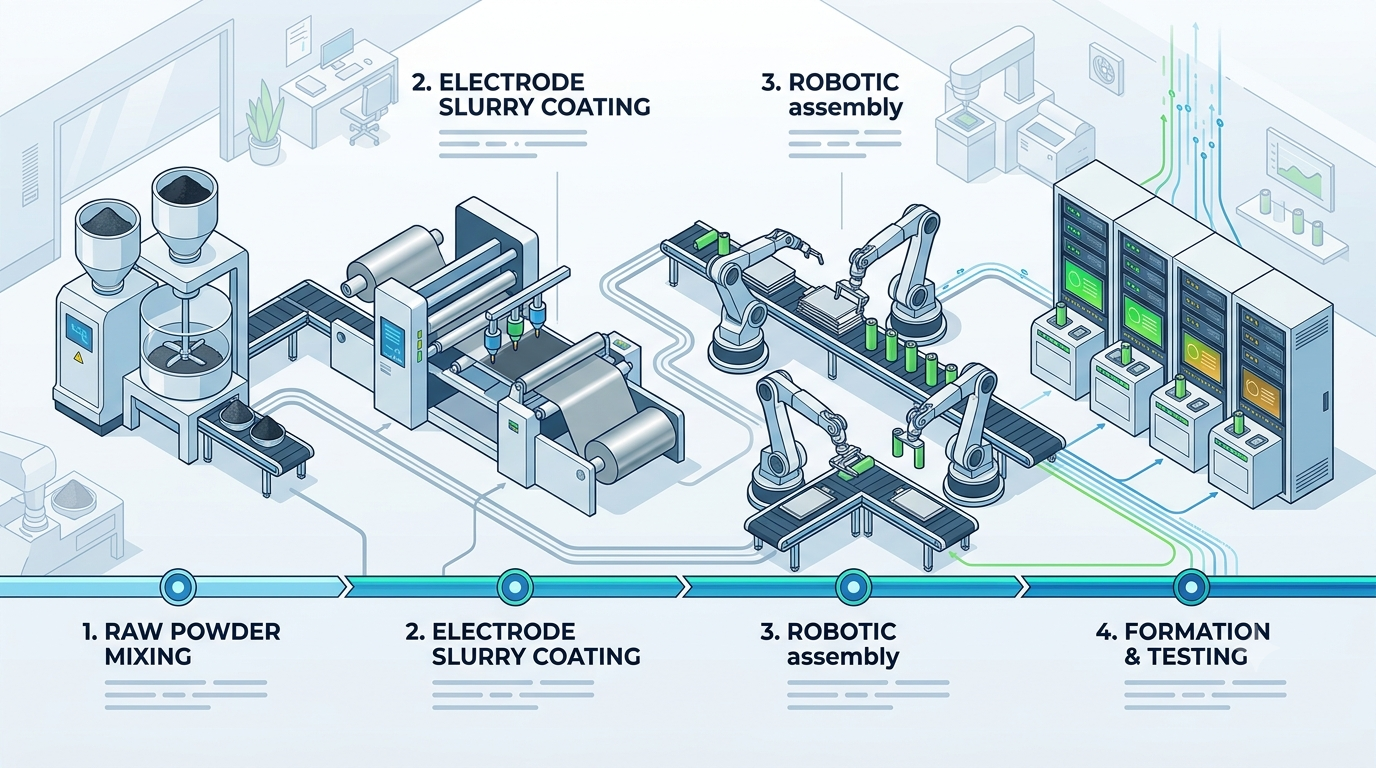
Before getting into the AI side, it helps to understand the baseline manufacturing process itself — it’s a tightly controlled, multi-stage sequence:
Raw Material Preparation: Cathode materials (lithium compounds, nickel, cobalt, manganese), graphite for the anode, electrolyte, and separator materials are processed to precise specifications.
Electrode Manufacturing: Active materials are mixed into a slurry, coated onto aluminum foil (cathode) and copper foil (anode), then dried, pressed to boost energy density, and sliced into electrode strips.
Cell Assembly: The anode, separator, and cathode are layered together into cylindrical, prismatic, or pouch cells, filled with electrolyte, and sealed to prevent leaks.
Formation and Testing: The cell goes through repeated charge/discharge cycles to activate it and stabilize its chemistry, then gets tested for voltage, capacity, temperature behavior, and safety.
Every single one of these stages is a candidate for AI-driven monitoring and optimization.
The Battery's "Brain": Battery Management Systems (BMS)
The BMS is what keeps a battery pack safe and efficient day to day. It handles voltage, current, and temperature monitoring, estimates state of charge and state of health, balances individual cells, and protects against overcharging, deep discharge, and thermal runaway. Within an AIoT battery manufacturing ecosystem, modern BMS technology has evolved well beyond basic monitoring:
AI-Based Smart BMS: Predicts aging and failure ahead of time, optimizing charging cycles in real time to extend overall lifespan.
Cloud-Connected BMS: Enables real-time remote monitoring and predictive fleet maintenance by streaming operational telematics.
Digital Twin BMS: Builds a virtual model of the battery pack to simulate performance and degradation before problems ever manifest physically.
Cybersecure BMS: Locks down internal communication with hardware-level encryption to prevent external tampering.
Keeping Batteries Cool (or Warm Enough): Thermal Management
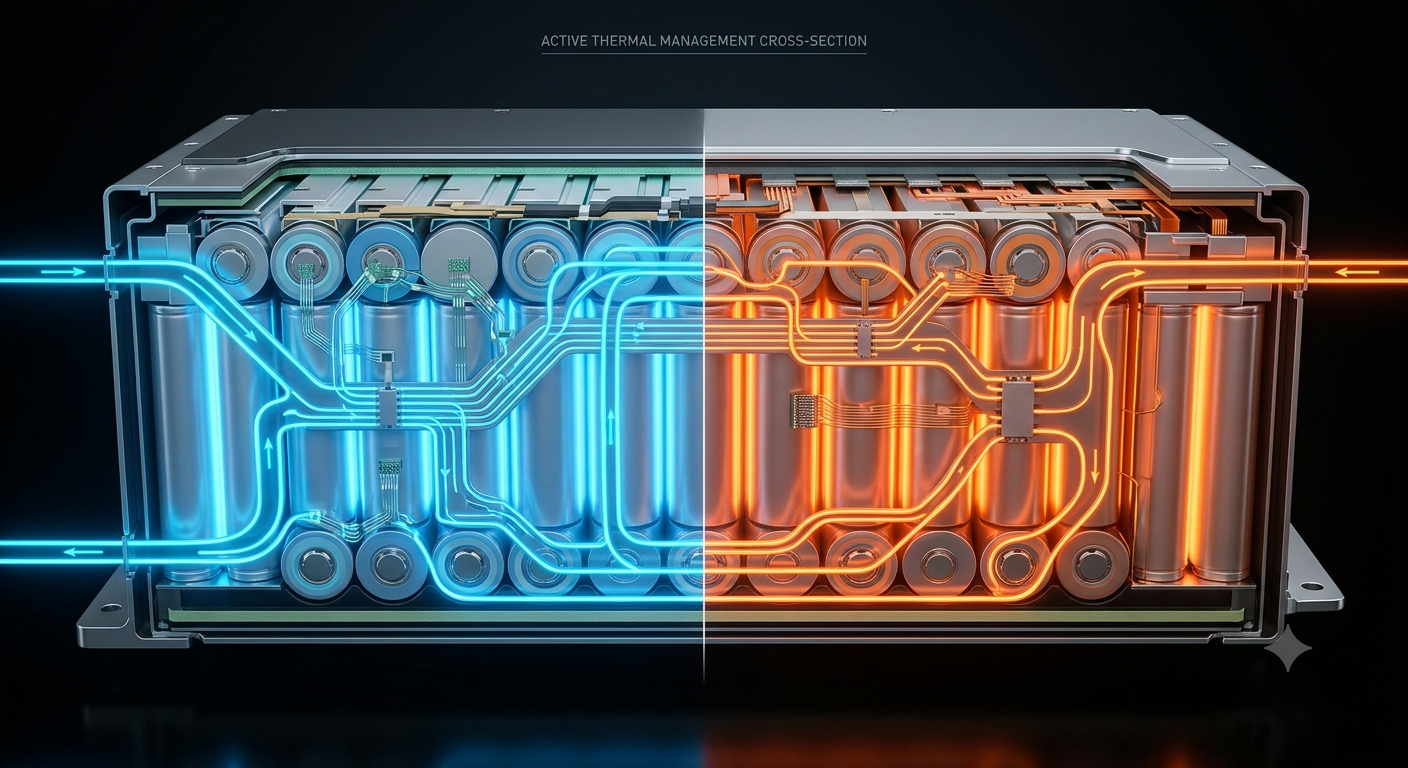
Batteries generate heat while charging and discharging, and both extremes — too hot or too cold — cause severe operational bottlenecks.
Too Hot: Leads to thermal runaway, electrolyte breakdown, catastrophic fire risk, and accelerated capacity loss.
Too Cold: Slows internal ion movement, causes dangerous lithium plating on the anodes, and severely drags down charging speed and efficiency.
The Battery Thermal Management System (BTMS) exists to keep temperatures in a safe band, and smart infrastructure ensures it is increasingly AI-driven:
Predictive Adjustments: Smart AI-based BTMS predicts thermal behavior based on load demand and adjusts cooling proactively rather than reactively.
Hybrid Integration: Combines air cooling, liquid cooling jackets, and phase-change materials for optimal thermal dissipation.
Climate Tuning: Deep learning models continuously fine-tune coolant flow, fan speed, and allowable charging current in real time to adapt to extreme ambient conditions.
Engineering for the Extremes
The hardware and software architectures deployed during AIoT battery manufacturing shift dramatically depending on the target environment:
For Extreme Heat
Hardware: Ceramic-coated separators, flame-retardant electrolytes, and heat-resistant cathode materials.
Software: AI edge models trained specifically to flag early micro-shortages and predict thermal runaway before it happens.
Applications: Desert EVs, heavy military defense systems, and uncooled industrial automation equipment.
For Extreme Cold
Hardware: Low-temperature optimized electrolytes, silicon-enhanced anodes, and internal self-heating element layers.
Software: AI-driven pre-heating cycles and dynamically restricted low-temperature charging profiles to eliminate lithium plating.
Applications: Arctic utility vehicles, aerospace systems, orbital satellites, and cold-region consumer EVs.
The Cybersecurity Layer Nobody Sees
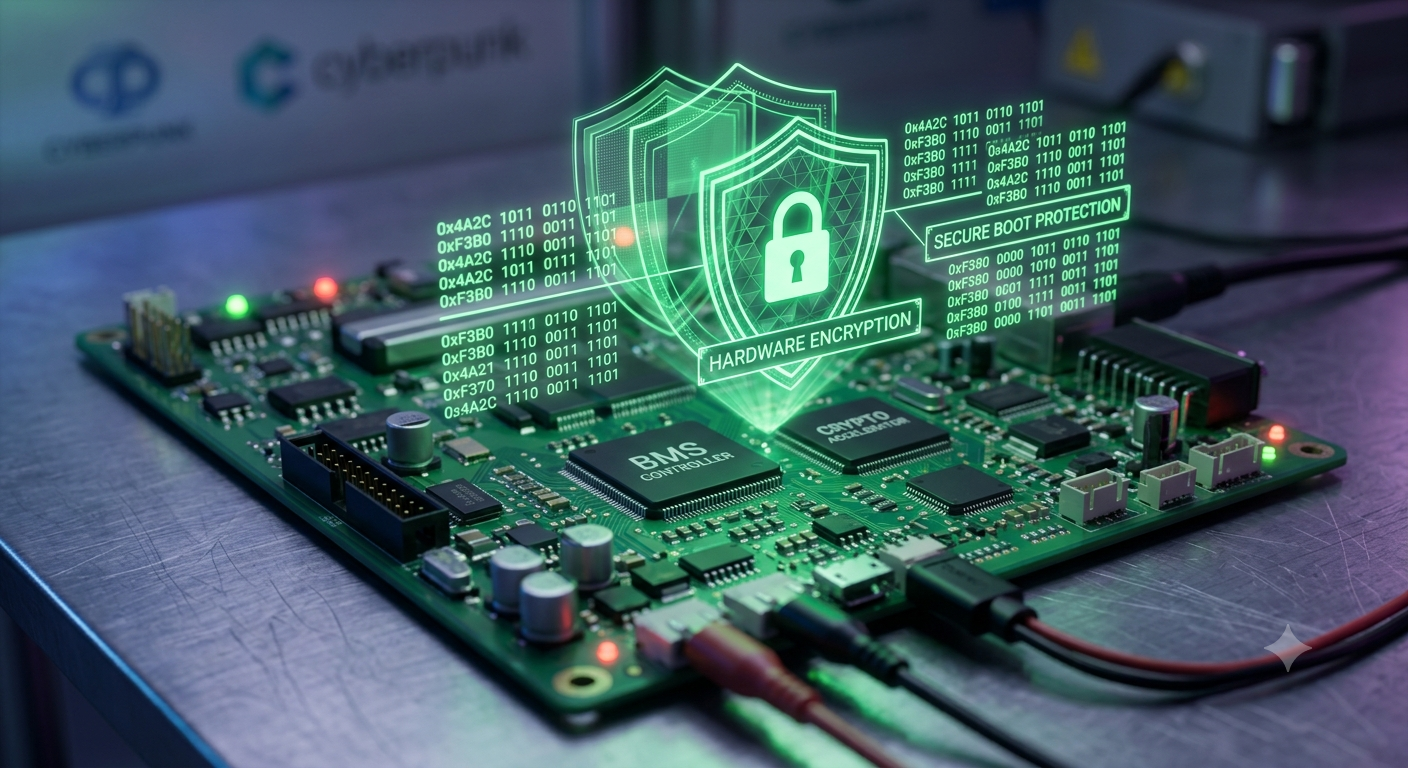
Connected battery systems — cloud platforms, industrial IoT, smart vehicles — open the door to real security risks: remote hacking, falsified sensor data, BMS manipulation, unauthorized firmware changes, and even deliberate thermal sabotage.
The industry response across the AIoT battery manufacturing pipeline is a layered, zero-trust defense network:
Secure Boot Firmware: Cryptographically ensures that only authorized, manufacturer-signed code can execute on the BMS controller.
Hardware Encryption: Protects critical data packets moving across the internal CAN bus or external IoT gateways.
Immutable Identity: Blockchain-backed battery passports give each cell a traceable, tamper-resistant history from the factory floor to recycling.
AI Intrusion Detection: Constantly monitors sensor streams to flag abnormal current or temperature reporting that suggests data tampering.
Digital Twins: Testing Before It's Real
A digital twin is a virtual replica of the physical battery or the manufacturing line itself, fed by live IoT data. By running parallel to the physical asset, it allows engineers to simulate rapid charging profiles, model thermal stress in synthetic environments, and predict maintenance cycles without risking real-world hardware. It has quickly become the gold standard in smart factories and advanced EV validation programs.
The Technology Stack
| Layer | Technologies | Purpose |
|---|---|---|
| AI & Analytics | Machine Learning, Deep Learning | Battery prediction, smart decisions |
| IoT Communication | MQTT, OPC-UA, CAN Bus | Real-time data exchange |
| Edge Devices | NVIDIA Jetson, Raspberry Pi | Local AI processing |
| Cloud Platform | AWS IoT, Azure IoT | Storage and remote monitoring |
| BMS Hardware | STM32, TI BQ Series | Battery protection and control |
| BTMS | Liquid cooling, smart fans | Temperature management |
| Automation | PLC, SCADA, industrial robots | Automated production |
| Cybersecurity | Encryption, secure firmware | System and data protection |
| Software Tools | Python, TensorFlow, PyTorch | AI model development |
Real-World Applications of Smart Batteries
Electric Vehicles: AI-enabled BMS and active liquid-cooled BTMS drastically improve charging safety and preserve multi-year pack health.
Aerospace and Defense: High-density, extreme-temperature batteries power deep-space satellites, tactical drones, and ruggedized military infrastructure.
Renewable Energy Storage: Grid-scale BESS (Battery Energy Storage Systems) rely on predictive analytics to balance loads and schedule preventative maintenance without downtime.
Smart Manufacturing Plants: Advanced AIoT battery manufacturing cuts production defects during the slurry-coating and cell-formation stages, lowering scrap rates significantly.
What's Coming Next
The next phase of battery manufacturing is likely to bring solid-state batteries, dry electrode manufacturing, fully autonomous AI-run factories, self-healing battery materials, advanced thermal materials, and even quantum-assisted material optimization. Smart factories will lean further into AI agents, digital twins, edge computing, and real-time industrial IoT to get there.
The Bottom Line
Manufacturing batteries that can survive genuinely extreme conditions isn’t just a materials science problem anymore — it’s an intelligence problem. Combining AI agents, industrial IoT, smart BMS and BTMS, cybersecurity, and digital twins is what makes it possible to build batteries that are safer, longer-lasting, and reliable in the harshest environments. As demand for high-performance batteries keeps climbing across EVs, aerospace, defense, and renewable energy, this kind of intelligent manufacturing is quickly becoming the new baseline, not the exception.