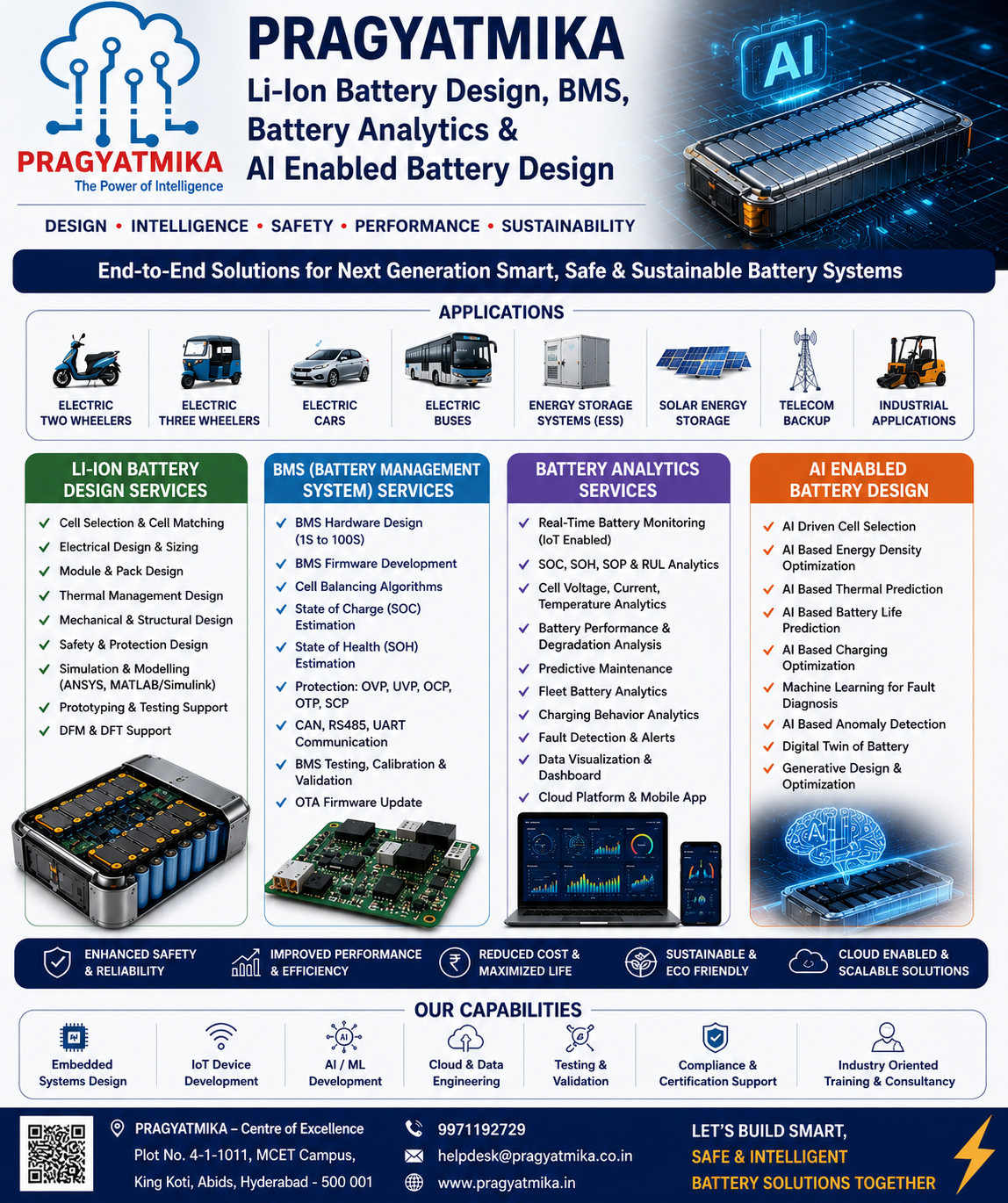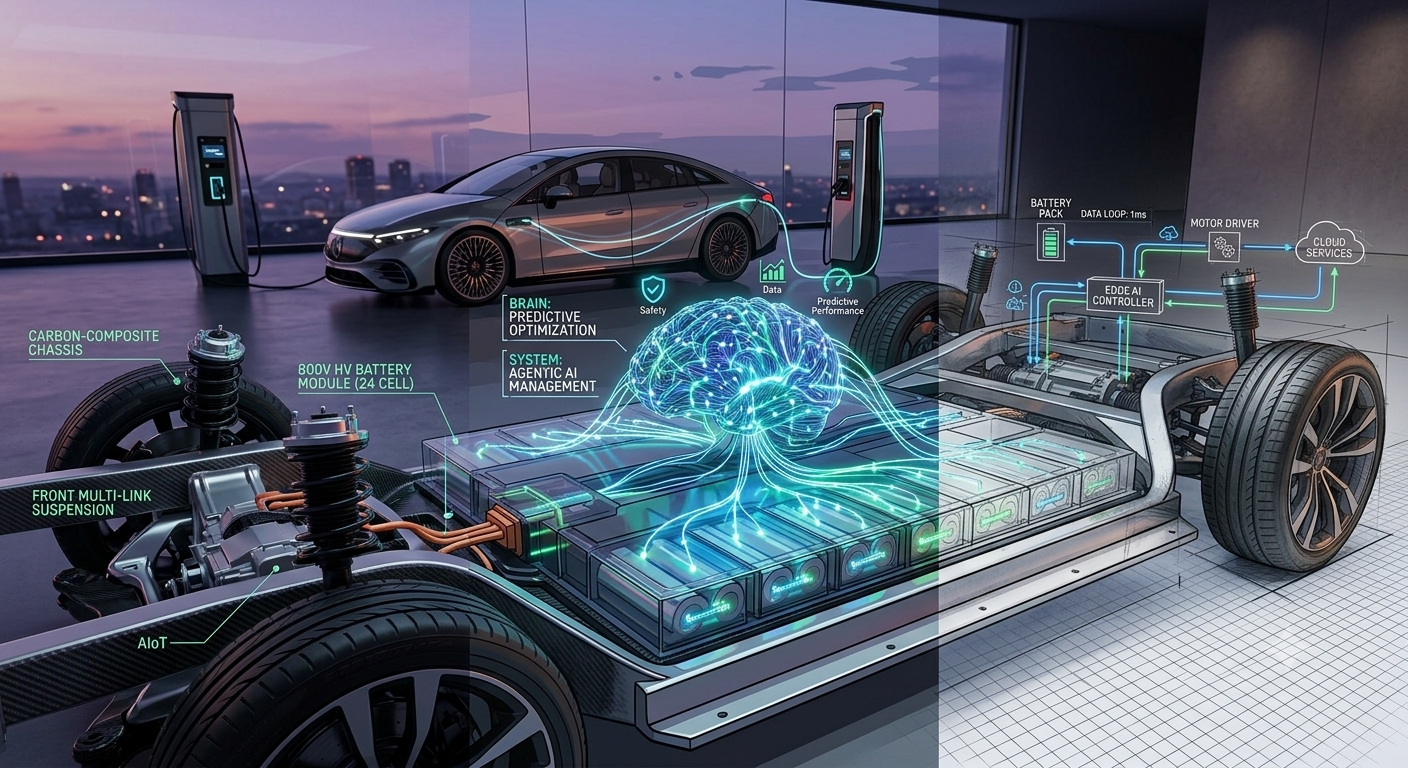
The transition to a fully electrified world is well underway, but it has hit a disheartening snag. Foryears, our reliance on the lithium-ion cell has been tempered by a high-stakes gamble. High-profilerecalls and tragic headlines—like the OLA scooter fires that resulted in the death of a man and his daughter—remind us that batteries are not merely electrical components; they are volatile chemical systems. Because traditional batteries are “black boxes”; we have lacked the eyes to see the hidden degradation and thermal coupling occurring within until it is far too late.We rely on these complex systems to power our lives, yet their internal lives remain a mystery.
Traditional monitoring can tell us a battery is dead, but it rarely explains the “why” or the “when”This lack of transparency has led to incidents ranging from the inconvenient—Volkswagen ownersfinding dead batteries after 48 hours of parking—to the catastrophic. The industry has reached a tipping point: we can no longer afford to treat the heart of the electric vehicle (EV) as a mystery.
Battery Analytics is the architectural breakthrough that finally turns raw, volatile chemistry into a monitored, quantifiable asset. By shifting the paradigm from hardware-centric to intelligence-led, we are transforming the battery from a silent passenger into a vocal, self-diagnostic brain This intelligence is the gatekeeper of the Fourth Industrial Revolution’s energy transition.
Moving from Reactive Guards to Proactive Pilots
The most significant shift in energy technology today is the transition from traditional Battery Management Systems (BMS) to AI-enabled frameworks. Traditional BMS frameworks are deterministic; they rely on fixed “if-then” rules and thresholds for voltage and temperature. While these guards provide basic protection, they are inherently reactive—they can only pull the alarm once the fire has already started.
In contrast, AI is a proactive pilot. By identifying subtle patterns in multidimensional data that deterministic models miss, AI-driven systems achieve State of Charge (SOC) accuracy above 98% and provide fault-detection lead times exceeding 48 hours. This shift is an operational necessity because advanced chemistries exhibit non-linear degradation that rule-based systems simply cannot calculate. AI provides the adaptive estimation required to optimize performance under the chaotic, real-world conditions of the grid and the road.
“Traditional BMS frameworks relied on deterministic models… In contrast, AI-driven systems employ machine-learning… to predict State of Charge (SOC), State of Health (SOH), and failure probabilities with remarkable precision.”
The "Click-Hiss" – AI Can Now Hear a Fire Before it Starts
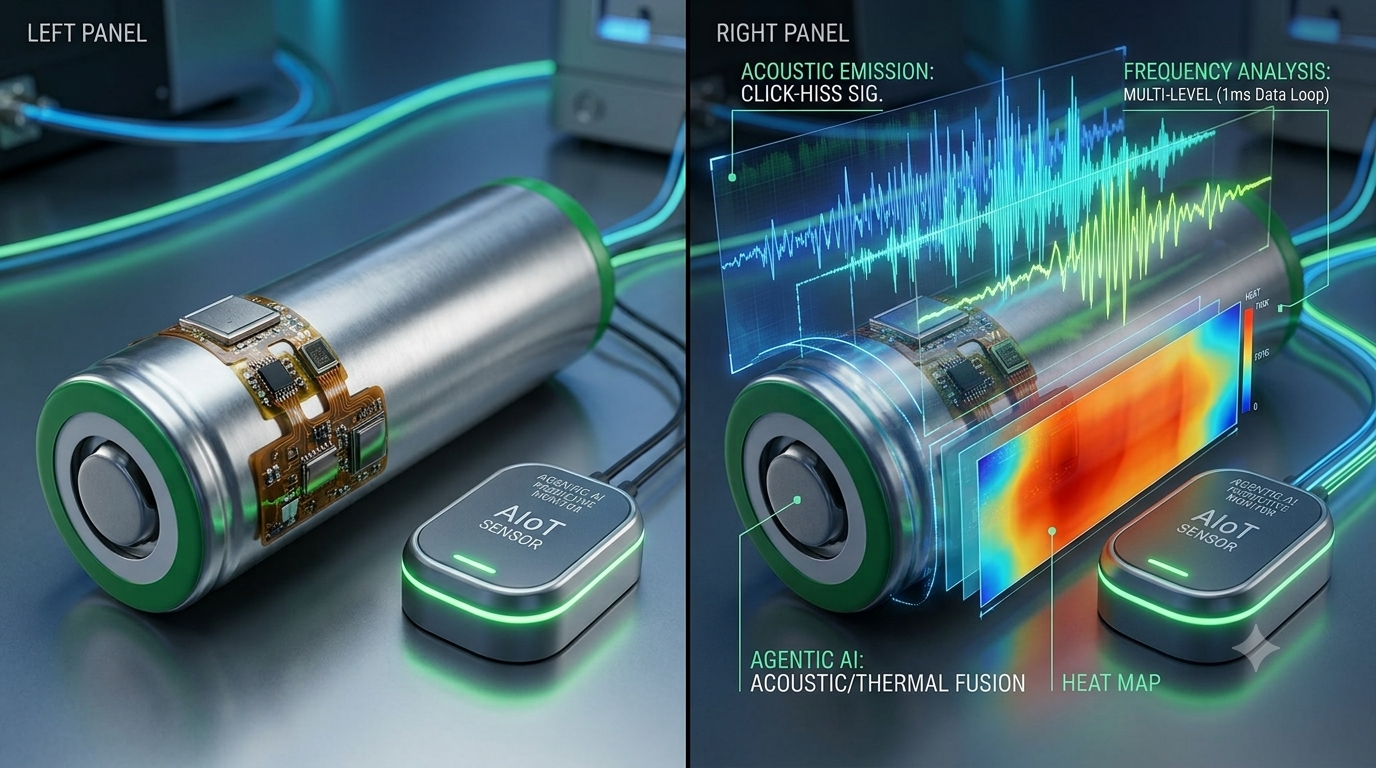
The next frontier of battery safety isn’t just about reading electrical signals; it’s about multi-sensor fusion that listens to the battery’s health. Groundbreaking research from the National Institute of Standards and Technology (NIST) has identified a unique click-hiss acoustic signature that lithium-ion batteries emit just before entering thermal runaway. By training neural networks on these audio patterns, AI can now identify battery failure sounds with a 94% accuracy rate, even in the cacophony of a moving vehicle. Crucially, this provides a two-minute critical evacuation window before catastrophic failure—time that traditional temperature sensors, which wait for heat to penetrate the casing, often fail to provide. This intelligence is bolstered by the integration of “single-chip” hardware containing capacitive pressure, metal oxide semiconductor gas, and platinum temperature sensors, allowing the AI to synthesize a 360-degreeview of the cell’s internal environment.
Your Battery Has a Digital Ghost (The Digital Twin)
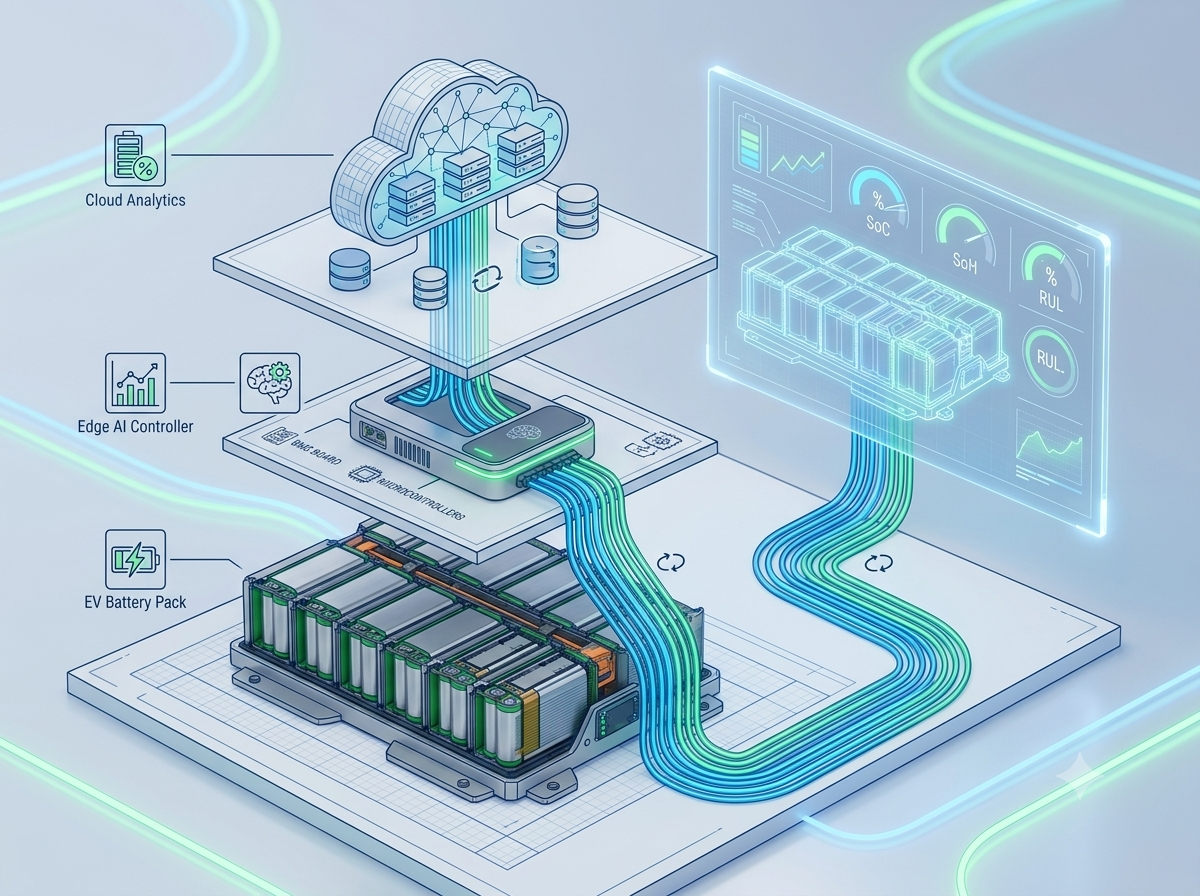
The Battery Digital Twin (BDT) is the virtual soul of the physical cell. It is a virtual representation synchronized with real-time operational conditions, allowing us to simulate a battery’s future before it happens. A comprehensive BDT/Analytics system provides continuous, high-fidelity answers to three core questions:
State of Charge (SoC): How much energy is actually available for use right now?
State of Health (SoH): How much total capacity and performance has the battery lost over
its lifespan?
Remaining Useful Life (RUL): How much longer can this asset perform safely before it
requires replacement or repurposing?
The future of this intelligence lies in a hybrid architecture. While Edge intelligence handles the sub-millisecond decision loops required for immediate safety actions, the Cloud leverages massive historical datasets to refine the Digital Twin. This dual-layer approach ensures that a vehicle is smart enough to save itself in a millisecond, but wise enough to learn from the performance of the entire global fleet.
Saving the Bottom Line by Preventing the "Sudden Downfall"
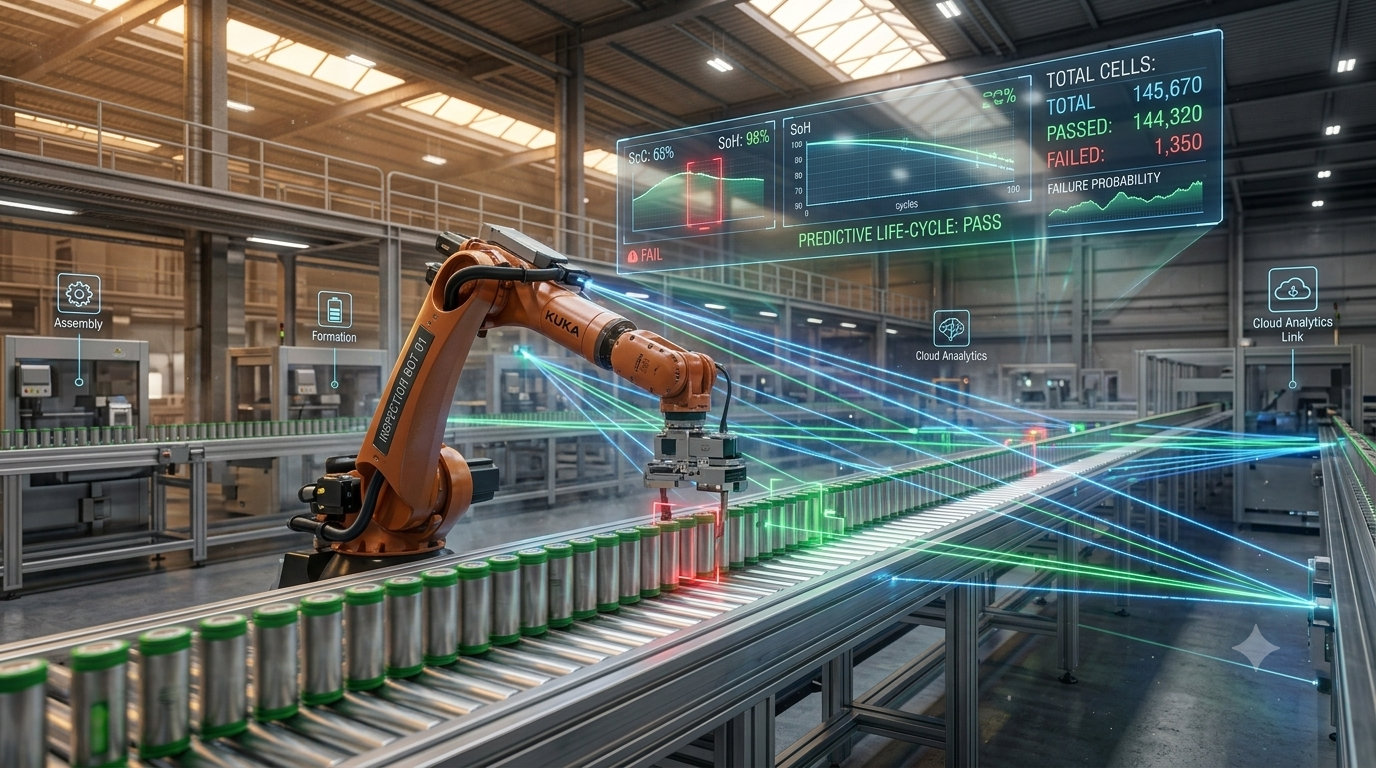
For Original Equipment Manufacturers (OEMs), battery intelligence is a matter of brand survival. The financial impact of a recall is double-edged: there is the immediate capital loss and the far more damaging “sudden downfall” of brand reputation. AI solves this at the source through “Warranty Risk Scoring.” By utilizing machine learning on the factory floor, manufacturers can analyze formation and early cycling data to predict a cell’s cycle life with 99.7% accuracy. This allows OEMs to identify and “chuck off” faulty cells during the pre-production stage, ensuring that only the highest-performing assets ever reach the consumer. This isn’t just a safety measure; it’s an economic moat that reduces unplanned maintenance and prevents the miscellaneous expenses of sudden field failures.
“Imagine how disheartening it is to recall your vehicles just because of their poor battery management system (BMS). Firstly, you have to bear the loss, and secondly, your brand reputation has to face a sudden downfall.”
The Circular Economy – Giving Batteries a Second Life
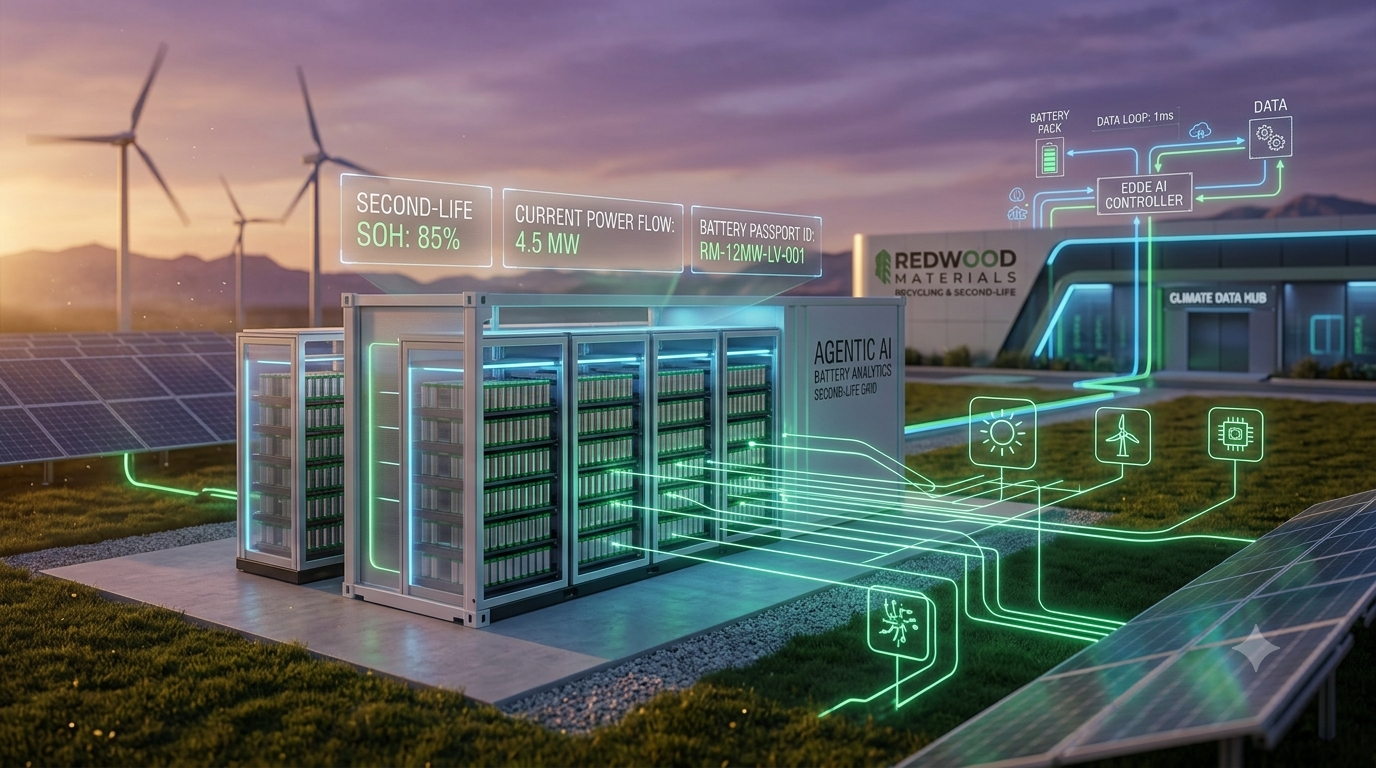
AI is the primary gatekeeper of the circular economy. When a battery’s capacity drops to 70-80%, it may no longer be fit for a high-performance EV, but it remains a potent asset for stationary storage.
The challenge is that “second-life” batteries are highly heterogeneous; each has aged differently.AI solves this by characterizing the unique condition of every repurposed cell, managing them as a cohesive system. A prime example is Redwood Materials’ 12 MW microgrid in Nevada, which uses repurposed EV batteries to power a massive data center. This movement is being standardized by the World Economic Forum’s Battery Passport project, a digital record that follows a battery from mine to second-life storage. By maximizing the utility of every kilogram of lithium, we directly support UN Sustainable Development Goals 7 and 12, turning potential waste into a sustainable energy backbone.
Conclusion: The Intelligence Infrastructure of Tomorrow
We are moving away from a world of isolated hardware toward an AIoT (Artificial Intelligence of Things) architecture. In this new reality, AI is the connective tissue linking the manufacturing plant, the EV on the road, and the renewable energy grid. It is the intelligence layer that transforms a simple energy storage device into a secure, self-learning ecosystem. As we transition to a fully electrified future, we must ask ourselves: are we prepared to trust a system that isn’t smart enough to tell us it’s about to fail—or will we demand that every battery has a brain of its own?