

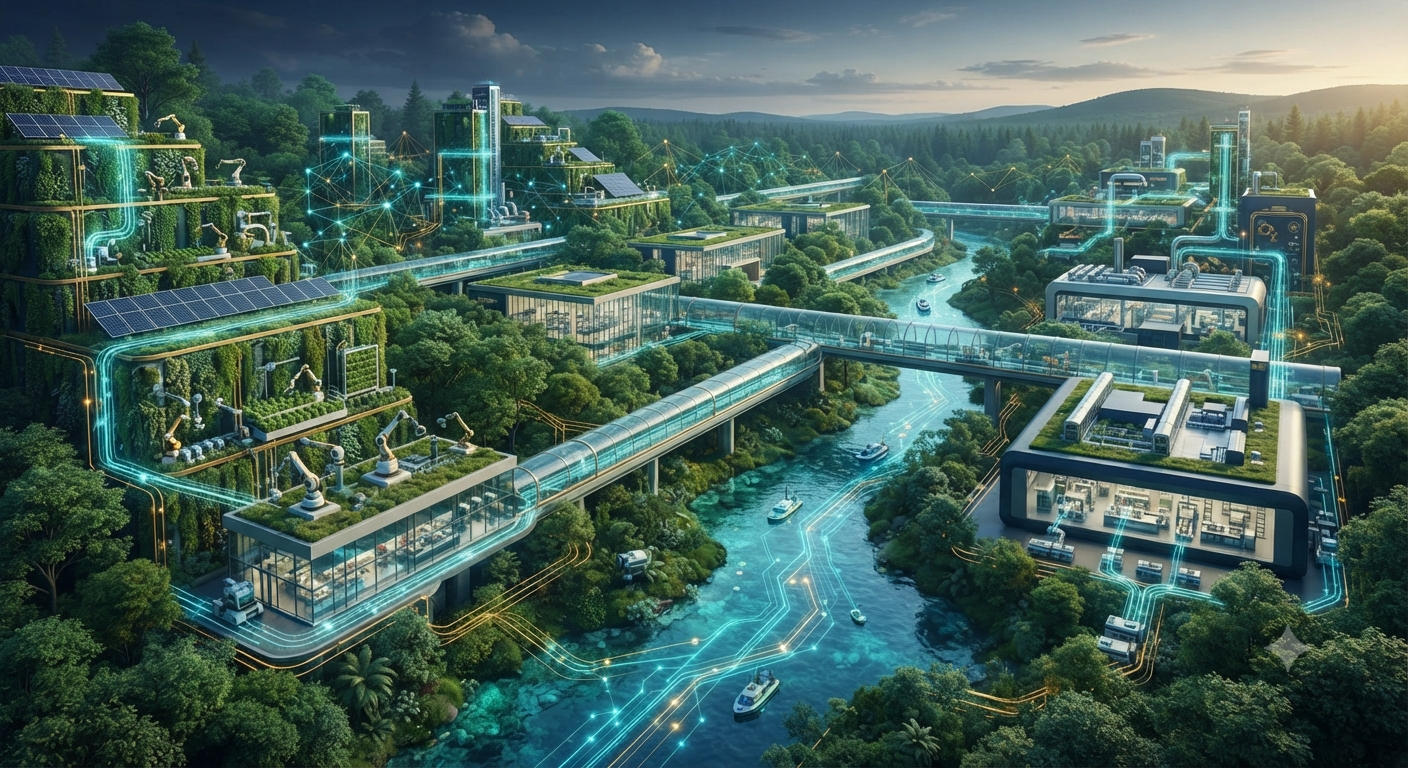
For the past decade, the global industrial vanguard has been fixated on “human-centricity.” That movement — Industry 5.0 — set out to bring the human touch back to automation, focusing on personalization and collaborative robots that work alongside us. We’ve meticulously built a world where technology acts as a mirror, reflecting our needs, our comfort, and our individual desires.
But as we approach a radical decentralization of the human ego, it’s becoming clear that prioritizing only ourselves is a luxury our planet can no longer afford. Strategic thinkers and industrial futurists are already looking past the human experience toward a more vital successor: Industry 6.0. This new era represents a fundamental pivot — from technology that serves us, to technology that serves the planet.
What happens when technology stops being a tool for human convenience and starts becoming a restorative force for the environment? The transition to Industry 6.0 suggests that our long-term survival depends on a nature-centric approach — one where the “throne” of technological priority is shared with the ecosystem that sustains us. We’re moving beyond a world of mere sustainability into a world of active, climate-balanced restoration.
1. The Surprising Pivot to "Nature-Centrism"
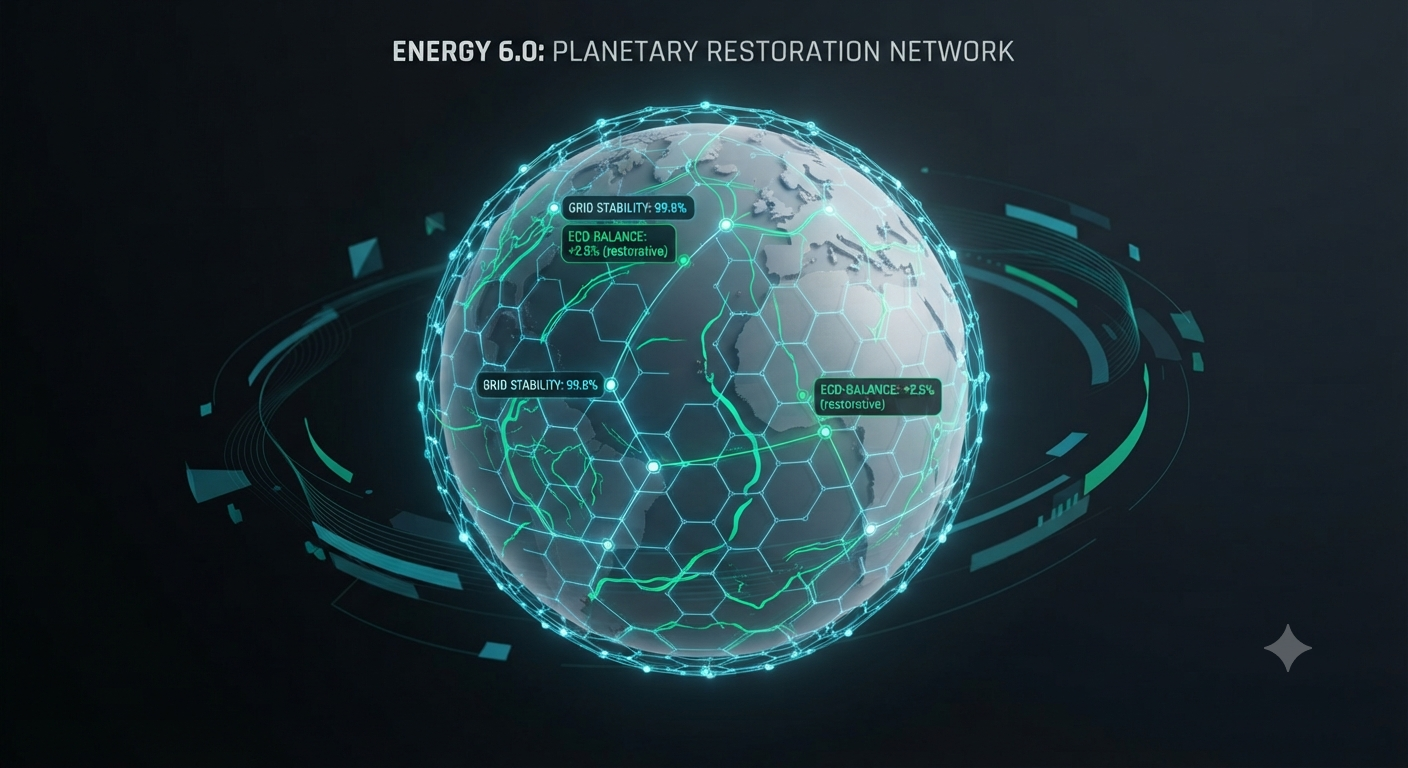
The defining shift in Industry 6.0 is the move away from the human-centric synergy of Industry 5.0 toward socially significant environmental and climate goals. Where the 5.0 paradigm focuses on the man-machine relationship to boost individual productivity, Industry 6.0 pursues a symbiosis between industrial technologies and Cyber-Physical-Social Systems.
This isn’t just about making factories more efficient — it’s about radically improving living conditions through restorative technology operating at a planetary scale. The movement is anchored by Energy 6.0, a new energy paradigm built for the second half of the 21st century: an environmentally oriented technological platform for the energy sector, built on the expansion of digital technologies — emotional artificial intelligence, the Internet of Everything, digital triplets, and hyper-connected enterprises — across basic industries.
2. The Fossil Fuel Paradox: Why We Can't Just Quit Cold Turkey
A central challenge of this nature-centric era is what might be called the fossil fuel paradox. The ultimate goal is zero greenhouse gas emissions, but an abrupt, total refusal to burn fossil fuels today would be catastrophic. Unmanaged, a reckless transition risks the sudden loss of affordable energy across developing regions — with consequences serious enough that researchers describe the worst-case outcome as the death of a significant part of humanity.
Industry 6.0 advocates for a seamless Fourth Energy Transition instead — a technological bridge that keeps the shift to renewables from triggering societal collapse. The pragmatic case is straightforward: abandoning current energy infrastructure on ideological grounds, without the digital framework Industry 6.0 provides, would be a regression of the highest order. Experts go so far as to warn that mismanaging this transition digitally could set quality of life back by tens of thousands of years. The purpose of Industry 6.0, in that framing, is to make sure we never have to choose between a dead planet and a dead civilization.
3. From Digital Twins to "Digital Triplets"
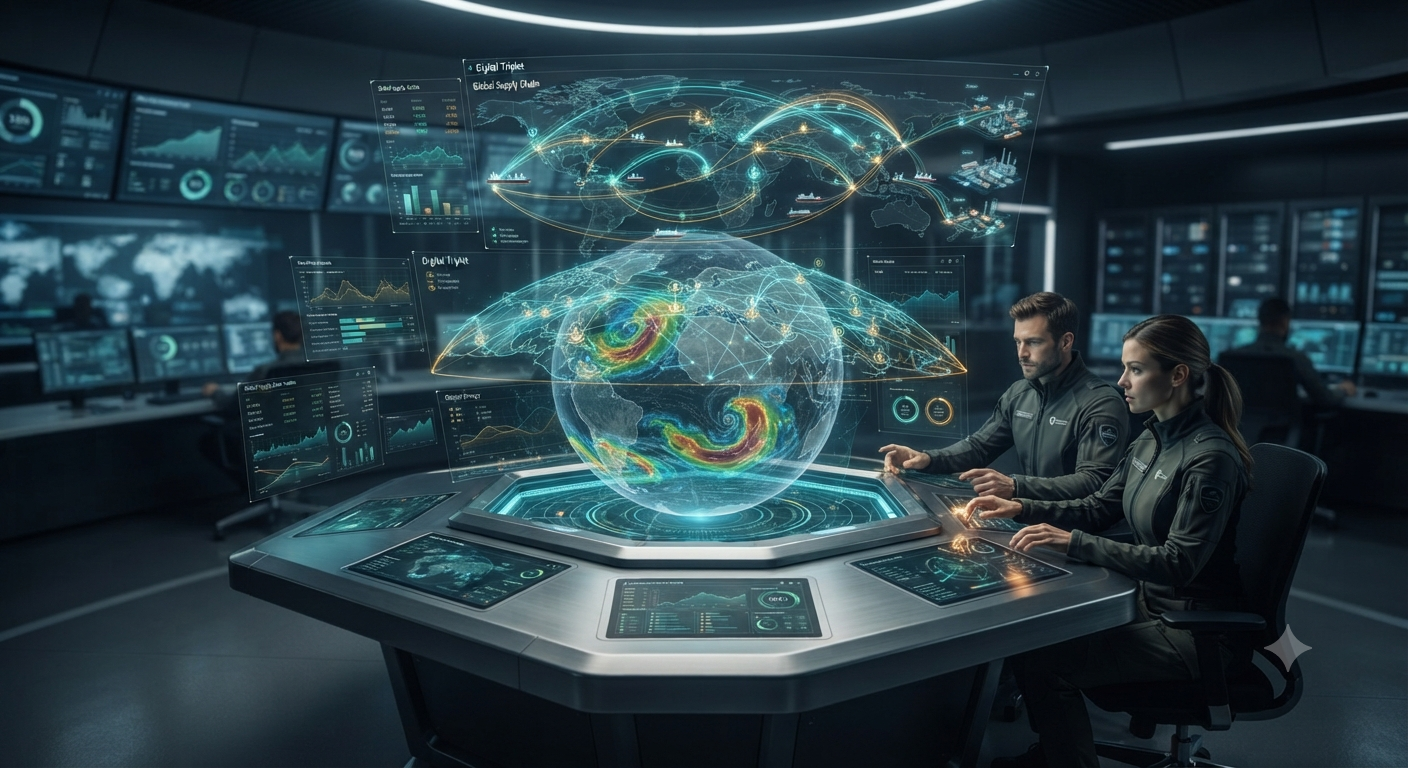
In earlier industrial phases, digital twins let us model individual pieces of equipment or single processes in isolation. Industry 6.0 evolves that virtualization into digital triplets.
Where twins model isolated entities, triplets use quantum processing and predictive multi-industry analytics to model entire industries and hyper-connected enterprises at once — virtualization on a planetary scale. Using axiomatic design, this approach can simulate complex industrial interactions across the globe, enabling computational experiments that replace traditional trial-and-error. The practical upshot: we no longer need to burn through physical resources to test a theory. We can identify the most restorative path forward inside a virtual environment, before a single swarm of robotic manipulators is ever deployed in the real world.
4. The Rise of Emotional Artificial Intelligence
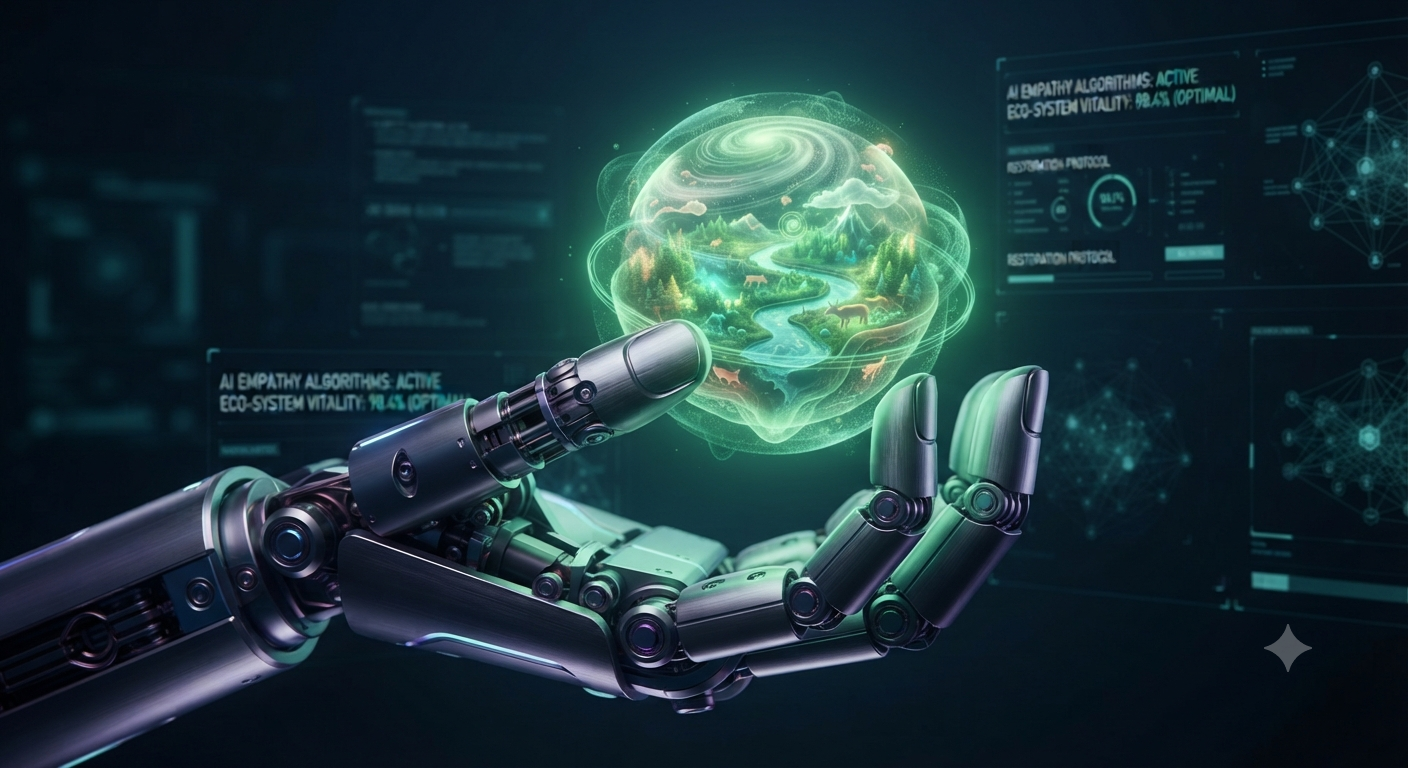
AI itself is undergoing a radical transformation into what’s being called “parallel” or “emotional” artificial intelligence. In Industry 4.0, machines learned independently. In 5.0, they learned to imitate human behavior. In the 6.0 era, AI systems form artificial communities — an entirely new kind of machine work collective.
These systems are designed with simulated “machine emotions” that mimic human-like care for the environment. They aren’t just optimizing for profit; they’re built to factor in the climate itself. There’s a genuine irony sitting inside this trajectory: as our own species struggles to keep its attention on the environment, we’re building machines with simulated empathy to help solve the very climate crisis that human industry created in the first place.
5. The "Antifragile" Global Supply Chain
Industry 6.0 introduces the concept of antifragility to the global production landscape. Most current systems are merely fragile — they resist shocks until they eventually break. An antifragile system, powered by the Internet of Everything (IoE), is one that actually gets stronger because of stressors, not despite them.
That hyper-connectivity between production, logistics, and finance is critical for preventing uninterrupted energy-supply failures. In a nature-centric world, the supply chain needs to be resilient enough to absorb the natural fluctuations of renewable energy without leaving the world’s most vulnerable populations in the dark. By building a dynamic, self-optimizing web of industries, Industry 6.0 aims to turn system shocks into opportunities for a smarter, stronger grid — rather than points of failure.
6. Bridging the "Energy Inequality" Gap
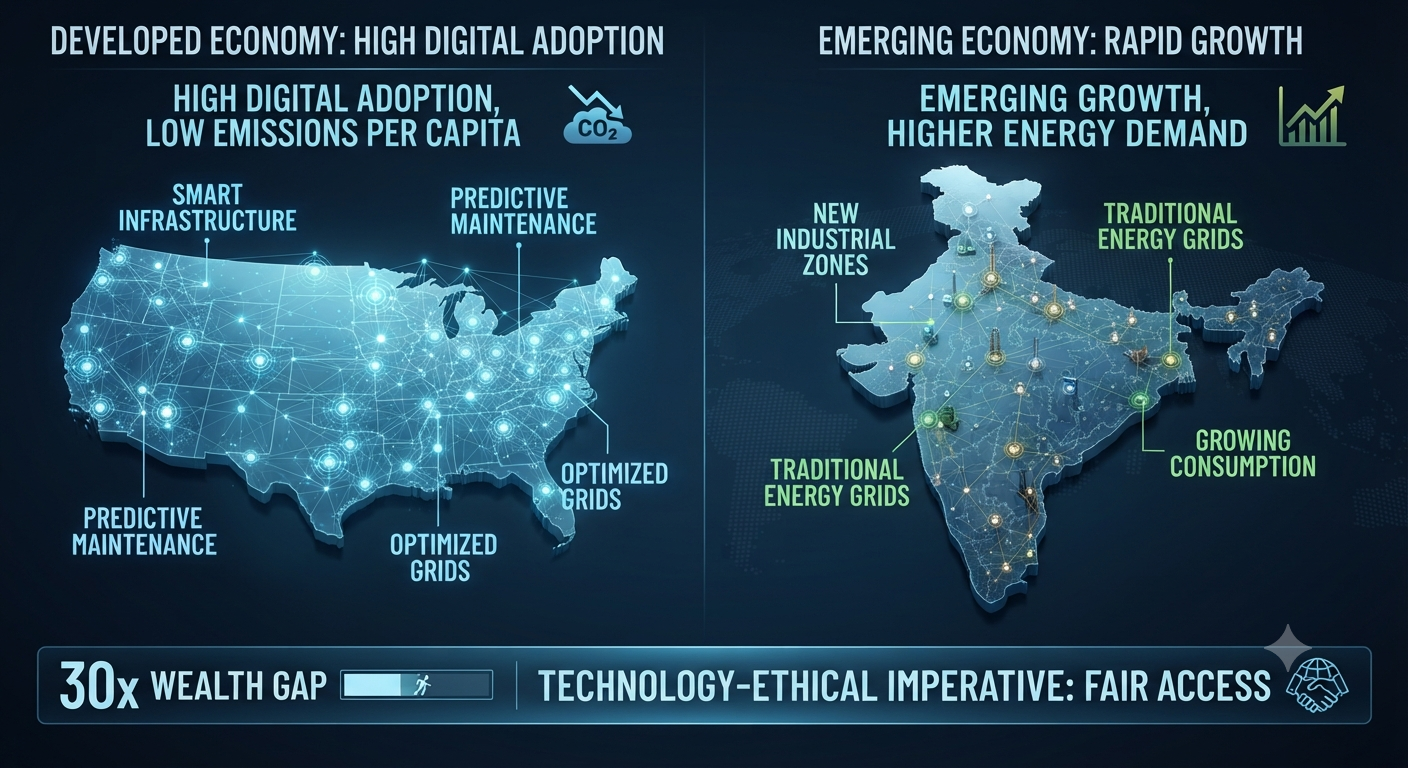
The transition to a nature-centric future is currently dangerously uneven. Consider the numbers: GDP per capita in the United States sits at roughly $65,020, compared to about $2,240 in India — a gap of roughly 30x. That wealth gap creates a matching disparity in CO2 emissions. Leading nations like the US and Japan can afford to reduce per-person energy consumption through digital platforms, while developing nations still need to increase theirs just to fuel basic economic growth.
Industry 6.0, alongside the Quintuple Innovation Helix framework, places a high priority on fair access to affordable energy. Sharing digital triplets and IoE frameworks with the rest of the world isn’t just generosity — it’s framed as a tech-ethical imperative. Without that cooperation, a large share of the global population risks becoming outsiders to the Fourth Technological Transition entirely, trapped in high-polluting industrial models while wealthier nations move on toward a restorative future.
Conclusion: The Century of the "Nature-Centric" Crown

Industry 6.0 represents what its proponents call the evolution crown of our technological development — the point where our machines, our data, and our energy systems finally align with the biological needs of the planet through active climate-stability systems. It marks a shift away from a narrow focus on human personalization, toward a framework that isn’t just sustainable, but genuinely restorative.
The question that remains is whether we’re ready to share the throne of technological priority with the environment itself. The case for Industry 6.0 is essentially that we don’t have another choice — that maintaining our quality of life over the long run requires building a world where technology works as hard for nature as it has historically worked for humanity. A seamless transition to a zero-emission future depends on embracing that nature-centric paradigm before time runs out.