

Introduction: The Automation Paradox
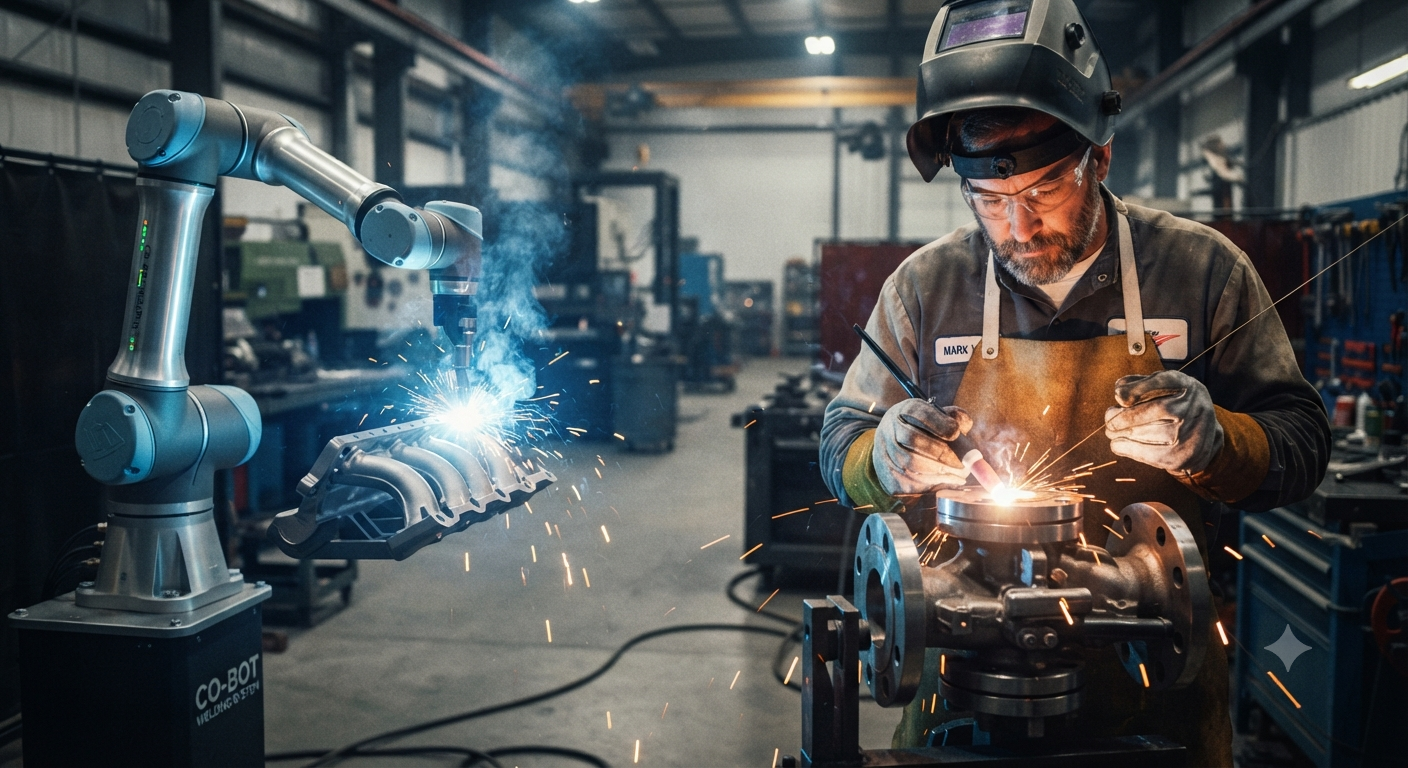
Everywhere you look, headlines warn that AI is coming for our jobs. In the white-collar world, we have already seen this play out: tech giants like Google, Microsoft, and Meta have laid off tens of thousands in roles once considered bulletproof. If an algorithm can draft a complex legal contract or pass a medical exam, the logic goes, surely the factory floor is next.Yet, a curious paradox exists at the intersection of bits and atoms. Why is it that AI can write a software script in seconds, but it cannot weld a Duplex Steel Gate Valve , feel the torque on a bolt, or make a high-stakes safety call while standing next to a high-pressure hydrotest rig for a Class 1500 trunnion-mounted valve ?While Silicon Valley cuts staff, the “backbone of the world”—the power stations, water treatment plants, and refineries that keep society functioning—remains reliant on human craftsmanship that simply cannot be downloaded. The “lights out” factory, where humans are engineered away entirely, is increasingly a myth. AI is indeed transforming the industrial sector, but it is doing so by elevating human judgment, not by replacing it.
Reality #1: AI Isn’t Replacing the PLC—It’s Learning to Work for It
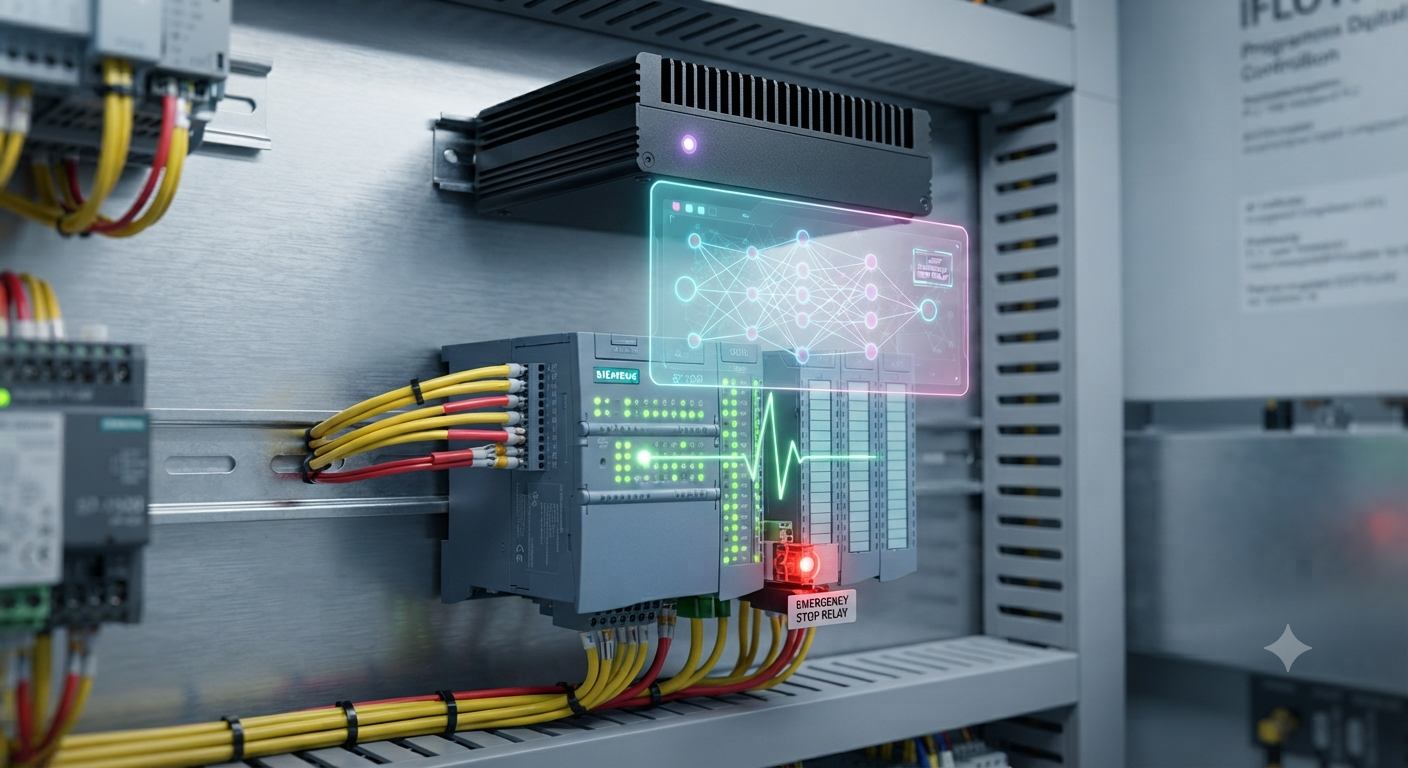
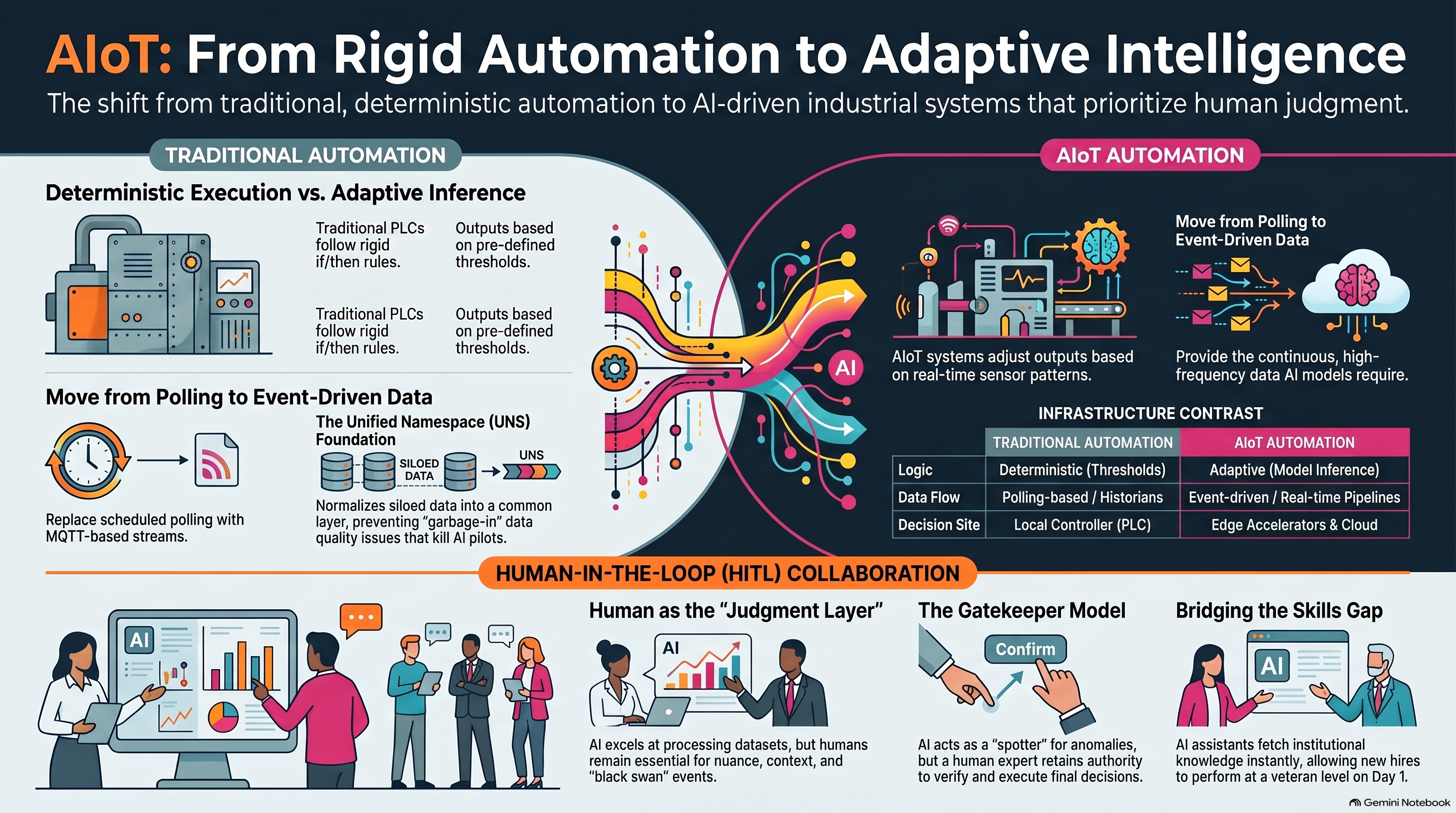
A common misconception among tech-savvy observers is that AI is a “rip and replace” upgrade for the factory floor. In reality, we are seeing a critical separation between deterministic and adaptive logic. Traditional automation, powered by programmable Logic Controllers (PLCs), is deterministic: “if this, then that” It is required for safety-critical loops where the same input must always produce the same output. AI-driven automation is adaptive. It ingests high-frequency streams to infer patterns and adjust parameters as operating conditions change. This is a different class of decision-making that runs on top of existing infrastructure. As noted in recent technical surveys: The controller still executes the deterministic program. AI informs, adjusts, or triggers that program based on real-time inference. In a modern architecture, the AI doesn’t bypass the safety system; it identifies an anomaly and triggers an MQTT event . The PLC, acting as a subscriber, then executes the response within its human-defined guardrails. AI serves as the “brain” but the PLC remains the “muscle” and the “shield”.
Reality #2: Human Judgment is Becoming More Valuable, Not Less
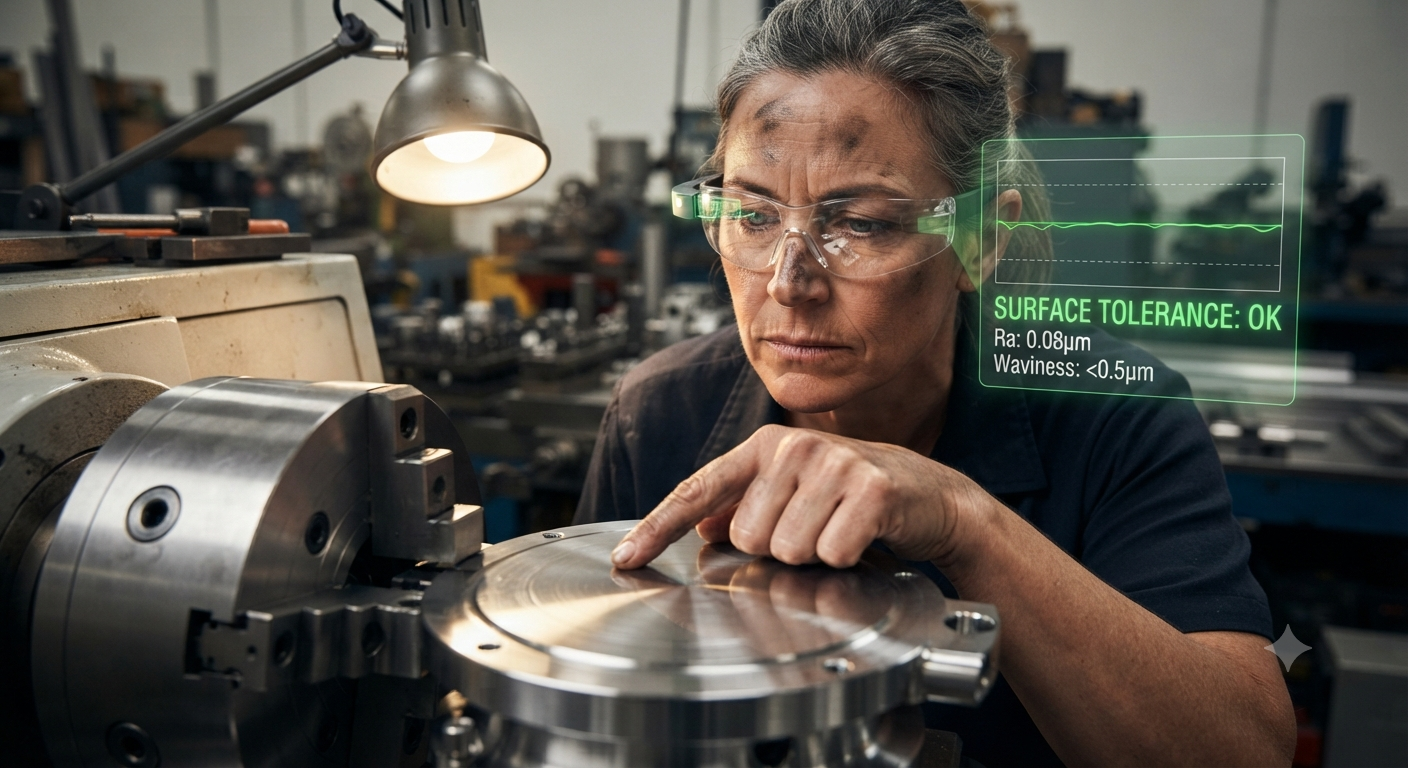
The industry is finally moving away from the “Bad Robot Problem” —the outdated practice of treating frontline workers as biological machines tasked with repetitive work. In 2026, the “lights out” model is actually a step backward for flexibility.AI is excellent at spotting vibration trends, but it lacks the nuance to handle “black swan” events. If a raw material batch has slightly different chemical properties, an autonomous model might hallucinate and produce thousands of defective parts. A human worker, using physical intuition, prevents this. They might spot a micro-defect in a machined surface or notice a waxy texture in the raw stock, overriding the model and adjusting a machining pass by instinct .Human-in-the-Loop (HITL) is not a fallback for when the AI fails; it is the operating system for a world that values nuance. Smelling the cutting fluid or feeling the vibration of a spindle is a form of expertise that ensures safety and accountability in complex production environments.
Reality #3: The “Silent Killer” of AI is Data Polling
The success of an AI model is entirely dependent on data frequency. In traditional automation, “polling” —requesting data at set intervals—is sufficient for a historian record. For AI, polling is a silent killer. Polling creates gaps that destroy the quality of predictive models, leading to “stale” data that causes model degradation. To be viable, AI requires event-driven MQTT pipelines that push data the instant a value changes. This is particularly critical for real-time control, where decisions must happen with sub-10ms latency.| Dimension | Traditional Data Needs | AI Data Needs || —— | —— | —— || Architecture | Polling-based; historian | Event-driven; continuous streams || Schema Governance | Implicit (tag naming) | Explicit; validation in-flight || Decision Speed | Microseconds (local) | Sub-10ms (edge) to seconds (cloud) || Failure Mode | Transparent (no action taken) | Silent (bad data, incorrect inference) |
Reality #4: Integration is a Physical Battle, Not Just a Software One
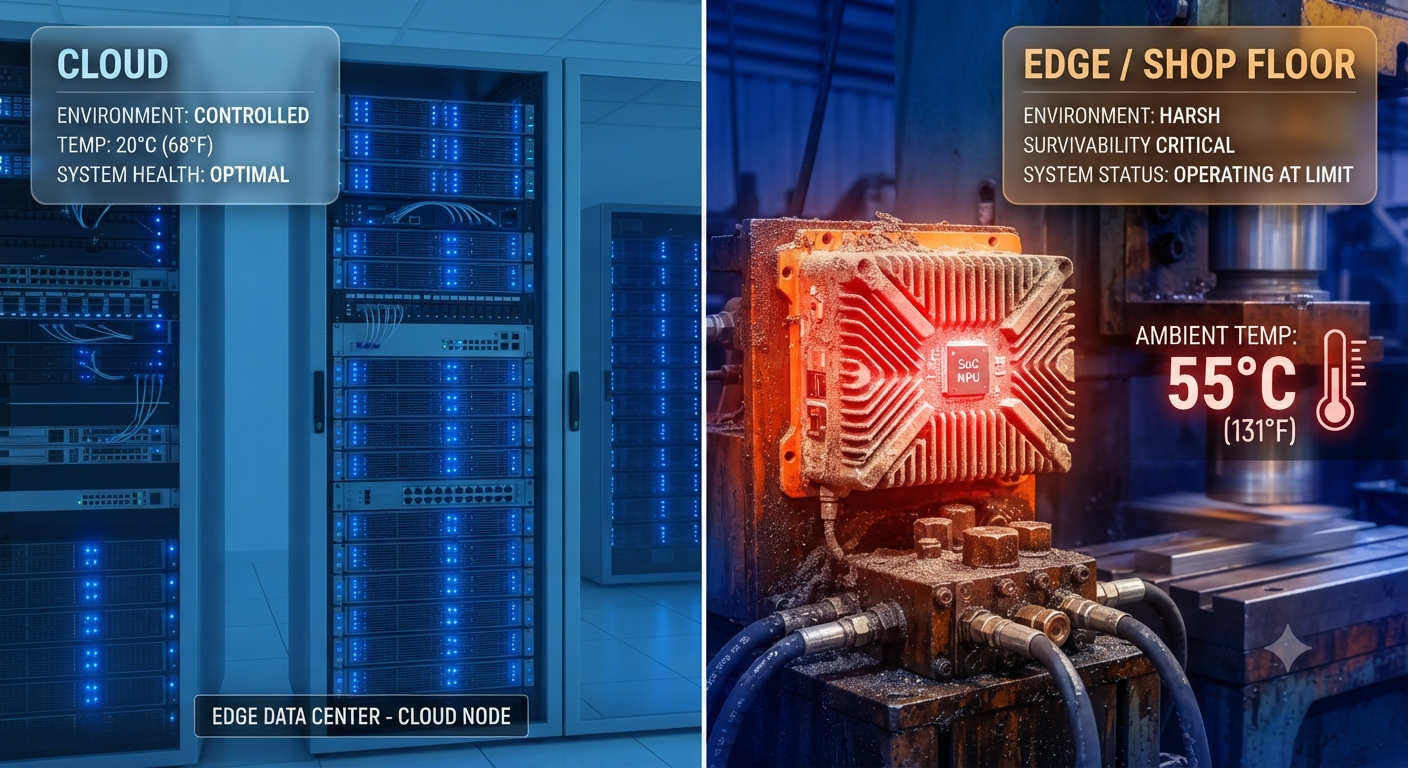
In a cloud environment, developers rarely worry about thermal constraints. On the factory floor, integration is a physical battle. Success requires more than a clean API; it requires specialized hardware— SoCs with built-in NPUs or GPUs for local inference and FPGAs for hardware acceleration of video processing. Industrial environments are harsh. Deploying AI means managing thermal budgets in unventilated areas and navigating a “protocol soup” where MQTT, OPC UA, and Modbus must be bridged without introducing latency. As the Promwad engineering team highlights: “Integrating AI with IoT in industrial environments is not a plug-and- play task… It brings unique technical challenges in edge computing, embedded design, and systems integration. “Success on the floor means building hardware that can survive the heat and noise while running complex models locally to avoid the latency of the cloud.
Reality #5: You Can’t Scale AI Without a “Unified Namespace”
Most AI pilots fail because data is siloed and inconsistently named. A Unified Namespace (UNS) is the non-negotiable prerequisite for moving past the pilot phase. A UNS serves as a single, contextualized topic hierarchy (Site, Area, Line) that normalizes data from the plant floor into a common schema that AI agents can understand. Critically, a UNS prevents Schema Drift —the silent restructuring of sensor tags that breaks model inputs. By grounding the system in functional models, a UNS allows Agentic AI to reason accurately across a global enterprise. Without a UNS, you have a science project; with a UNS, you have a scalable industrial strategy.
Conclusion: The Future is “Augmented” Not “Autonomous”
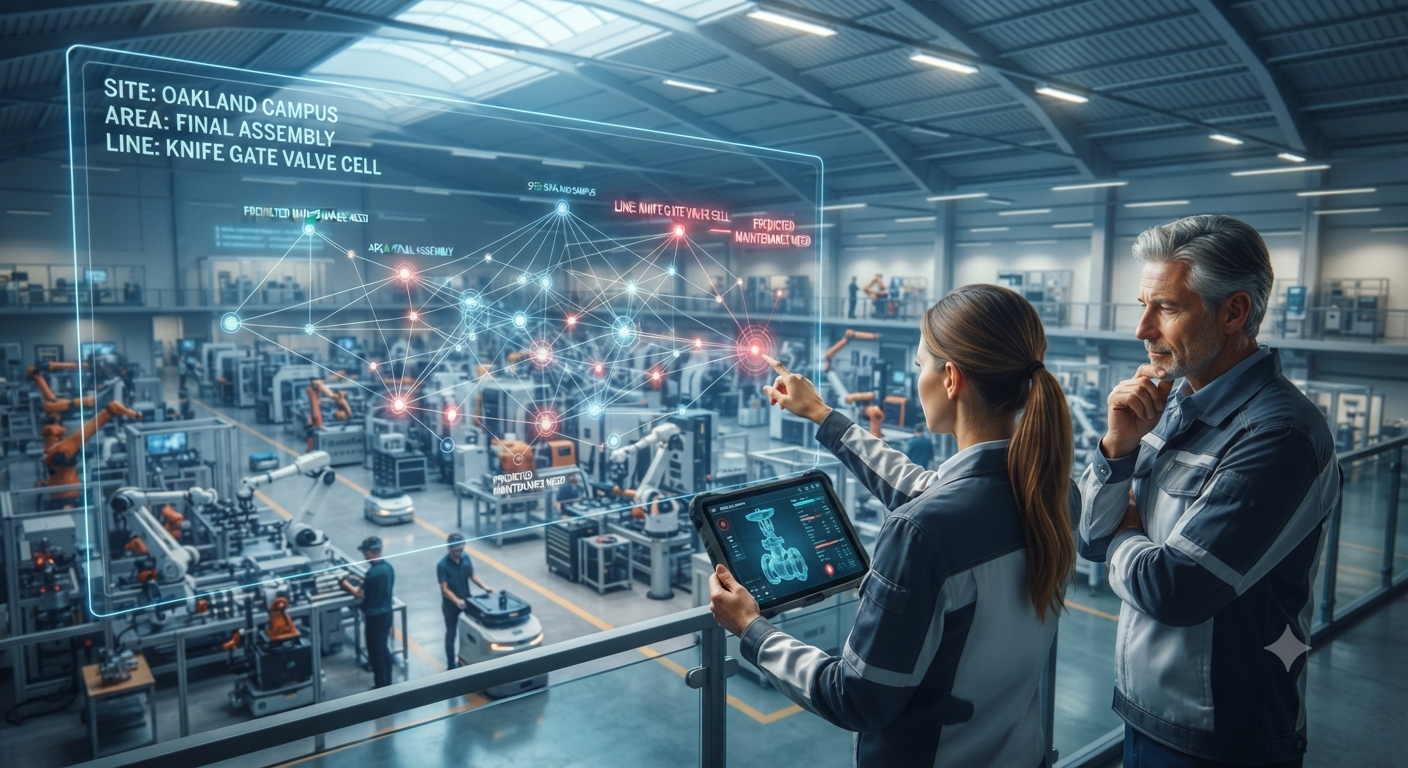
The shift we are witnessing is not “Humans vs. AI” but “Humans + AI” We are entering the era of Agentic AI —systems designed to detect and adapt, then plan and act within human- defined guardrails. As automation commoditizes routine labor, the most valuable assets in the factory will be the engineers and machinists who understand not just how to build a Knife Gate Valve , but why the tolerances matter. Automation handles the noise; humans handle the complexity. As automation handles the routine, are you prepared for a career where your primary output is no longer your labor, but your judgment?