

Next-Gen Solar Battery Storage Solutions: The Rise of Agentic AI
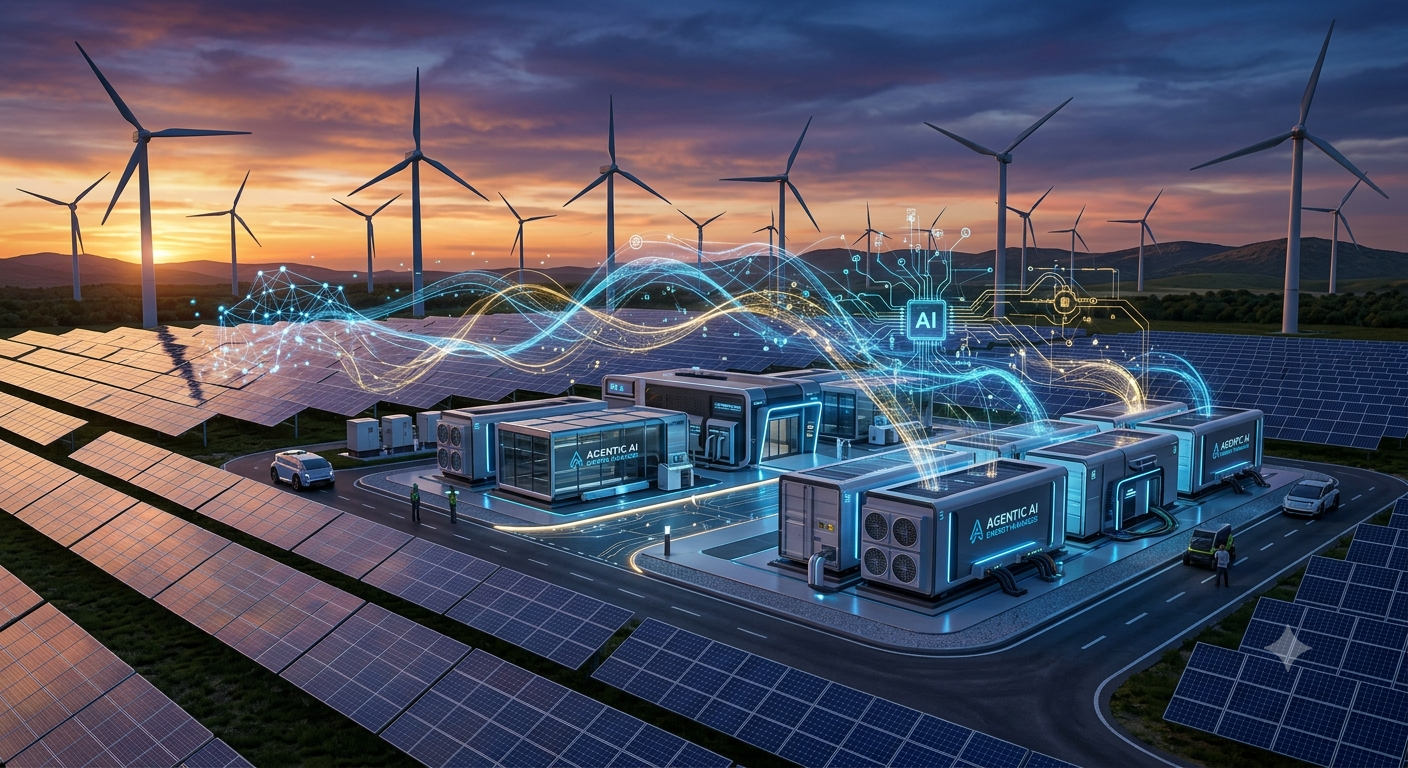
Solar panels don’t care what time it is, and wind doesn’t blow on a schedule. That mismatch between when renewable energy is generated and when it’s actually needed has always been the hard problem in clean energy — and batteries are the buffer that’s supposed to solve it.
The trouble is, most Battery Energy Storage Systems (BESS) today still run on static, rule-based logic. They charge and discharge on a fixed schedule, regardless of what’s actually happening on the grid. That’s starting to change with Agentic AIoT — a new approach where AI doesn’t just predict or monitor, it actively reasons through goals and makes decisions on its own.
What “Agentic” Actually Means Here
A normal AI model might tell you “battery is at 80% charge” or “demand will spike at 6pm.” An agentic AI goes a step further: give it a goal like “maximize battery life while minimizing cost,” and it breaks that down into sub-tasks, then acts on them through IoT sensors and controllers — without someone manually adjusting settings every time conditions change.
How the System Actually Works
At its core, an Agentic AIoT BESS runs on a continuous loop: perceive → reason → act. Two systems drive that loop.
Power Control System (PCS) — think of this as the muscle. It handles the physical, split-second work:
- Converting between AC and DC power with micro-second precision to keep grid frequency stable
- Balancing individual battery cells to prevent overheating or uneven wear
- Responding instantly to signals from the EMS to adjust output based on real-time demand
Energy Management System (EMS) — this is the brain. Instead of following a fixed schedule, an agentic EMS uses large language models or deep reinforcement learning to:
- Read weather forecasts and load history to anticipate energy surpluses before they happen
- Work out the most profitable moments to discharge stored energy (a strategy known as energy arbitrage)
- Independently decide to throttle non-essential charging when a demand spike is coming, so there’s reserve capacity ready
The Agents Behind the Curtain
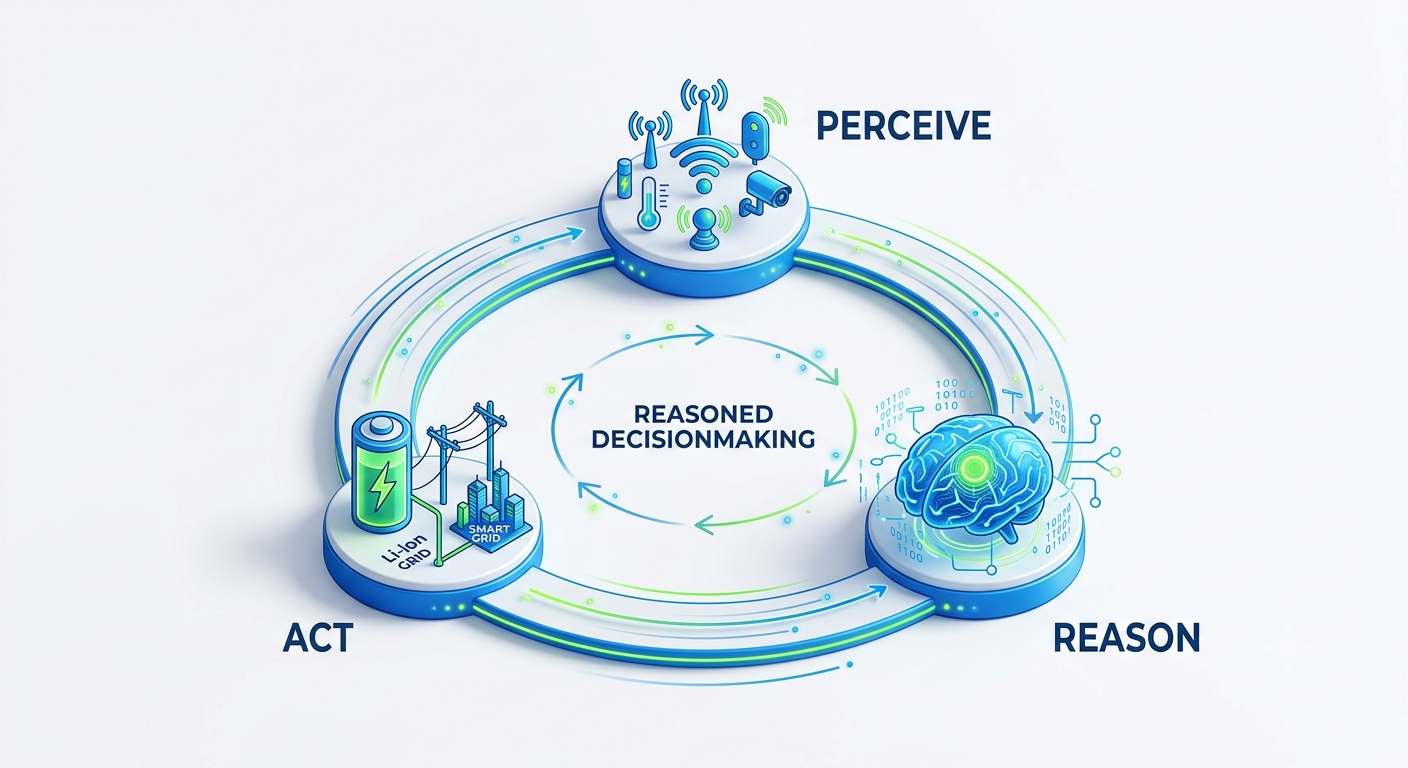
Rather than one AI trying to do everything, the system splits responsibility across specialized agents that communicate constantly:
The Monitoring Agent — the safety net. It watches for early signs of thermal runaway before it becomes dangerous.
The Forecasting Agent — uses LSTM neural networks to predict how much renewable power will be generated and where market prices are headed.
The Strategy Agent — the lead orchestrator. It takes high-level goals from a human operator and coordinates the other agents to achieve them.
The Grid-Interaction Agent — handles communication with the utility provider, managing demand-response signals so the battery system plays well with the wider grid.
What It’s Built On
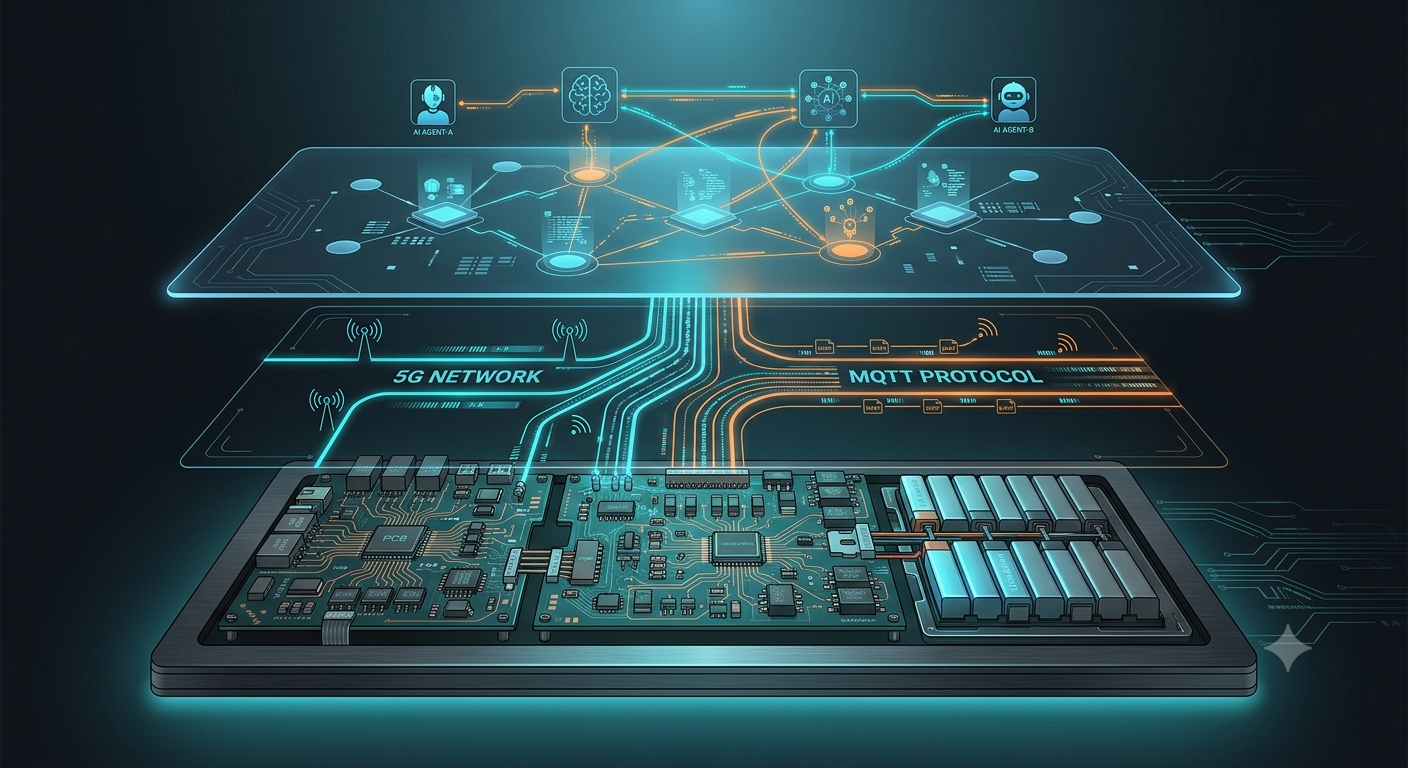
| Layer | Technologies |
|---|---|
| Hardware / IoT | ESP32, ARM Cortex-M, Modbus/CAN bus, LiFePO4 cells, smart inverters |
| Edge computing | NVIDIA Jetson Nano, AWS IoT Greengrass, EdgeX Foundry |
| Communication | MQTT, CoAP, 5G/LoRaWAN, Zigbee |
| AI / agent frameworks | LangChain, PyTorch/TensorFlow, AutoGPT, Microsoft AutoGen |
| Data & visualization | InfluxDB, Grafana, Azure Digital Twins |
The basic data flow: sensors collect readings → an edge gateway filters the data → AI agents in the cloud reason through it → the PCS executes commands → the system interacts with the grid or connected loads.
Where This Is Already Being Used
- Industrial peak shaving — factories discharge stored power during the most expensive tariff hours, with the Strategy Agent calculating exactly when, saving significant money on energy bills.
- Microgrid stability — in remote areas without constant human oversight, the system balances unpredictable solar input against local demand to keep power running around the clock.
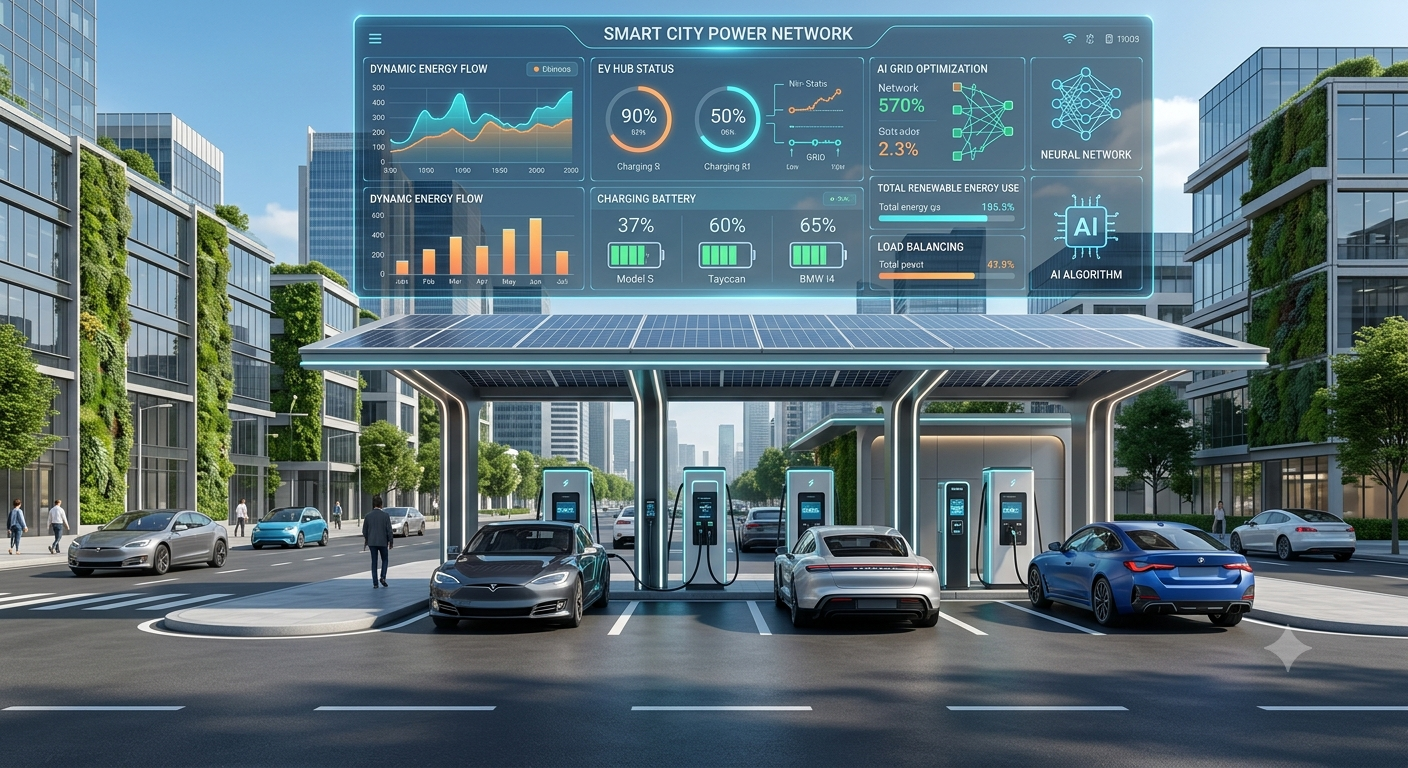
- EV charging hubs — agents coordinate multiple fast-chargers with the grid so that charging a fleet of vehicles doesn’t overload the local transformer.
Why This Matters Beyond the Tech
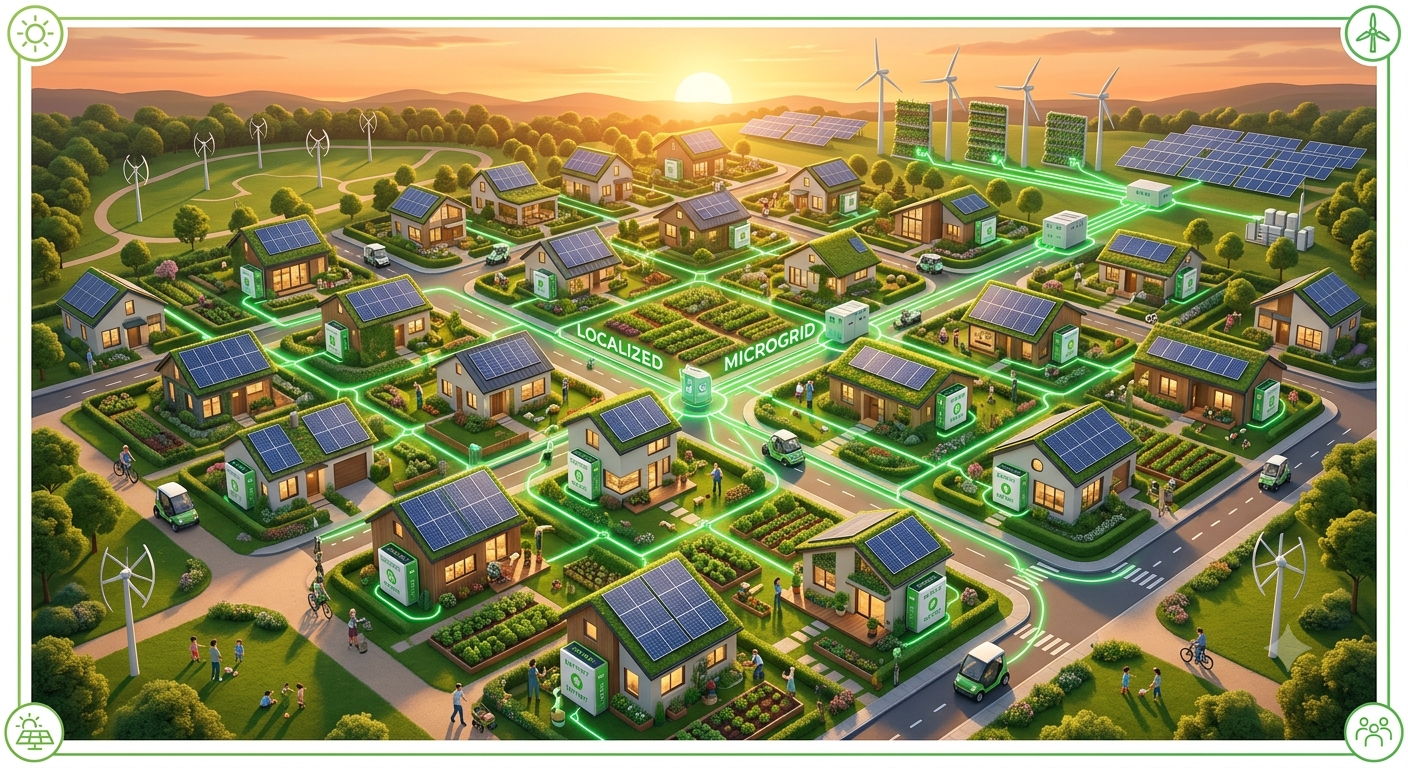
Energy democratization. When small-scale storage becomes efficient and autonomous, individual households can become “prosumers” — producing and consuming their own energy. Entire neighborhoods can form Virtual Power Plants, trading energy with each other and relying less on centralized, fossil-fuel-heavy utilities.
Environmental resilience. Precise thermal and charge management extends battery lifespan significantly, which means fewer replacements — and less strain from lithium mining and electronic waste.
Grid reliability. Traditional grids are vulnerable to cascading failures. Agentic AI can detect and isolate faults in milliseconds, far faster than any human operator — a real advantage for keeping hospitals and water treatment plants powered during natural disasters.
Economic efficiency. By optimizing when energy is bought, stored, and sold, these systems lower electricity costs for end users, while reducing the need for specialized manual oversight — making advanced energy infrastructure more accessible in developing regions too.
The Bigger Picture
Agentic AIoT isn’t just a smarter way to manage a battery — it’s a shift from “dumb” storage that follows fixed rules to intelligent energy assets that reason, plan, and adapt in real time. As the world leans harder into renewables, systems like this aren’t a nice-to-have; they’re becoming the infrastructure a genuinely sustainable, resilient grid depends on.
Based on research by Sai Naresh, Methodist College of Engineering and Technology (MCET).