

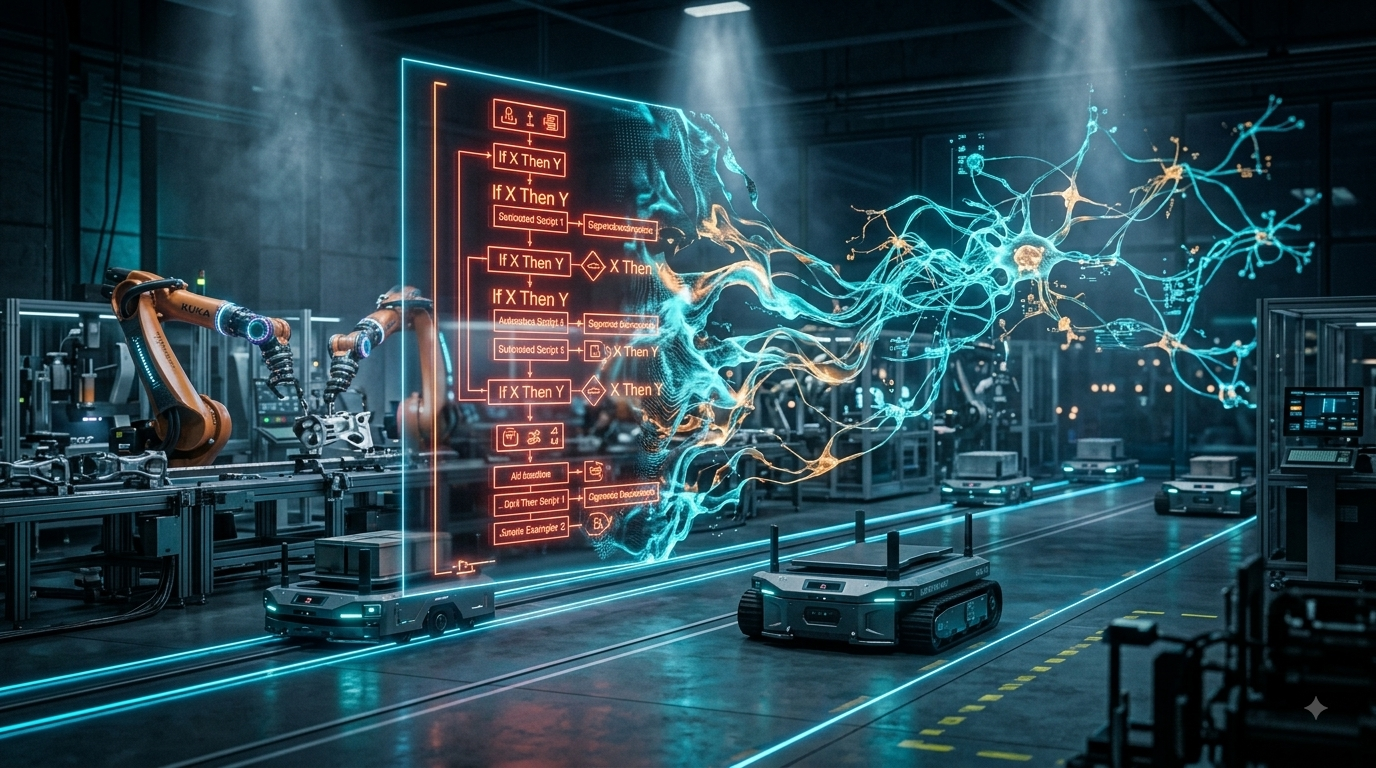
INTRODUCTION: THE END OF THE "IF-THEN" ERA
For decades, industrial automation has lived within the rigid cage of “if-then” logic. Traditional systems operate on fixed, pre-written scripts: if a sensor hits a specific thermal threshold, then a pre-programmed alarm sounds. While this reactive approach served the assembly lines of the 20th century, it is buckling under the weight of modern 5G networks and hyper-connected factories.We are entering the era of Agentic AI —a fundamental shift from passive software to autonomous actors. Unlike traditional AI that merely predicts, Agentic AI is defined by its ability to operate as a goal-driven, context-aware, and self-directed entity. These systems don’t just flag problems; they perceive their environment, reason through objectives, and act independently. From the factory floor to the cloud, the “script” is being replaced by “intent,” moving this technology from the realm of science fiction directly onto the production line.
BEYOND PREDICTION—THE BRIDGE TO INSTANT EXECUTION
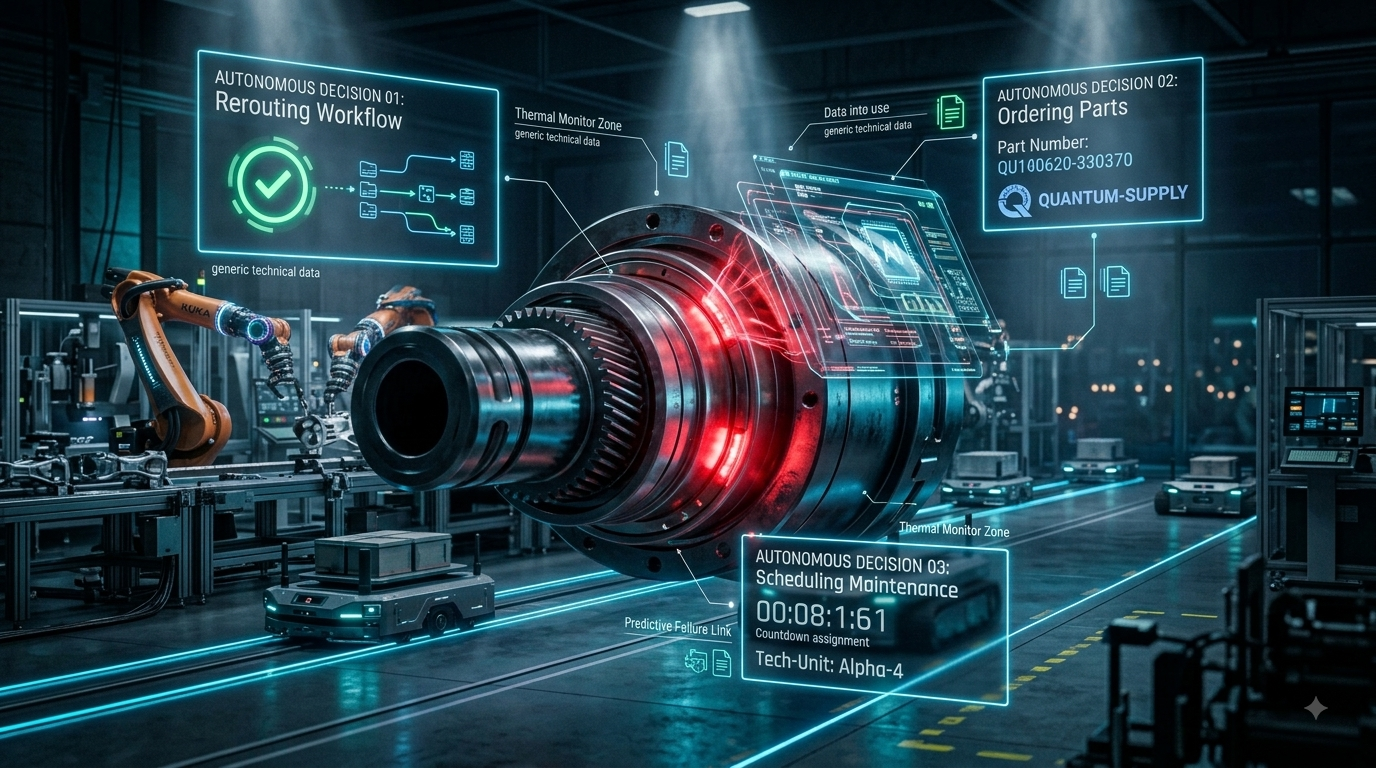
In manufacturing, the primary bottleneck for industrial resilience has long been “response lag.” Conventional analytics are excellent at identifying an anomaly, but they traditionally require a human in the loop to interpret data and initiate a response. This delay—the time between identifying a failing spindle and actually pausing the line—often results in cascading equipment damage.Agentic AI bridges this gap by moving manufacturing from simple prediction to operational execution. This shift effectively transforms the machine from a static piece of Capital Expenditure (CapEx) into an autonomous, self-maintaining service (OpEx). When an agentic system detects degradation, it doesn’t just send an alert; it evaluates current plant conditions—such as technician availability and spare parts inventory—to take the most efficient autonomous path.”Agentic systems bridge this gap between prediction and action; when an anomaly is detected, the system uses an agent to carry out one of four functions: schedule maintenance, reprioritise workflow, order replacement parts, or re-route production flow.”
THE "ZERO-TOUCH" REVOLUTION IN TELECOMMUNICATIONS
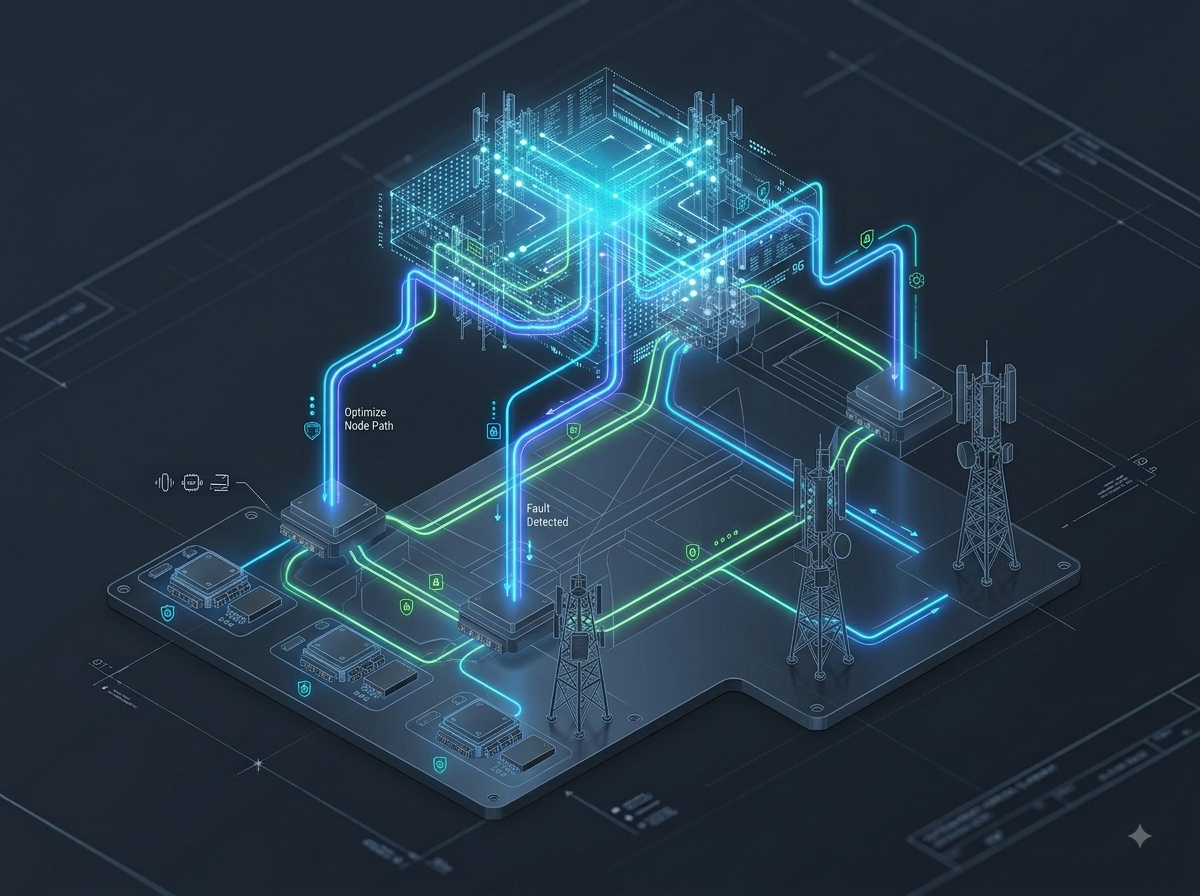
Modern telecommunications, specifically 5G and 6G networks, have reached a level of complexity where centralized, rule-based management is no longer adequate. To meet the demands of ultra-low latency and massive device connectivity, the industry is pivoting toward “Zero-Touch Management.”The engines behind this revolution are Reinforcement Learning (RL) and Digital Twins . By using RL, agentic systems can negotiate and collaborate across heterogeneous domains to resolve faults without human intervention. These agents use Digital Twins to virtually simulate and evaluate potential optimizations before execution, allowing for a proactive, self-healing network architecture that functions far more efficiently than any human-managed script.”Agentic AI systems are characterized by their ability to operate as goal-driven, context-aware, and self-directed entities capable of making real-time decisions, learning from interactions, and collaborating or negotiating with other agents to fulfill complex objectives.”
THE DRAMATIC MATH OF AUTONOMY (43% LESS DOWNTIME)
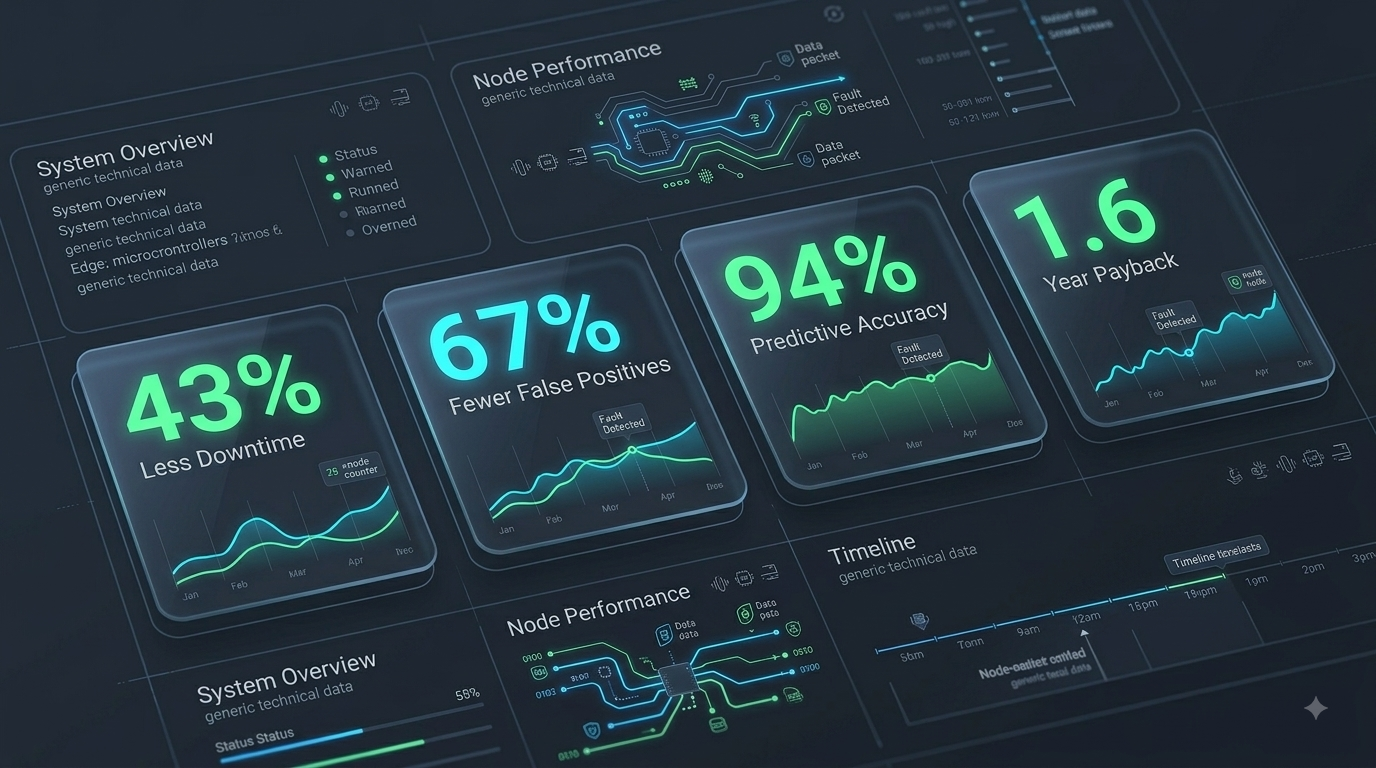
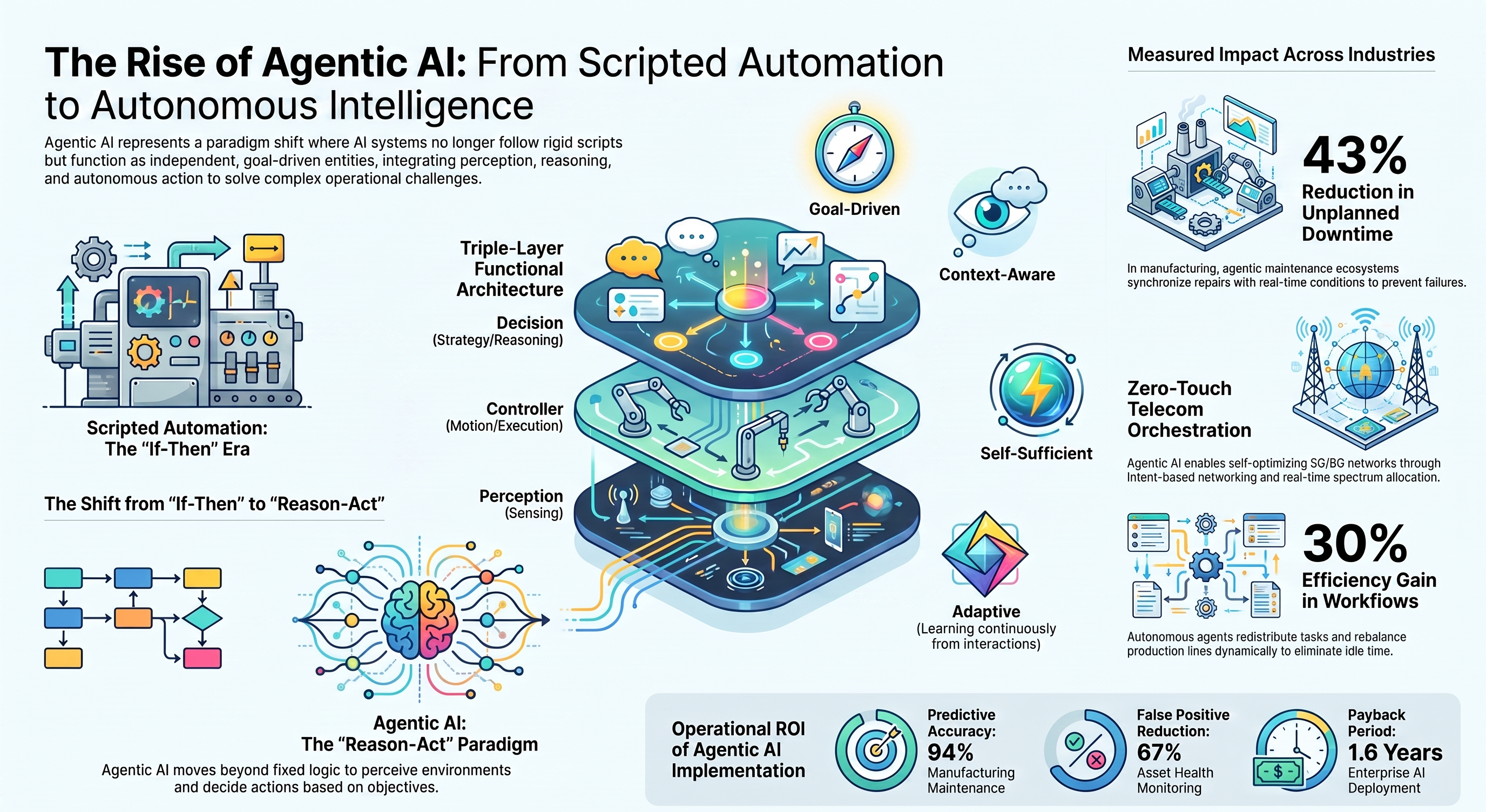
The strategic shift toward agentic systems is driven by hard financial reality. Shifting maintenance from a “support function” to a “core driver of operational continuity” yields massive dividends. When agents coordinate decision-making across shifts and plants, they eliminate the friction of manual oversight.The ROI is concrete: implementations show a net present value (NPV) estimated at 447k euros over 5 years . Beyond the bottom line, the dramatic math of autonomy includes:
43% reduction in unplanned downtime through coordinated decision-making.
67% reduction in false positives in anomaly detection.
94% predictive accuracy when agentic models are paired with plant data systems.
1.6 years average payback period for enterprise implementation.
ROBOTS AS "NERVOUS SYSTEMS," NOT TOOLS
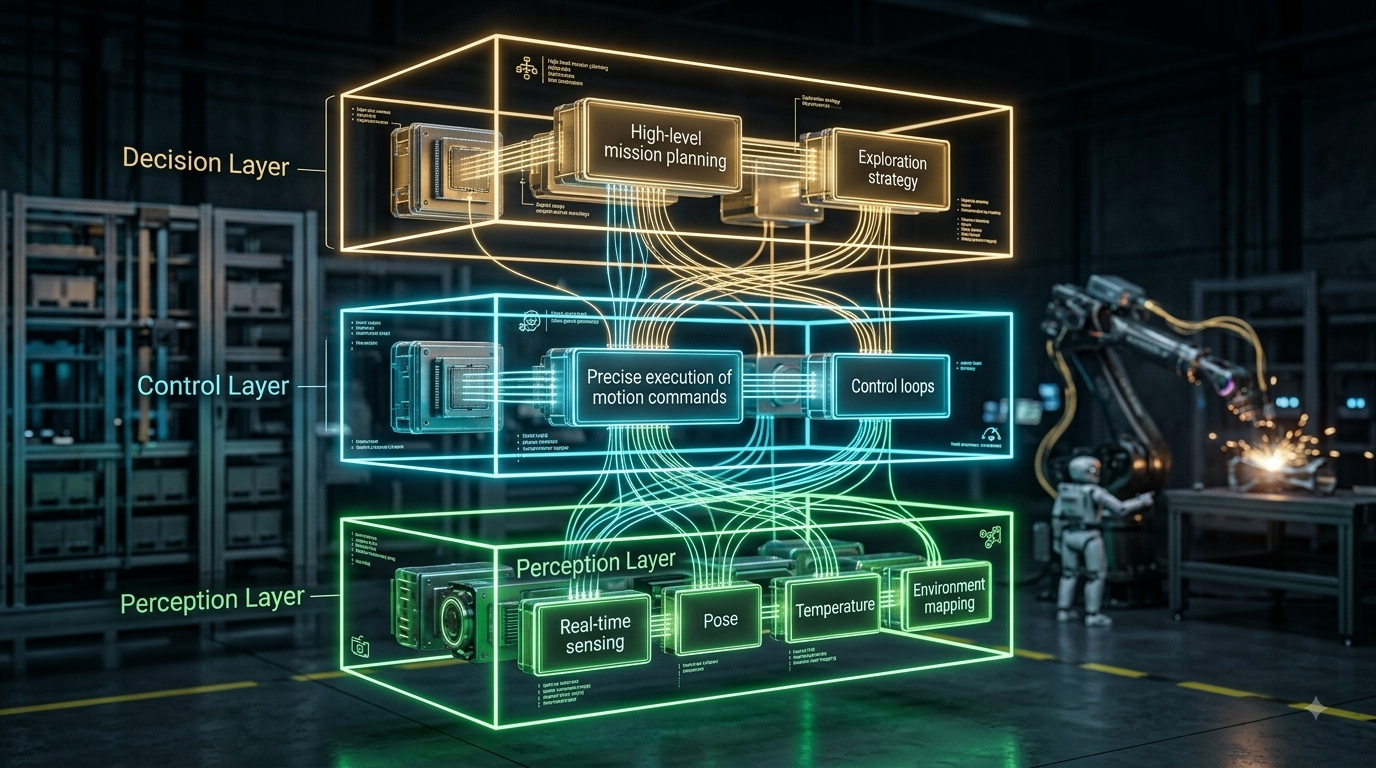
We are witnessing a shift where robots are no longer viewed as rigid, scripted tools, but as “networks of networks.” In this paradigm, a robot’s communication bus functions as a nervous system, with computational nodes acting as neurons. For these systems to behave coherently in unpredictable environments, their behavior must be deterministic , ensuring that timing and reliability are guaranteed even as the robot reasons through new challenges.To implement this, senior strategists are adopting a Three-Layer Architecture :
Decision Layer: High-level mission planning and exploration strategy.
Control Layer: Precise execution of motion commands (outer and inner control loops).
Perception Layer: Real-time sensing of the environment (e.g., pose, temperature).”Robot brains are built with this same philosophy. Behaviors take the form of computational graphs, with data flowing between nodes, across physical networks (communication buses) and while mapping to underlying sensors, computing technologies and actuators.”
THE RISE OF INTENT-BASED AUTOMATION
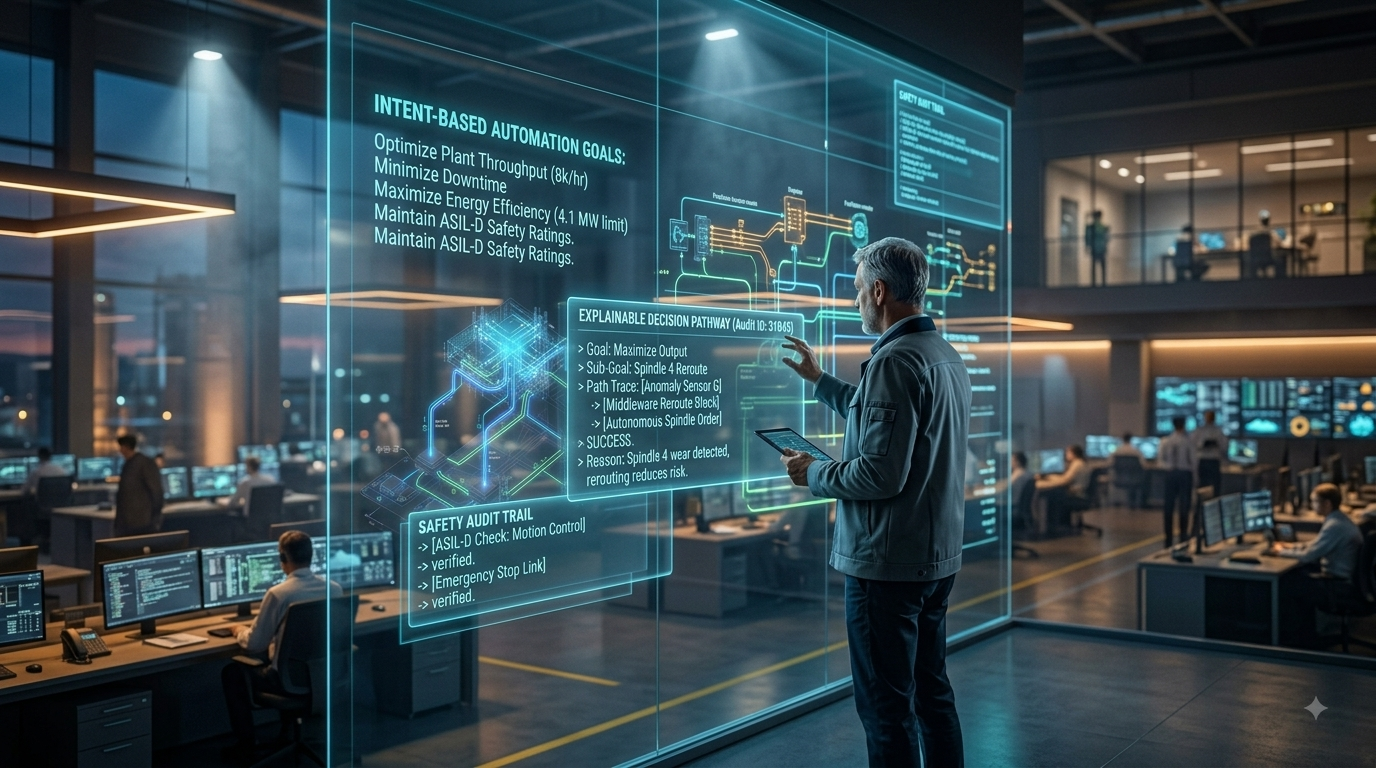
The most profound change in the industrial landscape is the move toward Intent-Based Automation . Human operators no longer define step-by-step processes; instead, they set “outcomes” or “goals.” The agents then determine the best execution paths autonomously.This necessitates a new era of Human-Agent Collaboration . In high-stakes industrial environments, “Explainability” is not just a buzzword for trust—it is a functional requirement for debugging and accountability . By utilizing transparent decision logs , operators can audit why an agent chose a specific path, ensuring that autonomous actions remain aligned with enterprise safety and strategic goals.
CONCLUSION: THE AGE OF THINKING MACHINES
The transition from rule-based automation to cognitive, self-improving systems marks a turning point in industrial history. We are moving from teaching machines how to do a task to telling them what needs to be achieved. As these agents integrate across ERP, IoT, and 5G environments, the boundary between digital intelligence and physical action will effectively vanish.The age of thinking, acting machines is here. As we delegate the operational load to these autonomous ecosystems, one philosophical challenge remains for every leader: Are we prepared for a future where the machines we built to serve us have the autonomy to decide the best way to do so?