

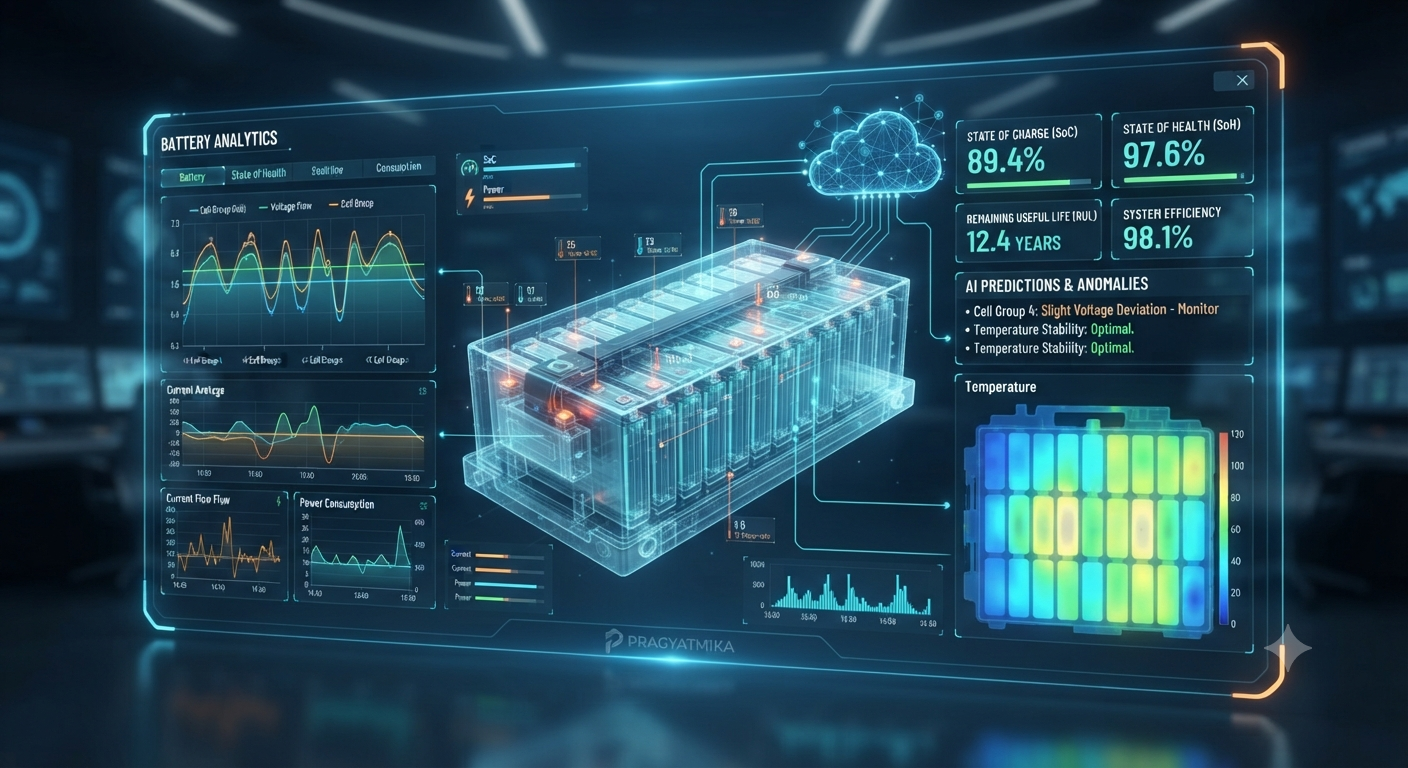
Batteries have quietly become the most important component in modern life — powering everything from the phone in your pocket to the car in your driveway to the grid that keeps the lights on. But a battery is a chemical system, not just an electrical one, and chemical systems degrade, overheat, and occasionally fail in dangerous ways. That’s exactly the problem battery analytics exists to solve.
What Is Battery Analytics?
Battery analytics is the practice of continuously collecting, processing, and interpreting data from a battery — voltage, current, temperature, internal resistance, charge/discharge cycles — to understand its real-time condition and predict how it will behave in the future. Instead of treating a battery as a black box that either “works” or “doesn’t,” analytics turns it into a monitored, quantifiable system.
At its core, battery analytics answers three questions continuously:
- State of Charge (SoC) — how much energy is available right now
- State of Health (SoH) — how much capacity and performance the battery has lost over its life
- Remaining Useful Life (RUL) — how much longer the battery can be expected to perform safely and reliably
Getting these three numbers right is the difference between a battery that quietly serves its purpose for years and one that fails unexpectedly — sometimes catastrophically.
The Role of IoT and AI in Battery Analytics
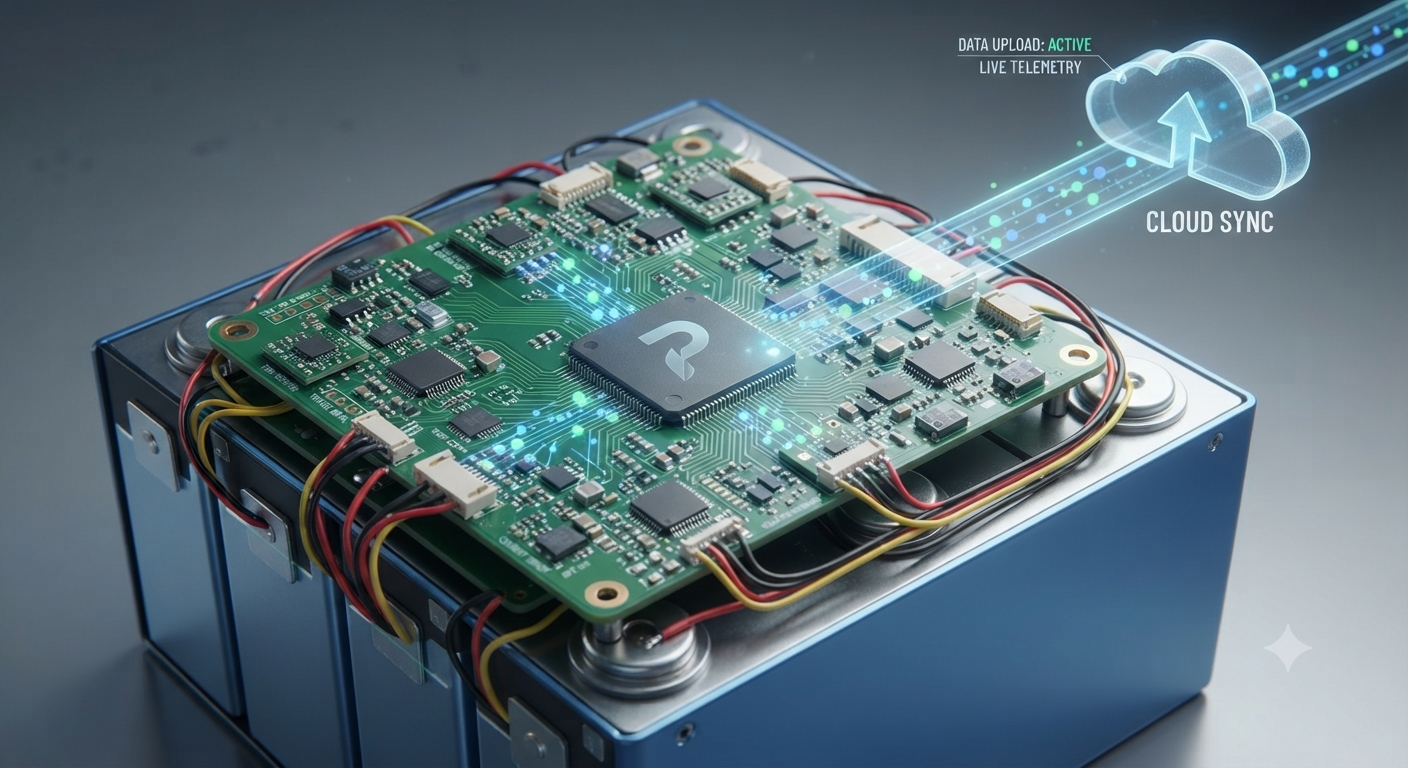
On their own, sensors just produce numbers. IoT and AI are what turn those numbers into insight and action.
IoT is the nervous system — a network of sensors (voltage, current, temperature, pressure) embedded directly in or around the battery pack, continuously streaming data to a local controller or the cloud. This is what makes real-time, remote battery visibility possible in the first place, whether the battery is sitting in a warehouse or driving down a highway a thousand miles away.
AI is the brain that makes sense of that stream. Machine learning models trained on historical battery behavior can spot subtle patterns that precede a problem — a slightly abnormal voltage curve, a temperature rise that doesn’t match the load, a charging pattern that deviates from the norm — often long before the issue becomes visible or dangerous. This is what shifts battery management from reactive (fix it after it fails) to predictive (catch it before it fails).
Put together, IoT plus AI is what people increasingly call AIoT — Artificial Intelligence of Things — and it’s rapidly becoming the standard architecture for any serious battery monitoring system, whether in a single EV or an entire grid-scale storage facility.
How This Helps Battery Manufacturing
Manufacturing is where battery analytics starts paying off before a battery ever reaches a customer. During production, sensors and AI models can:
- Flag manufacturing defects (weak cells, inconsistent capacity, poor connections) before they leave the factory
- Predict which cells are likely to degrade faster, allowing better quality sorting and matching within a pack
- Optimize formation and testing cycles, reducing wasted time and energy during production
- Feed real-world field data back into design improvements for the next generation of cells
Essentially, analytics turns manufacturing from a fixed, one-size-fits-all process into something that continuously improves based on real performance data — both from the production line and from batteries already out in the field.
Is This Also Used in Battery Storage?
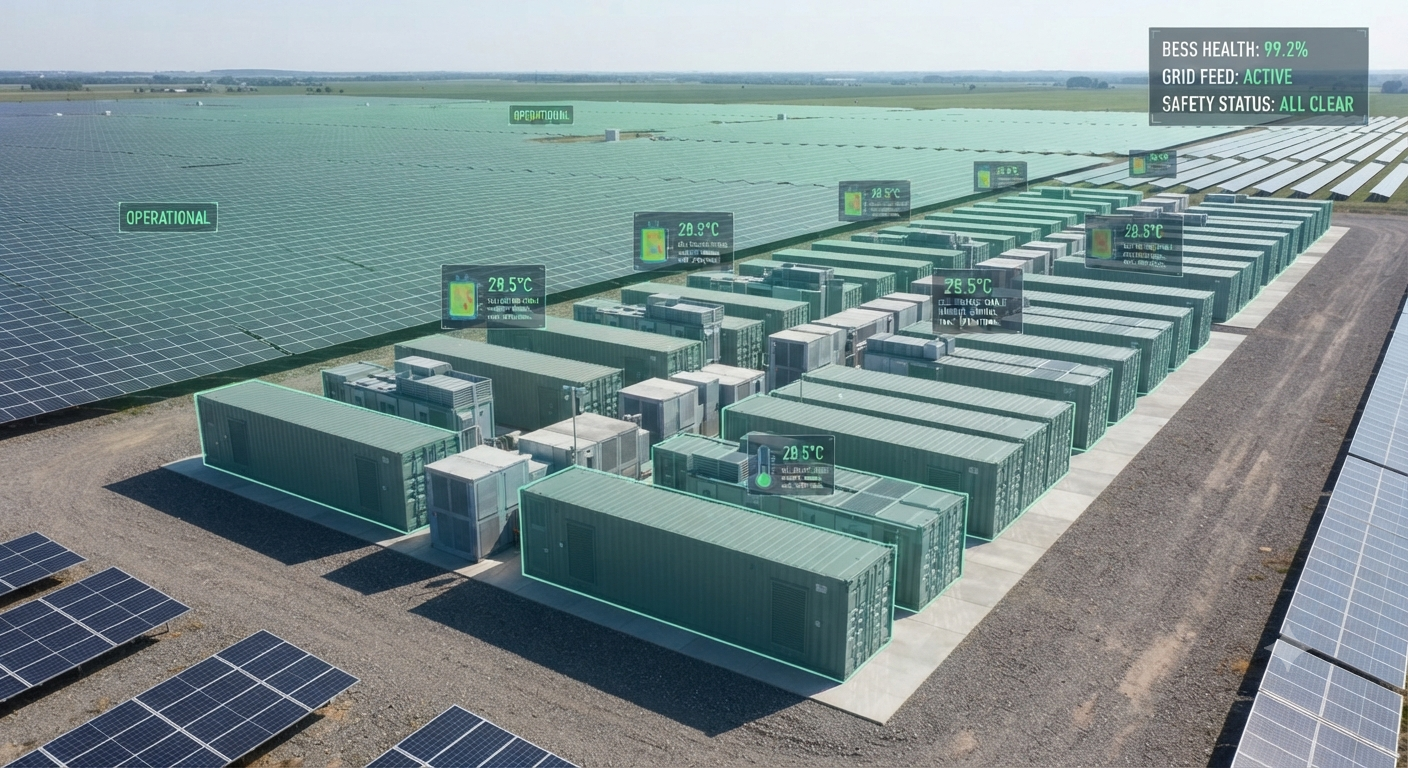
Yes — and arguably it matters even more here. Large-scale Battery Energy Storage Systems (BESS) used in solar farms, wind installations, and grid infrastructure involve hundreds or thousands of individual cells operating together. At that scale, manual monitoring simply isn’t feasible.
Battery analytics in storage applications is used to:
- Track the health of individual cells within a massive pack, not just the pack as a whole
- Detect early signs of thermal runaway — the chain reaction that leads to battery fires — before it becomes uncontrollable
- Optimize charge and discharge cycles to extend the system’s overall lifespan
- Balance load across cells so no single unit is overworked while others sit idle
Given how much energy is concentrated in a storage facility, catching a developing fault early isn’t just about saving money — it’s a genuine safety requirement.
How Pragyatmika Supports Battery Manufacturers on Battery Electronics
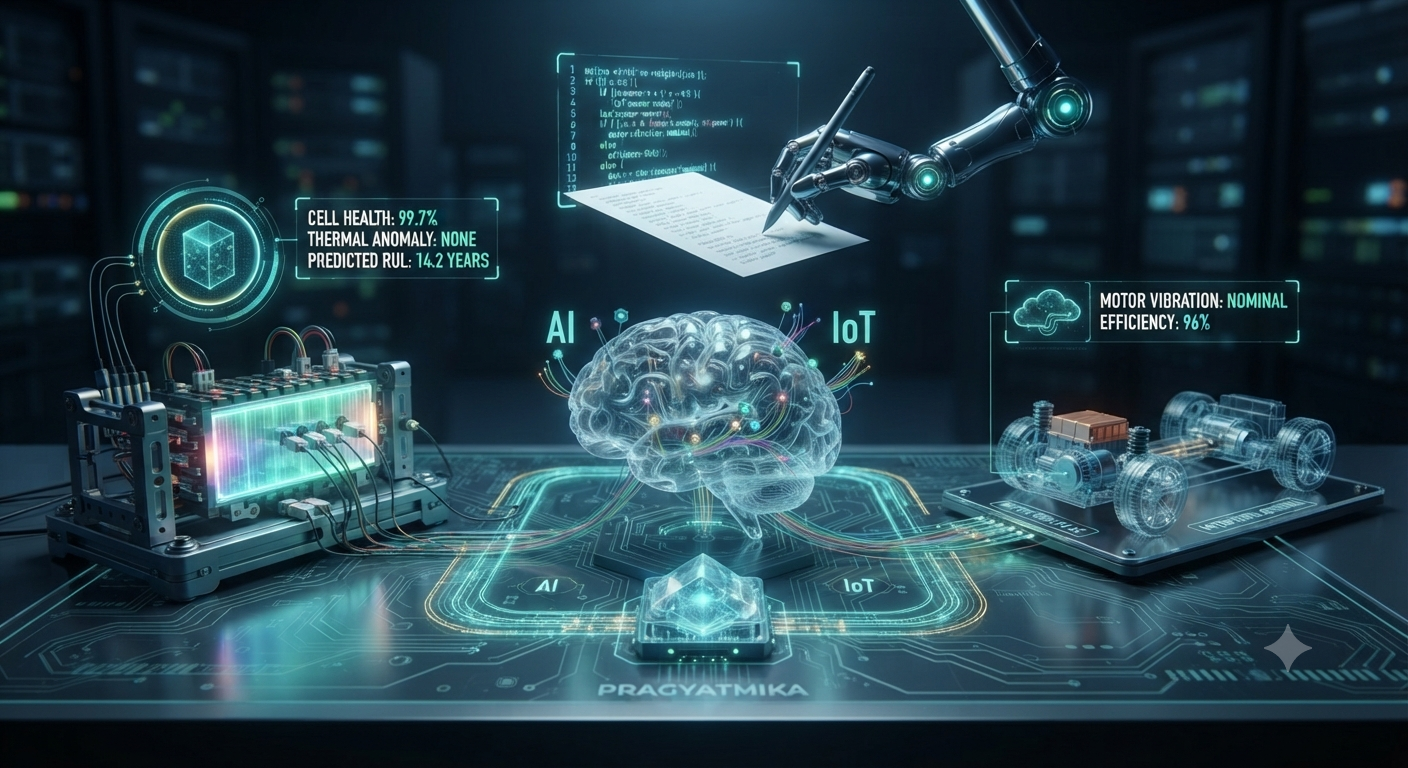
Pragyatmika is an India-based technology training and consultancy organization focused specifically on the electronics, IoT, and AI layers that sit around a battery cell — the parts that turn raw chemistry into a safe, smart, connected product.
Their work in this space centers on Li-ion Battery Electronics and BMS (Battery Management System) Design, covering the full stack a manufacturer actually needs:
- Cell selection, characterization, and testing
- Battery pack design — electrical, thermal, and mechanical
- BMS hardware and firmware development, including cell balancing and safety cutoffs
- Functional safety practices aligned with standards like ISO 26262
- IoT and cloud integration for remote battery diagnostics
- Data analytics for interpreting battery performance and safety data at scale
Rather than treating these as separate disciplines, Pragyatmika’s approach ties embedded electronics, IoT connectivity, and AI-driven analytics together — which reflects how modern battery manufacturers actually need to build products today: not just a cell, but a monitored, intelligent, connected system around it.
How Battery Analytics Helps in Vehicle Health Monitoring
In an electric vehicle, the battery isn’t the only thing that needs watching — but it’s usually the most critical. Battery analytics feeds directly into a vehicle’s overall health monitoring system by continuously tracking:
- Charging and discharging behavior across every trip
- Temperature trends under different driving conditions
- Gradual capacity loss over the vehicle’s lifetime
- Sudden anomalies that could indicate a developing fault
This data typically flows into onboard dashboards and connected mobile apps, giving drivers early warnings — reduced range, unusual charging behavior, temperature alerts — well before a problem becomes a breakdown or, worse, a safety incident.
Battery Analytics and Motor Failure Prediction: Working Together to Prevent Hazards
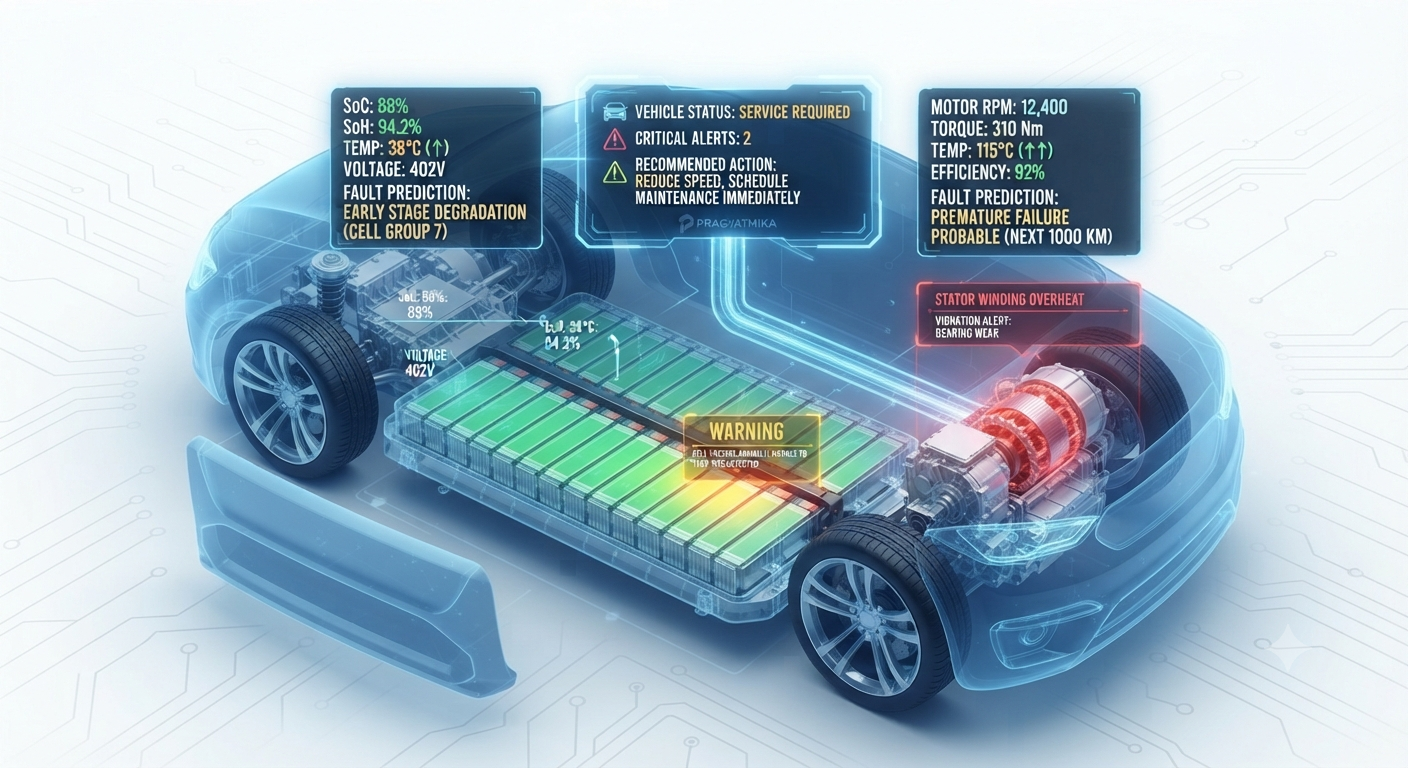
A vehicle isn’t just a battery — it’s a battery and a motor working in constant coordination, and problems in one often show up as stress on the other. This is where combining battery analytics with motor failure prediction becomes genuinely powerful.
For example: a motor drawing more current than expected to maintain the same speed can indicate mechanical wear — but it also puts additional strain on the battery, accelerating degradation and heat buildup. Analyzed separately, each signal might look minor. Analyzed together, the pattern can reveal a developing fault well before either component actually fails.
This combined approach helps prevent real-world hazards:
- Thermal events — catching abnormal heat buildup in either the battery or motor before it escalates
- Sudden power loss — predicting degradation trends before they cause an unexpected shutdown mid-drive
- Electrical faults — identifying wiring or connection issues that stress both systems simultaneously
The result is a vehicle that doesn’t just react to failure — it anticipates it, giving drivers and fleet operators the chance to intervene before a mechanical issue becomes a safety issue.
Pragyatmika's Work on Vehicle Health Monitoring
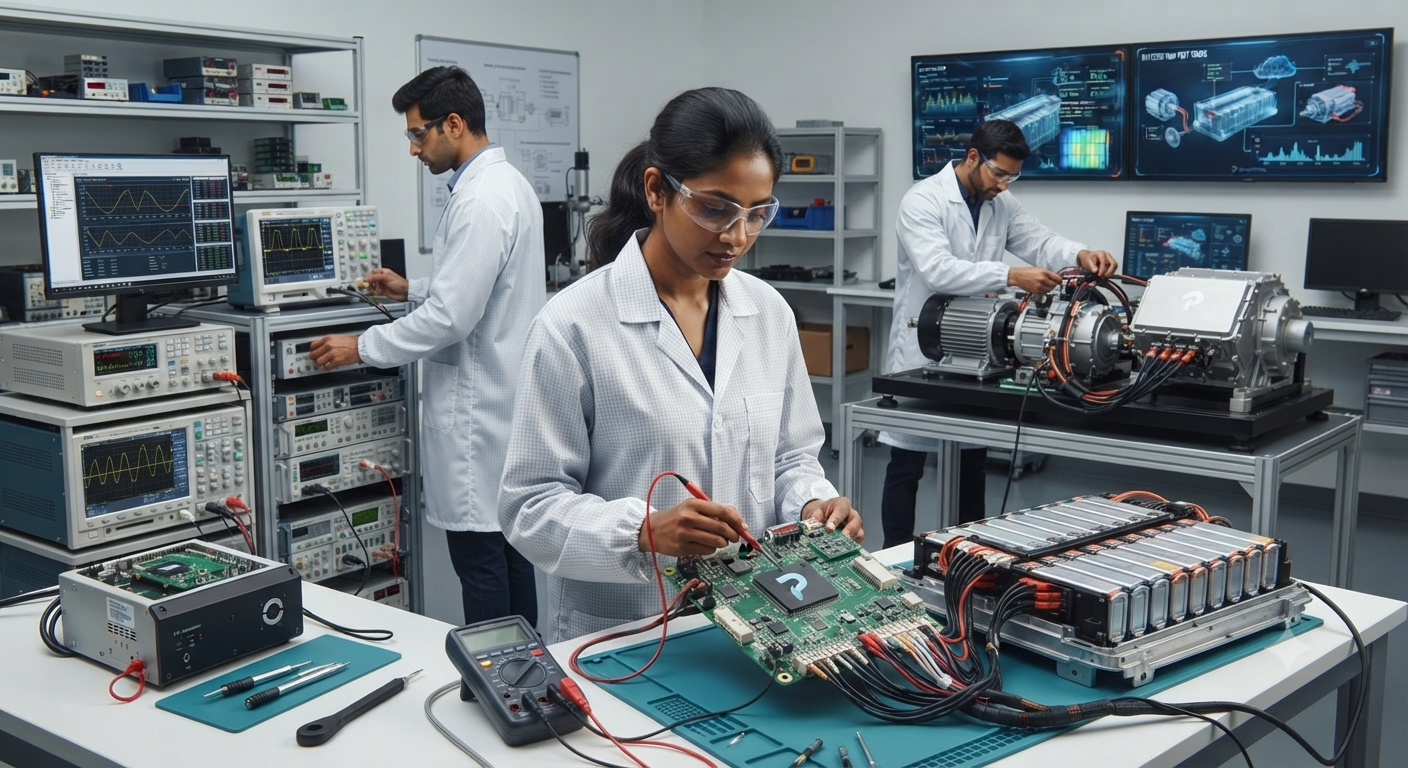
Pragyatmika’s EV engineering programs are built around this exact intersection — batteries, motors, and the embedded electronics that connect them. Their training and consultancy work covers areas including electric vehicle systems engineering, autonomous ground EV development, and the broader embedded systems and IoT foundation that any vehicle health monitoring platform depends on.
Their approach treats the vehicle as a connected system rather than isolated parts — battery electronics, motor control, and IoT-based diagnostics designed to work together rather than being bolted on separately after the fact.
Why Pragyatmika Is Positioned to Bring Embedded Systems, IoT, AI, Battery, and EV Together for Complete Vehicle Security
Vehicle security — in the sense of physical safety, not just cybersecurity — depends on multiple systems talking to each other reliably. Pragyatmika’s scope of work spans exactly the disciplines this requires:
- Embedded systems — the microcontrollers and firmware that directly control safety-critical functions
- IoT — the connectivity layer that lets a vehicle report its condition in real time
- AI and data analytics — the intelligence layer that turns raw sensor data into early warnings
- Battery electronics and BMS — the foundation of safe energy storage and delivery
- EV systems engineering — the integration layer that ties all of the above into a working vehicle
Because their training and consultancy work spans all of these areas rather than just one, the practical value is in the integration — designing a vehicle’s safety systems as one coordinated whole, rather than a battery team, a motor team, and a software team each solving their piece in isolation.
How Battery Analytics Helps in Storage — Financially and Operationally
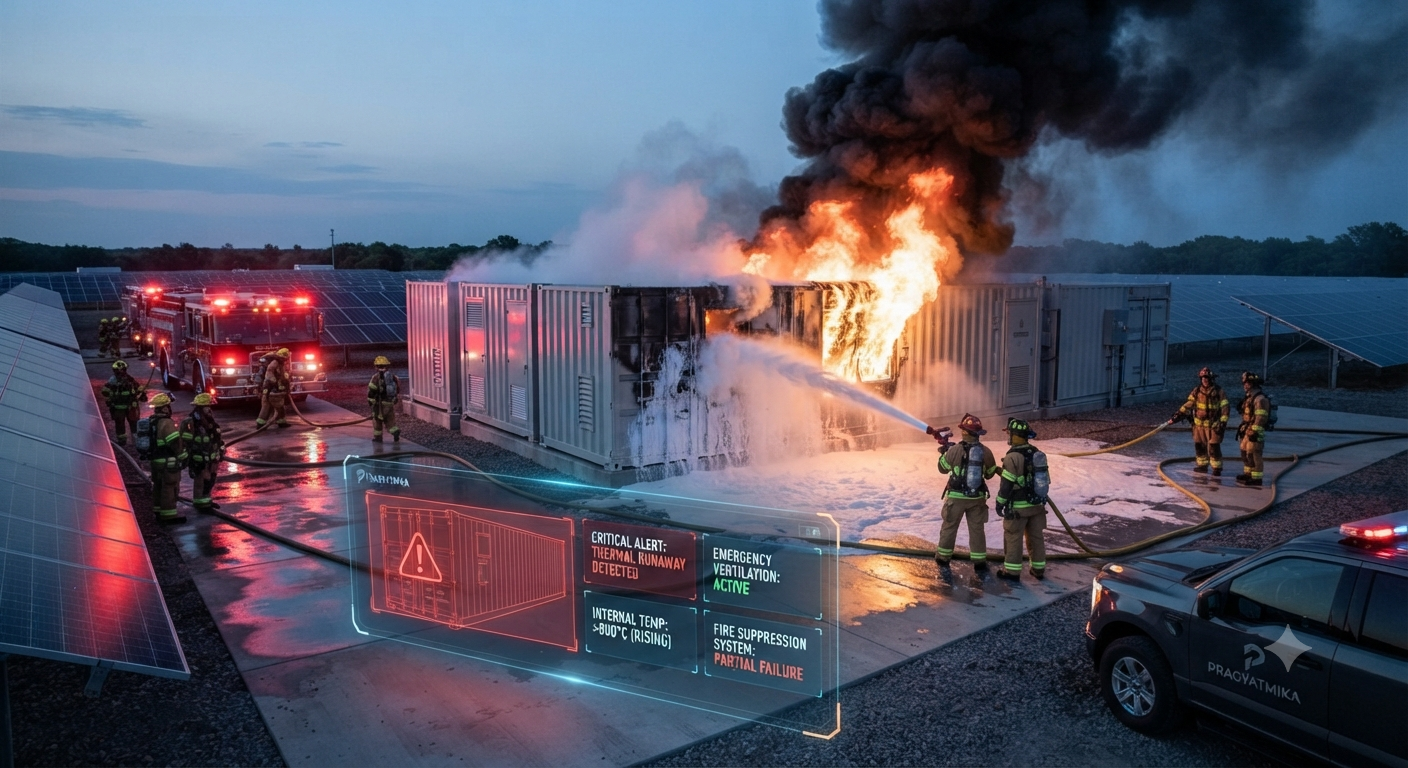
Beyond safety, battery analytics has a direct financial case for both manufacturers and operators of storage systems, and it shows up in a few clear ways.
Extended battery lifespan. By avoiding overcharging, deep discharging, and excessive heat, analytics-driven management can meaningfully extend how long a storage system stays productive — delaying the single biggest cost in any storage project: battery replacement.
Reduced downtime. Predictive maintenance means faults get caught and addressed before they cause an outage, rather than after — which matters enormously for systems tied to critical infrastructure or revenue-generating operations.
Lower insurance and compliance costs. Demonstrable, data-backed safety monitoring is increasingly expected — and sometimes required — for large-scale storage installations, and can directly affect insurance terms.
How This Helps Solar and Grid Energy Suppliers
For solar and other renewable energy providers, storage is the piece that makes intermittent generation actually useful — and battery analytics is what makes that storage trustworthy at scale.
- Better energy forecasting. Knowing the real, current state of health of storage batteries — not just their rated capacity — allows more accurate planning for how much energy can be stored and released.
- Smarter grid balancing. Analytics-driven insight into battery condition helps operators decide when to charge, discharge, or hold, optimizing for both grid stability and energy pricing.
- Fewer catastrophic failures. Given how much energy a grid-scale storage facility holds, early fault detection isn’t optional — it’s central to keeping the facility, and everyone near it, safe.
- Stronger revenue protection. Every hour a storage system is offline due to an undetected fault is lost revenue and reduced grid reliability; predictive analytics directly protects against that.
How Pragyatmika Helps in Battery Storage and EV Maintenance

Incidents like a battery pack catching fire — whether in a parked EV or inside a storage facility — are exactly the scenarios that good battery electronics, monitoring, and maintenance practices are designed to prevent. This is where Pragyatmika’s training and consultancy work is most directly relevant.
For battery storage systems, Pragyatmika’s programs cover the design and safety practices that reduce the risk of the kind of thermal events that lead to fires:
- BMS design with proper cell balancing and overcharge/over-discharge protection, so no individual cell is pushed past a safe limit
- Thermal management (BTMS) design principles that keep pack temperature within safe operating bounds
- IoT-based remote monitoring so storage operators can see abnormal voltage or temperature trends before they escalate
- Functional safety practices (aligned with standards like ISO 26262) built into the BMS from the design stage, not added as an afterthought
For EV maintenance, the same foundation applies at the vehicle level. Pragyatmika’s EV systems engineering and battery electronics training covers how to build in the diagnostic and monitoring capability that makes proactive maintenance possible — tracking cell health, catching early signs of degradation or damage, and flagging abnormal charging behavior before it turns into a safety event. The goal is straightforward: a properly designed and monitored battery system should catch a developing fault long before it becomes the kind of failure that ends in a vehicle fire.
In both cases, the underlying philosophy is the same — safety isn’t something you inspect for after the fact, it’s something you design into the electronics, firmware, and monitoring systems from day one.
The Bigger Picture
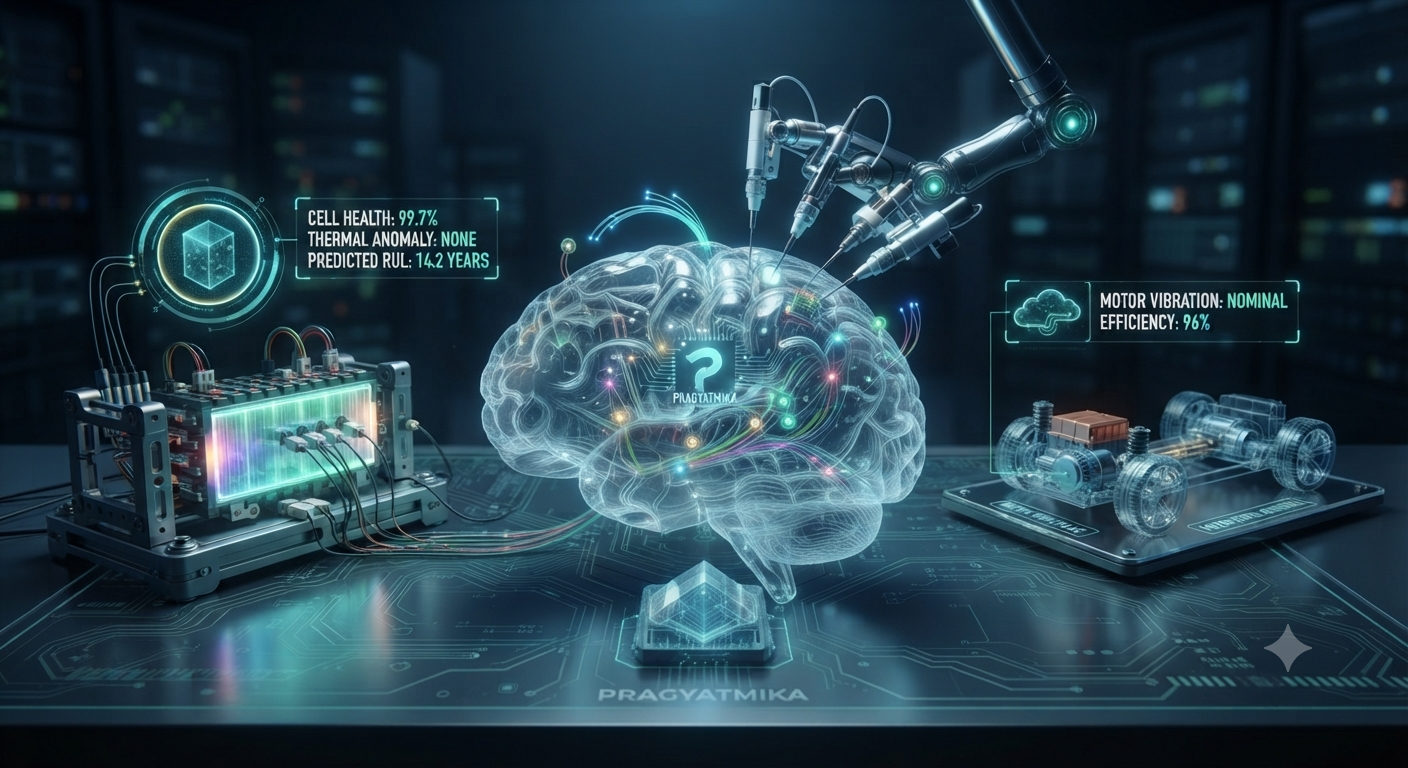
Battery analytics, powered by IoT and AI, is quietly becoming the connective tissue between battery manufacturing, electric vehicles, and renewable energy storage. It’s the difference between a battery that simply exists and one that’s actively monitored, understood, and protected throughout its life — which matters just as much for a single EV owner as it does for a utility-scale solar farm.
As demand for batteries keeps climbing across every one of these sectors, the organizations and engineers who understand this full stack — embedded electronics, IoT connectivity, AI-driven analytics, and the physical battery and vehicle systems themselves — are the ones positioned to build genuinely safer, longer-lasting, and more financially sound energy systems.
White canes and guide dogs are proven, but limited — they can’t identify objects, read text, recognize a face, or explain what’s happening around someone in real time. Even most existing “smart” assistive devices just relay sensor data without actually reasoning about it.
Agentic AI changes that. Instead of just detecting “object nearby,” the system can understand context, learn a person’s habits over time, and proactively offer help — like noticing someone’s in the kitchen at breakfast time and suggesting what’s available to eat, without being asked.