

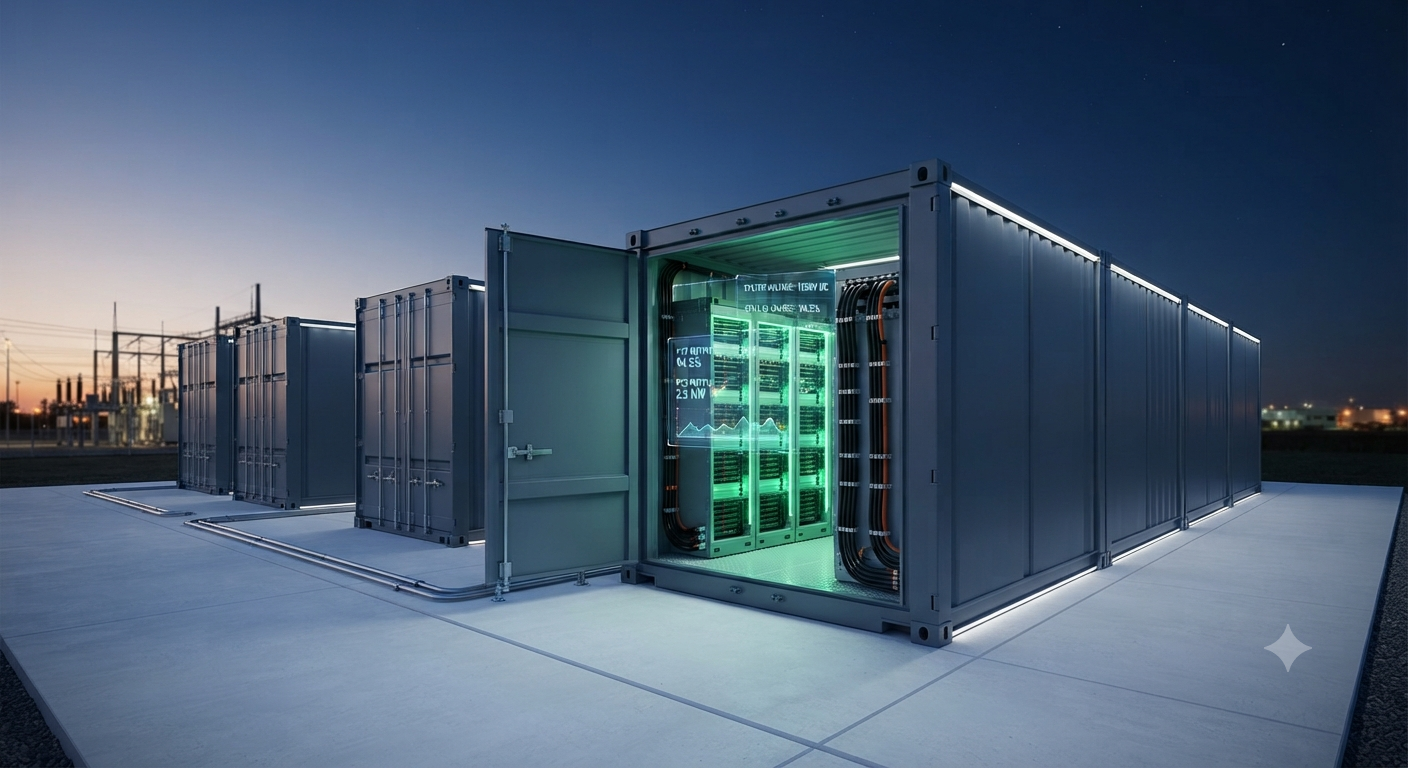
The Shipping Container Illusion
To the casual observer, a utility-scale Battery Energy Storage System (BESS) looks like a static row of shipping containers — silent, metallic, and inert. That visual is deceptive. Under the surface, a BESS isn’t a simple box of batteries at all; it’s a precisely orchestrated assembly of hardware and software subsystems working in constant coordination.
As the global energy landscape shifts toward intermittent renewable sources like wind and solar, the grid needs more than just raw storage capacity — it needs smarter, more decentralized infrastructure. To understand where clean-tech is headed, it helps to look past the steel exterior and recognize the BESS for what it actually is: an almost biological industrial machine, built to store, convert, and dispatch energy on a microsecond’s notice.
1. It’s an Organism, Not a Box
/*! elementor – v3.7.4 – 31-08-2022 */
.elementor-widget-image{text-align:center}.elementor-widget-image a{display:inline-block}.elementor-widget-image a img[src$=”.svg”]{width:48px}.elementor-widget-image img{vertical-align:middle;display:inline-block} 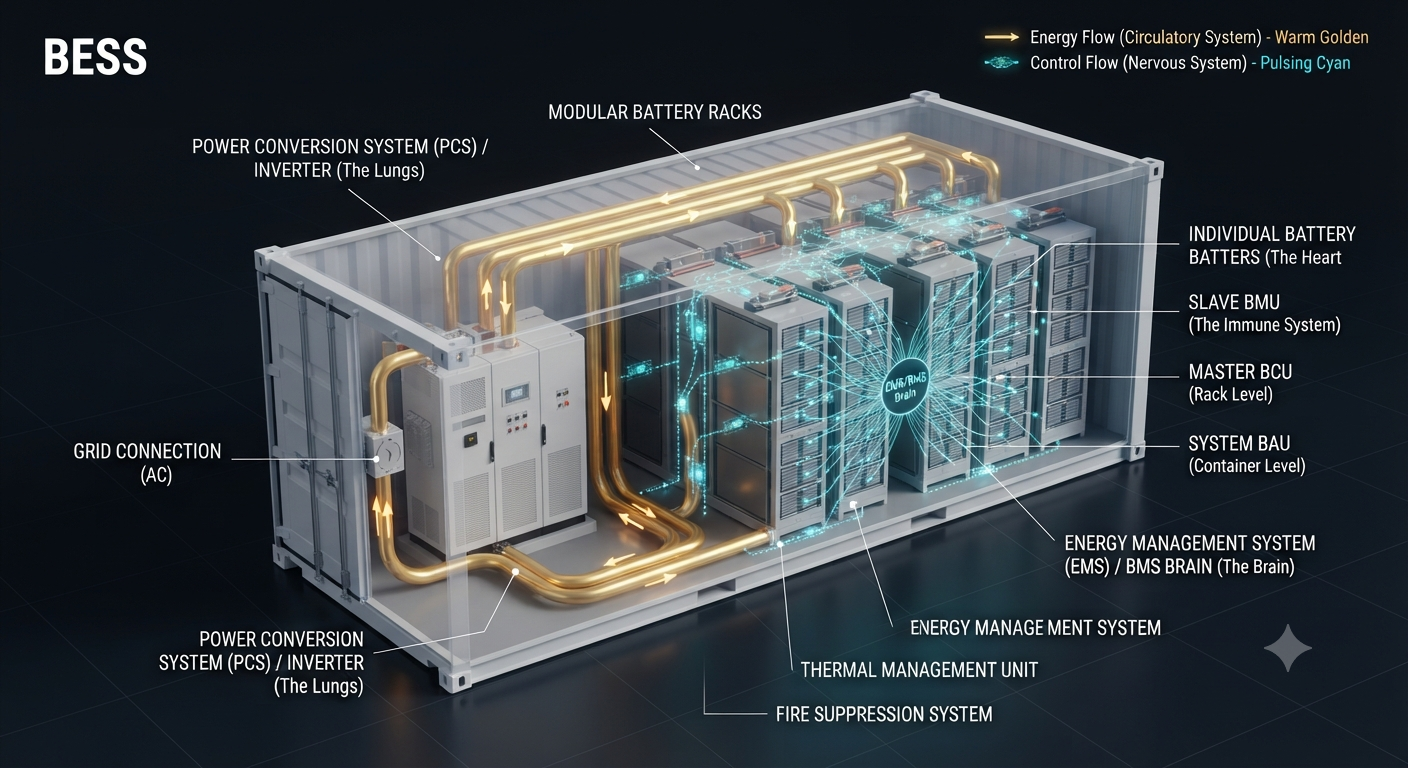
A BESS behaves less like a warehouse and more like a living organism. To understand its architecture, it helps to trace two parallel flows through the system. The energy flow is the physical circulatory system — grid, to transformer, to Power Conversion System, to battery racks. The control flow is the nervous system — Energy Management System, to Battery Management System, down to individual cells.
The industry has settled on a fittingly biological way to describe these relationships: think of the battery as the heart, storing energy; the PCS as the lungs, exchanging energy with the outside world; the BMS as the immune system, protecting every individual cell; and the EMS as the brain, making the strategic decisions. In this model, thermal management and fire suppression play the role of the body’s temperature regulation and external defenses — keeping the organism alive through the harsh, 20-year stress test of a utility Power Purchase Agreement (PPA).
2. The Million-Dollar Percentage Point
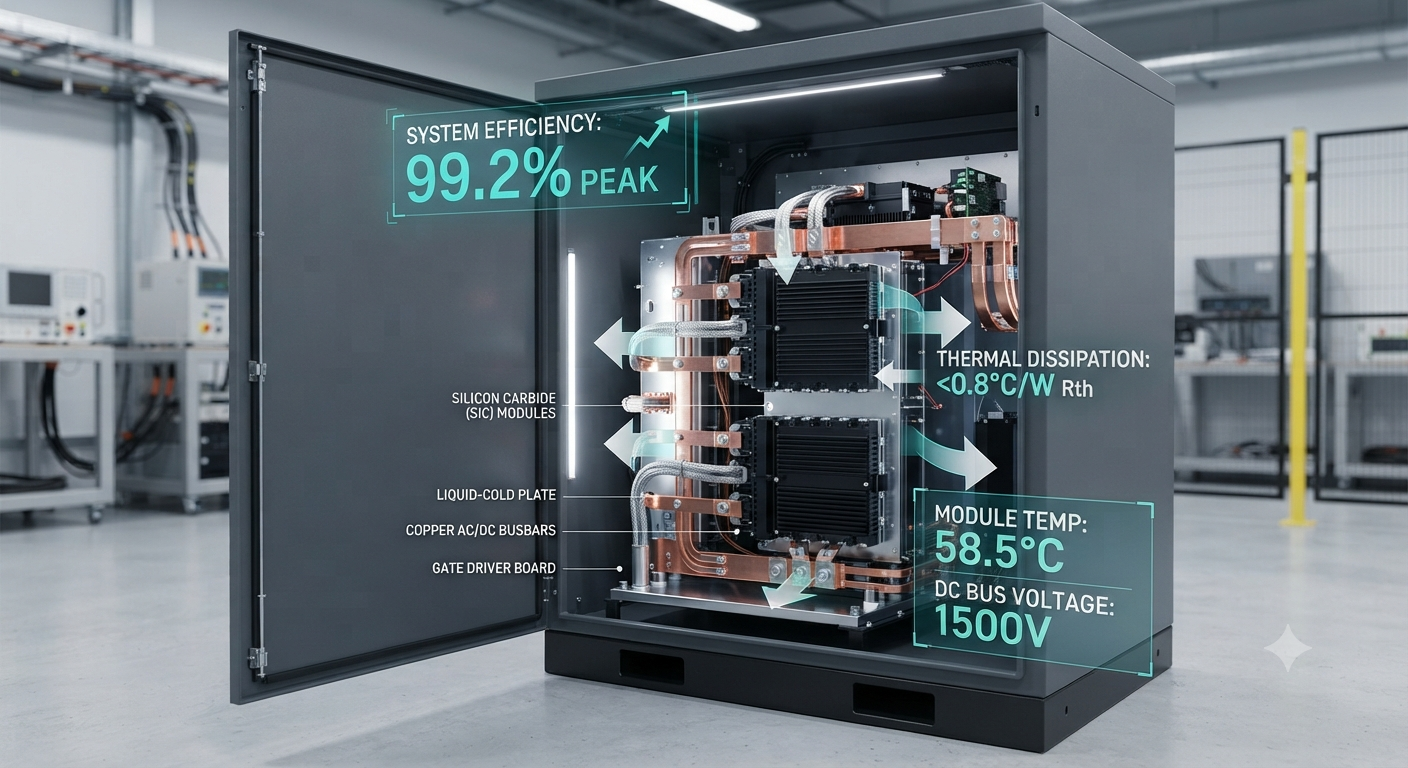
The Power Conversion System (PCS) is the system’s energy translator, bidirectionally converting alternating current (AC) from the grid into the direct current (DC) stored in the cells. For utility-scale projects, String PCS architecture has become the dominant choice, thanks to superior availability and better efficiency at partial loads.
The hardware behind this conversion is evolving fast. Traditional silicon-based IGBTs top out around 97.5% efficiency, while modern Silicon Carbide (SiC) MOSFETs are pushing peak efficiency to a striking 99.2%. That gap isn’t just an engineering flex — it’s a serious financial lever. A single percentage point of PCS efficiency loss works out to roughly 365 MWh of wasted energy per year on a 100 MWh system. Stretched across a 15-year asset life, that loss can add up to more than $1 million in forfeited revenue.
3. 270°C vs. 150°C: Why Chemistry Is a Safety Frontier
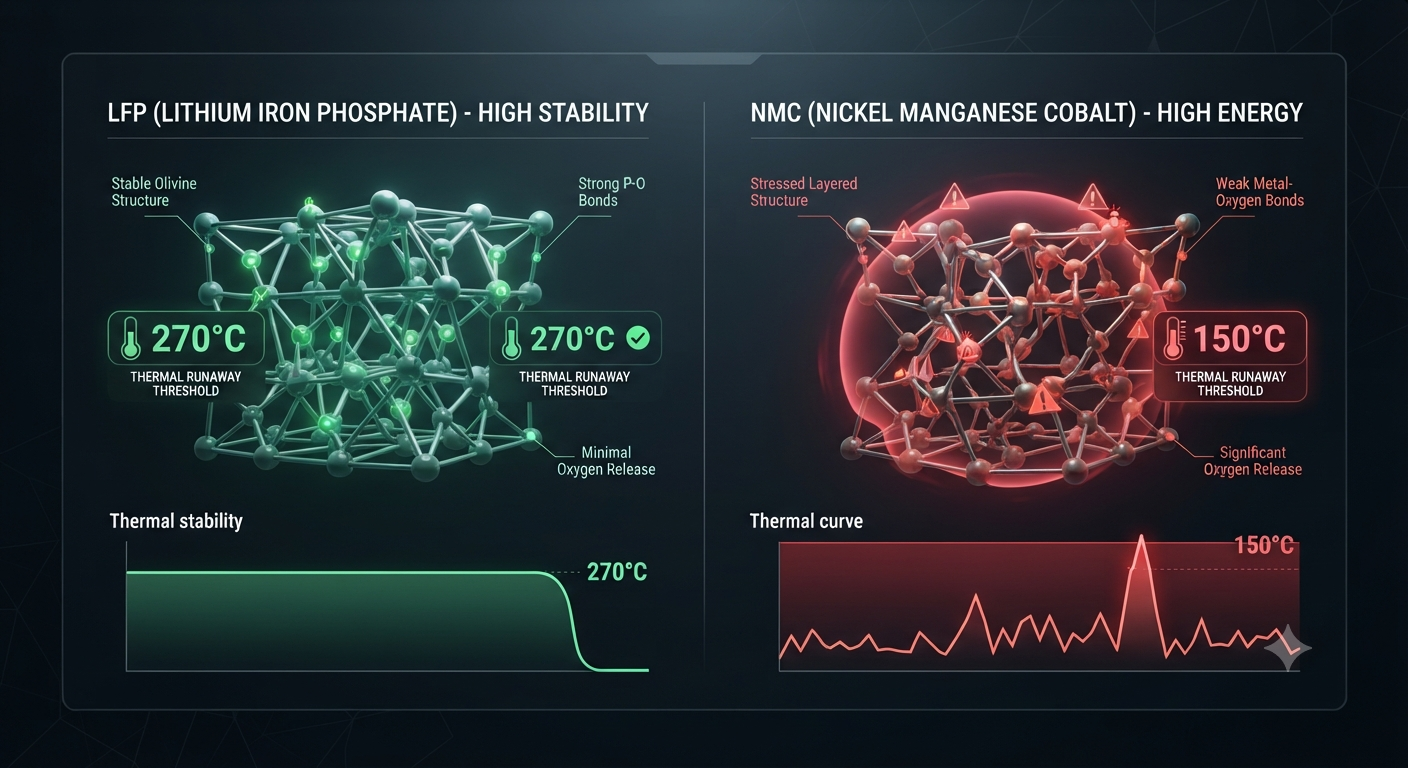
Where electric vehicles chase energy density above all else, stationary storage plays a different game — one weighted toward safety and lifecycle economics. That’s what’s made Lithium Iron Phosphate (LFP) the de facto standard over Nickel Manganese Cobalt (NMC).
The main driver is the thermal runaway threshold. LFP’s threshold sits around 270°C, nearly double NMC’s roughly 150°C — a gap that dramatically simplifies fire-safety approvals and lowers insurance premiums. LFP also offers a cycle life of 6,000 to 8,000 cycles, which lines up neatly with a 20-year utility PPA, compared with NMC’s typical 3,000 to 5,000 cycles.
There’s a further wrinkle strategists have to account for: the C-rate factor. A rack configured for high-power 4P discharge over 15 minutes can see its cycle life cut roughly in half — down to around 4,000 cycles — compared with an 8,000-cycle 1P (one-hour) configuration, regardless of which chemistry is used.
4. The Three-Tiered Democracy That Prevents Catastrophe
The Battery Management System (BMS) enforces safety through a strict three-tier hierarchy:
- Slave / BMU (module level) — “dumb-by-design” local boards that measure voltage and temperature.
- Master / BCU (rack level) — the layer that aggregates that data and enforces safety boundaries.
- System / BAU (container level) — the top-level unit that coordinates the entire enclosure and interfaces with the grid.
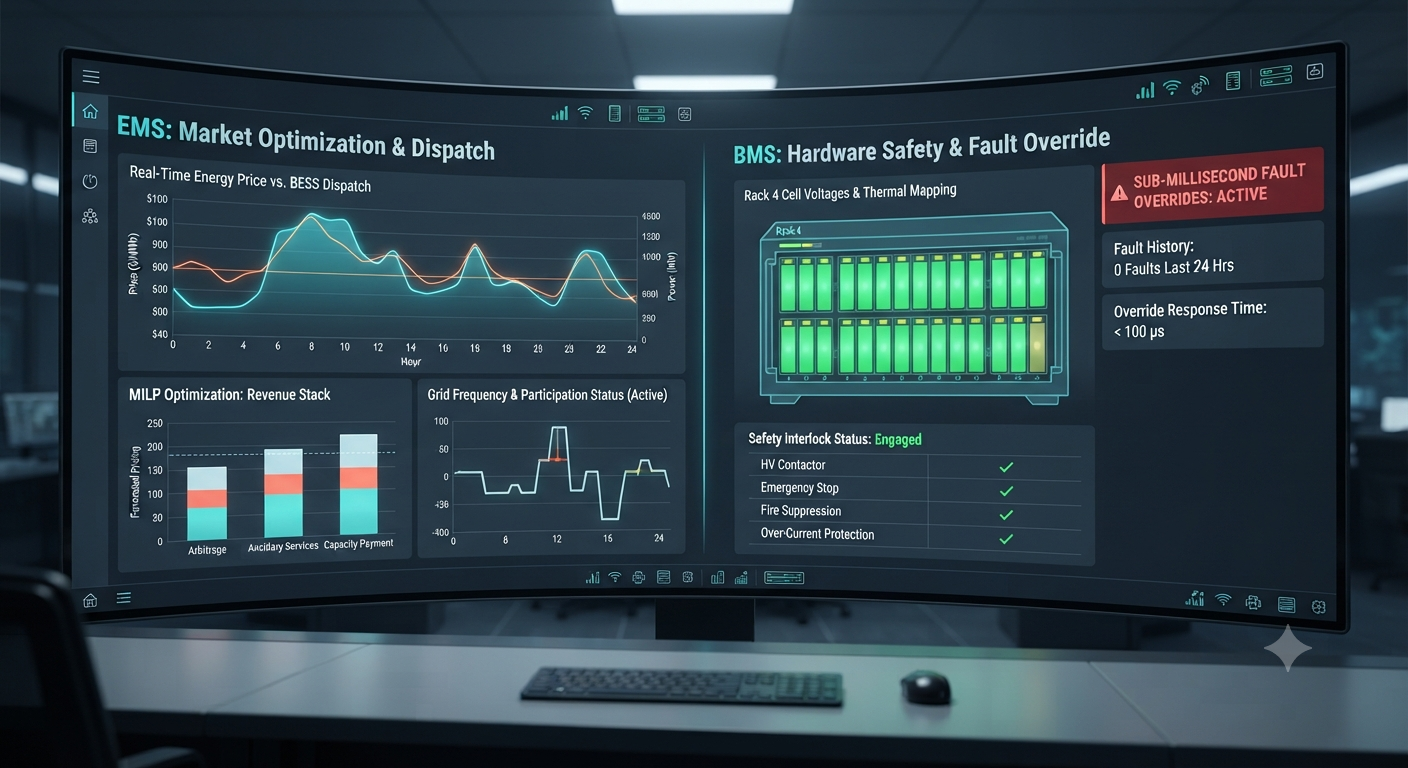
The BMS also draws a hard line between hardware and software response speed. Short-circuit protection runs at the hardware level in under 100 microseconds, while slower faults — like over-temperature conditions — are caught by software-level loops within about 10 milliseconds. That separation of concerns is deliberate: the EMS owns the profit-making strategy, but the BMS owns the final safety override, no matter what the EMS wants to do.
5. Cooling Is a Financial Strategy, Not a Comfort Feature
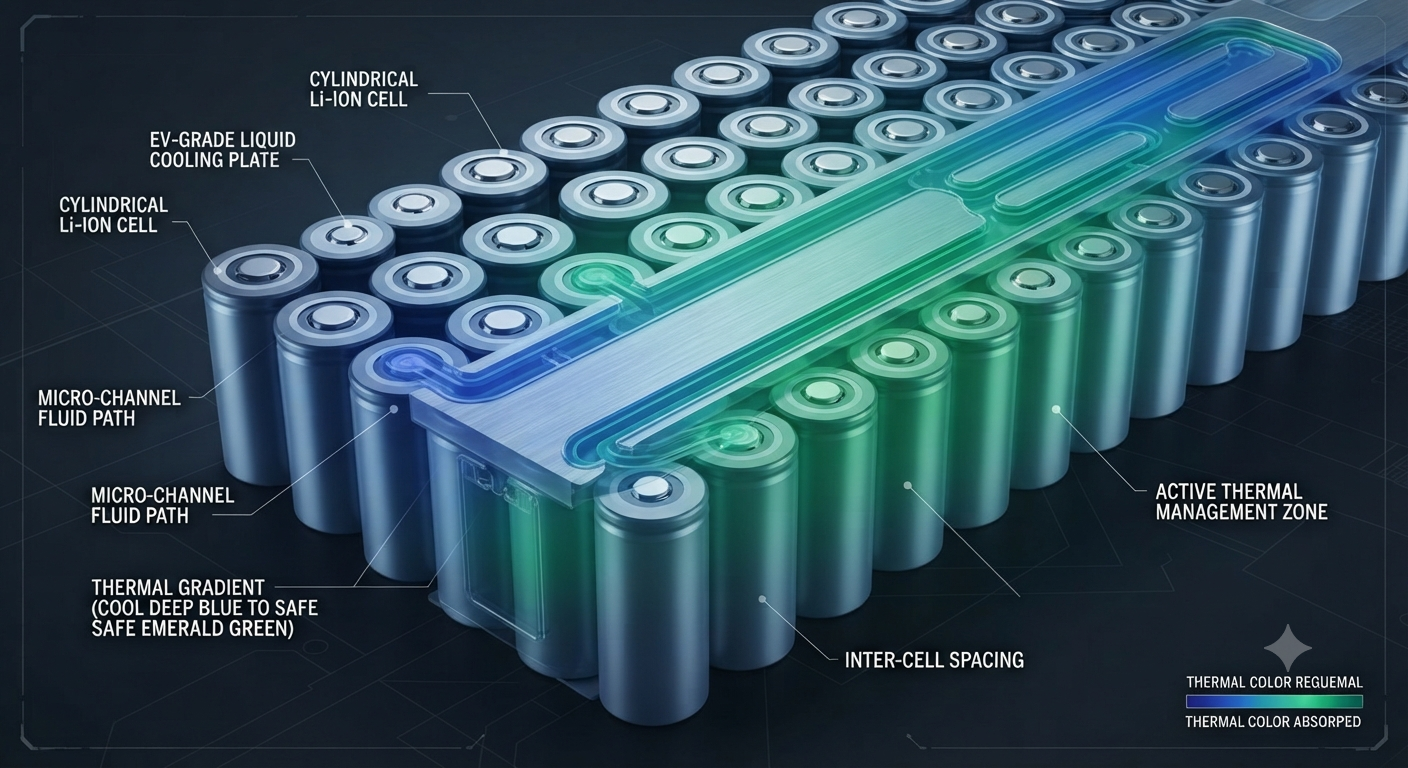
Thermal management is one of the biggest drivers of BESS economics, not just a nice-to-have. Lithium cells follow something close to the Arrhenius rule of thumb: every 10°C rise above 25°C roughly doubles the rate at which they age.
Traditional air cooling often can’t keep up with high-power systems — it tends to leave a 5–10°C temperature spread across a rack, which causes uneven aging between modules. Liquid cooling has become the utility standard instead, because it can hold the cell-to-cell temperature difference to 3°C or less. That uniformity is what stops a single “hot” module from prematurely dragging down a multi-million-dollar asset.
6. The Certificate Trap: Understanding the UL 9540A Nuance
Navigating safety standards is probably the most common pitfall for new developers. It’s essential to distinguish between UL 9540, the system-level safety listing, and UL 9540A, the actual fire test report — a certificate alone doesn’t tell the whole story.
Under UL 9540A 6th Edition, released in March 2026, installation-level testing becomes mandatory starting in January 2027. Fire authorities rely on that data to determine unit separation and suppression requirements. If a site’s module spacing or orientation doesn’t match the exact configuration used in the manufacturer’s UL 9540A fire test report, the permit can be denied — regardless of how good the hardware itself is.
7. Strategic Brain vs. Tactical Guardian: The EMS/BMS Relationship
The relationship between the EMS and the BMS is really what defines a system’s ROI. The EMS is the strategic brain, operating on a timescale of minutes to hours, using Mixed-Integer Linear Programming (MILP) to navigate energy markets — deciding, for instance, whether to chase Dynamic Containment revenue in the UK or peak-shaving opportunities in California.
But while the EMS decides what to do to maximize profit, it’s ultimately subservient to the BMS, which decides if it’s safe to do it. If the BMS reports a State of Charge (SOC) error of more than 5%, the EMS is effectively making million-dollar decisions on bad data. The BMS exists as the tactical guardian precisely to make sure the EMS’s pursuit of revenue never compromises the physical integrity of the cells.
Conclusion: The Invisible Infrastructure of the Future
Utility-scale battery storage is among the most complex industrial machines ever built — a biological-style system where hardware and software have to stay in perfect sync across a 20-year asset life.
As the grid gets smarter, the real question is whether the industry is ready to manage these “industrial organisms” at scale. One clear trend is a push toward vertical integration: when a single manufacturer develops the cells, the BMS, and the PCS together, it eliminates one of the leading causes of commissioning delays — CAN bus DBC file mismatches between different vendors’ equipment. Vertical integration isn’t just about efficiency, in other words. It’s about cutting out the finger-pointing that inevitably happens when complex, decentralized systems run into the real stresses of the modern grid.