


Most households maintain a familiar environmental purgatory: the “junk drawer.” It is a graveyard of half-spent alkaline cells, depleted smartphone batteries, and mysterious silver button cells. Until recently, these items were treated as an environmental afterthought, typically destined for mixed municipal waste. However, India has fundamentally restructured the lifecycle of these materials through the Battery Waste Management Rules, 2022 . These rules represent a sophisticated transition from a linear disposal model to a highly regulated circular economy, mandating that producers remain accountable for every gram of material introduced to the market.
No Battery Left Behind (Universal Scope)
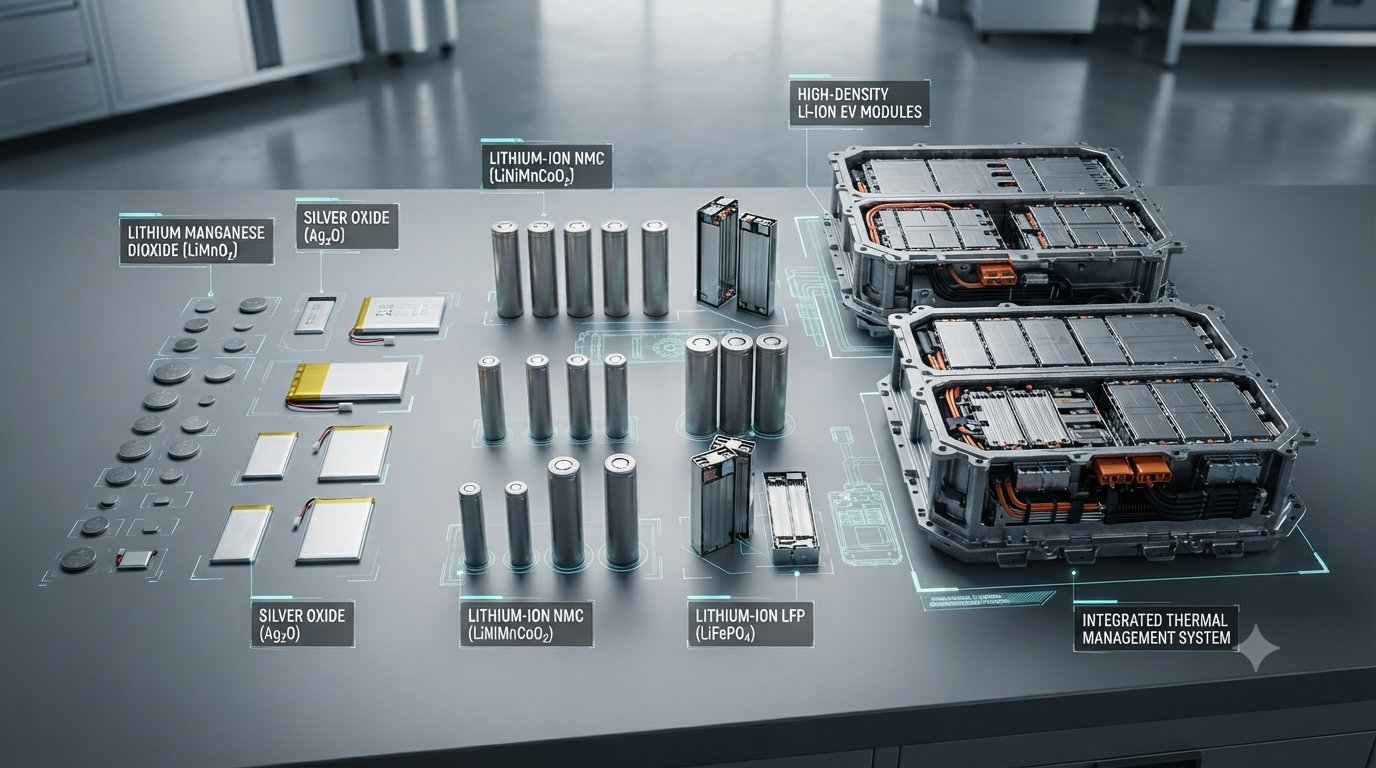
The 2022 rules significantly expand the regulatory umbrella to ensure no hazardous components escape oversight. Unlike previous frameworks that focused predominantly on lead- acid chemistries, the current mandate applies to all batteries regardless of chemistry, shape, volume, or intended application. This includes Portable batteries, Automotive batteries, Industrial batteries, and Electric Vehicle (EV) batteries. As a policy analyst, I view this” all- inclusive” approach as a vital safeguard against ” technological leakage.” By explicitly including ” pre-consumer off-spec” batteries—those factory rejects or components that fail quality control before ever reaching a shelf—under Section 3(ze), the law prevents industrial waste from slipping through regulatory cracks. This ensures that as the market pivots from traditional chemistries to advanced lithium-ion variants, the infrastructure for recovery remains robust and standardized. “Battery' means new or refurbished cell and/or Battery and/or their component, including accumulator, which is any source of electrical energy generated by direct conversion of chemical energy and includes disposable primary and/or secondary battery” — Section 3(c)
The "Polluter Pays" Evolution (Extended Producer Responsibility)

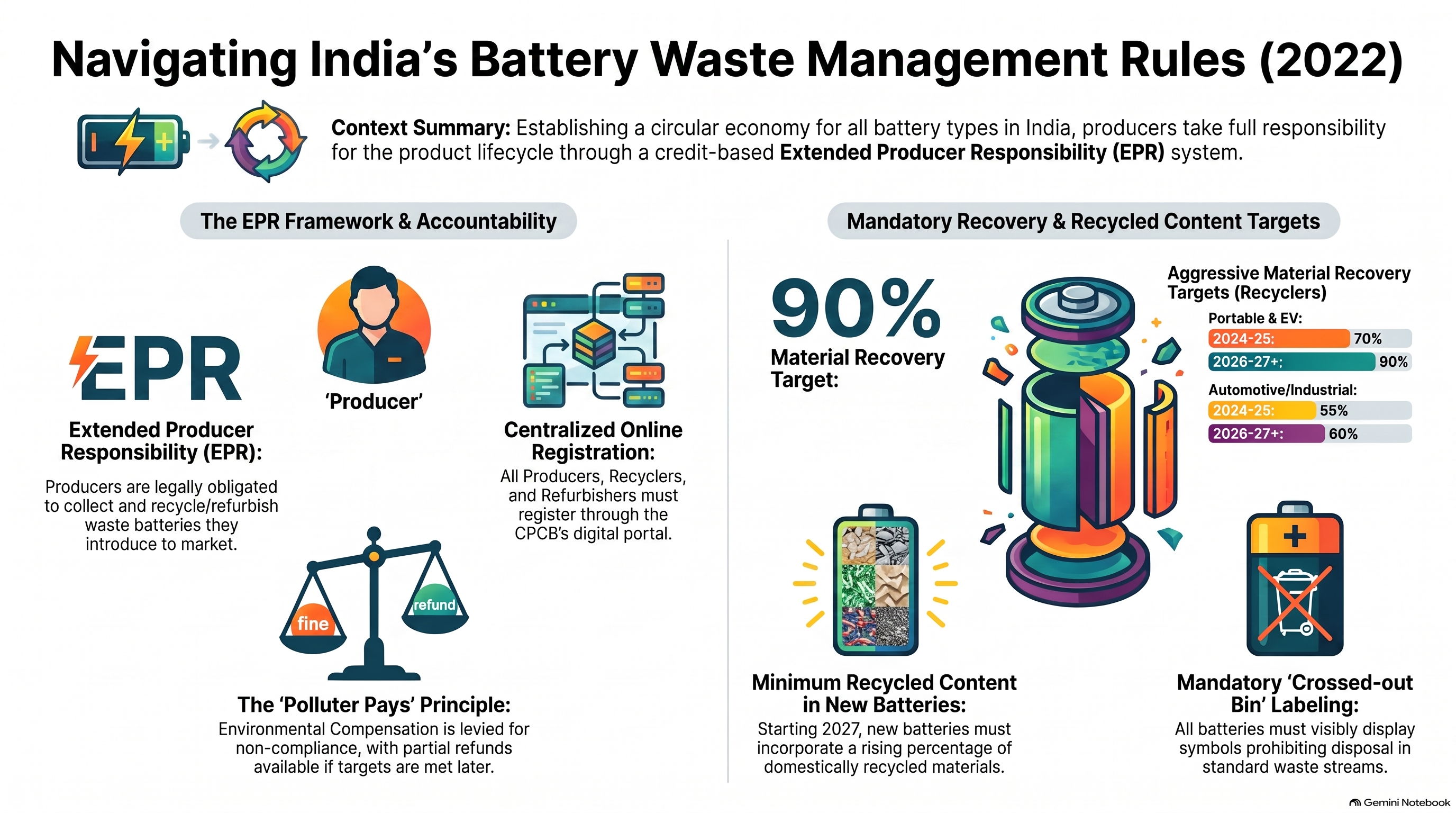
The regulatory engine of these rules is Extended Producer Responsibility (EPR). Under this framework, the “Producer”—any entity manufacturing, selling, or importing batteries—is legally obligated to ensure the “Environmentally sound management ” of waste. This is not merely a moral suggestion; it is a rigid legal mandate to ensure that batteries do not end up in landfills or incinerators. The 2022 rules “financialize” environmental compliance through a market-based mechanism of EPR certificates. Crucially, Producers do not “earn” these through their own actions; rather, under Rule 10(6), the Central Pollution Control Board (CPCB) generates these certificates and assigns them to registered recyclers or refurbishes based on the quantity of waste processed. Producers must then purchase these certificates from recyclers to offset their specific liabilities. This system incentivizes a high-efficiency recycling market by turning compliance into a tradable commodity. Core Obligations of a Producer (Section 4):
● Registration: Mandatory registration through the CPCB’s centralized online portal using Form 1(A).
● Target Adherence: Achievement of mandatory collection and 100% recycling/refurbishment targets as specified in Schedule II.
● EPR Planning: Submission of an annual EPR plan (Form 1(C)) by June 30th, detailing the weight and dry weight composition of batteries introduced to the market.
● Annual Returns: Filing Form 3 to report waste collected and processed, including details of the registered recyclers from whom EPR certificates were procured.
● Prohibition Compliance: Ensuring all products adhere to heavy metal prohibitions and labelling requirements outlined in Schedule I.
Mining the Future (Minimum Recycled Content)

Rule 4(14) introduces a radical mandate: ” Minimum use of domestically recycled materials. “Starting in the 2024-25 cycle for automotive and industrial sectors, and 2027-28 for others, producers are required to ensure that new batteries contain a specific percentage of materials recovered from domestic recycling streams. This mandate effectively mandates “urban mining.” By focusing on the dry weight” of battery materials—which includes metals like lithium and cobalt as well as plastics and paper (Section 3(e))—the rule excludes heavy liquid electrolytes from the calculation. This forces recyclers to focus on recovering high-value solid materials. For importers, the rule adds a nuanced layer of accountability: if a producer imports batteries, they must meet their recycled content obligation by ensuring an equivalent quantity of recycled material is utilized by other domestic businesses or by exporting that quantity. Minimum Use of Recycled Materials Targets (Rule 4/14)| Battery Type | 2027-28 Target (%) | 2030-31 and onwards (%) || —— | —— | —— || Portable | 5% | 20% || Electric Vehicle | 5% | 20% || Automotive | 40% | 40% || Industrial | 40% | 40% |
Efficiency is No Longer Optional (Recovery Targets)

Under this new regime, simply ” processing ” waste is insufficient. Section 10(4) mandates high- efficiency recovery, requiring recyclers to extract a specific percentage of the total weight of the battery materials. This prevents ” sham recycling” where only the easiest-to-extract metals are taken while the rest is discarded. For EV and Portable batteries, the targets are set to reach a 90% recovery rate by 2026-27. However, the rules contain a scientifically grounded caveat: this recovery target is adjusted downward by the percentage of non-recoverable hazardous material content present in the battery (as per the Note in Rule 10(4)). This ensures the targets remain achievable and account for materials that cannot be safely reintroduced into the production cycle. “Recovery of minimum percentage target is the percentage of total weight of all recovered materials out of dry weight of the Battery and recyclers shall be mandated for minimum recovery of Battery materials…” — Section 10(4)
The Icon of Change (Labelling and Symbols)
Visual Mandates and Consumer Responsibilities The Rules recognize that systemic change requires consumer participation. Schedule I mandates that all batteries be marked with the “crossed-out wheeled bin ” symbol, which must occupy at least 3% of the largest side of the battery. Additionally, chemical symbols (Hg, Cd, Pb) must be visible if the battery contains mercury, cadmium, or lead. From a policy perspective, these labels are more than just information—they are a trigger for Rule 5 (Functions of Consumer). Consumers are legally responsible for discarding waste batteries separately from other waste streams, specifically mixed domestic waste. These visual cues serve as the front-line instruction for the mandatory segregation required to fuel the recycling ecosystem.
Conclusion: A Cleaner Horizon
The Battery Waste Management Rules, 2022, signal India’s transition from waste management to sophisticated resource management. By establishing clear CPCB oversight, creating a market for EPR certificates, and mandating the use of recycled content, the framework treats the “junk drawer” not as a nuisance, but as a strategic stockpile of essential minerals. As we move toward this circular ecosystem, it is vital to acknowledge your own role. Under Section 3(h), a “consumer” is defined as the ” end user of Battery.” As the initial link in this chain, the law now mandates your active participation in waste segregation. Are you prepared to ensure your discarded batteries become the raw materials for India's future manufacturing?