

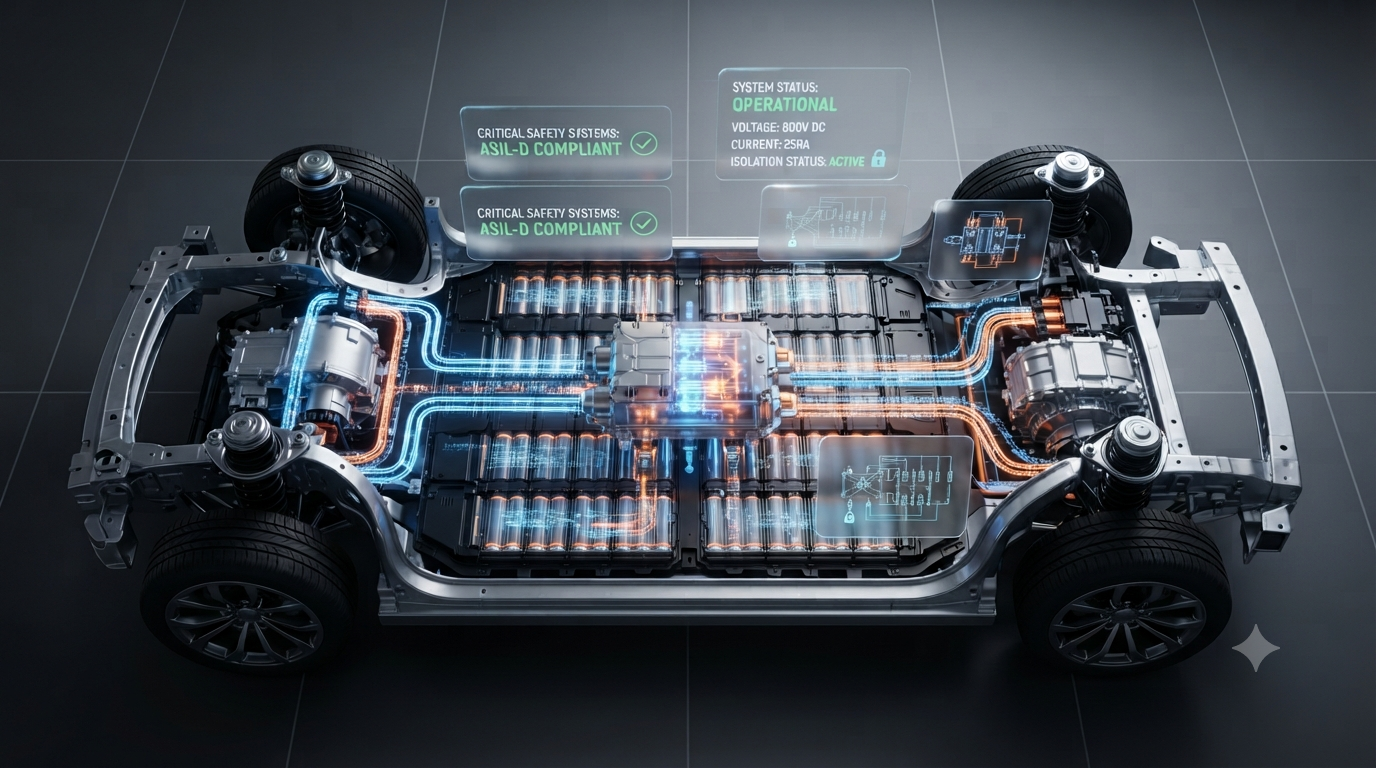
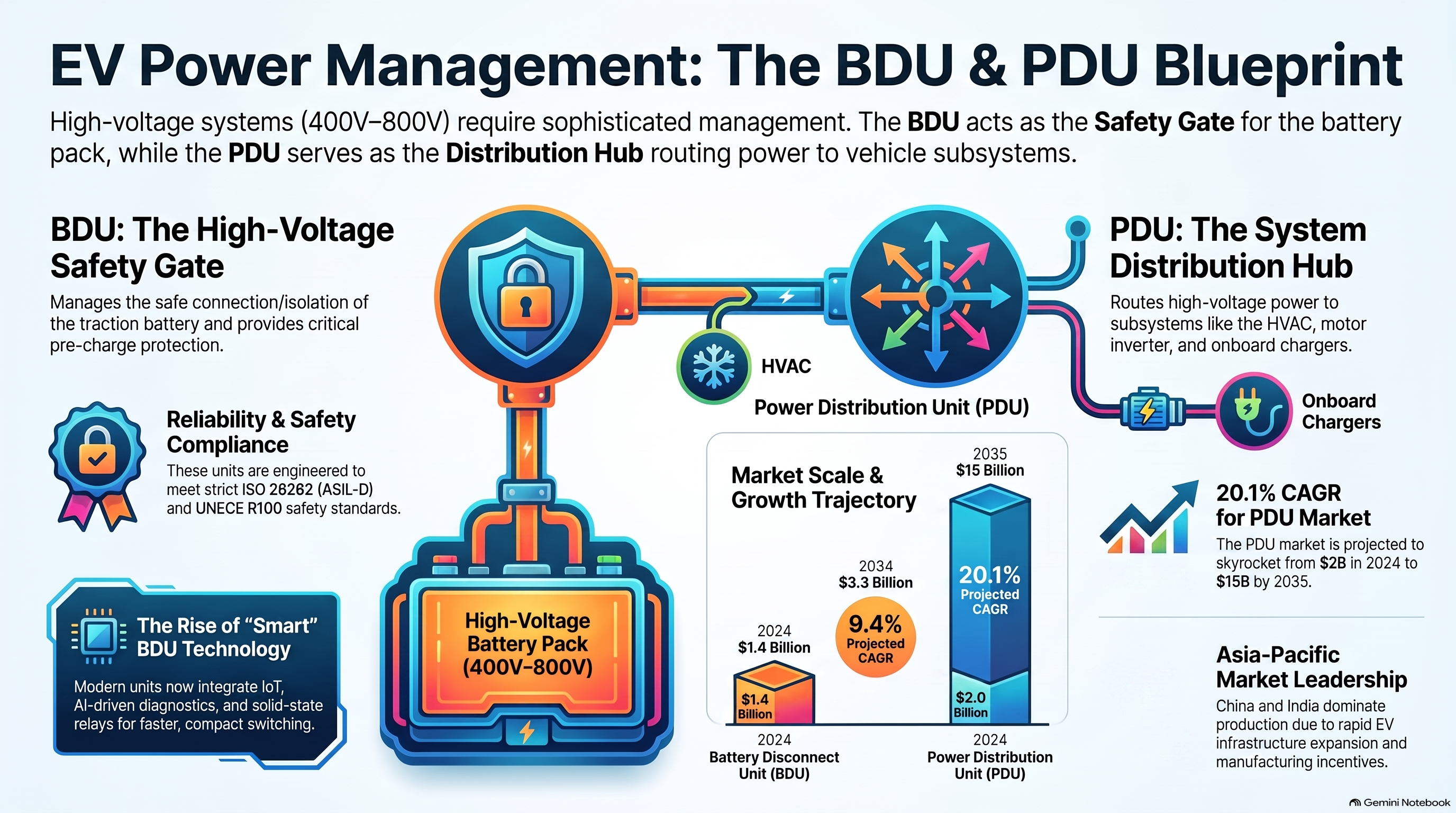
Modern electric vehicles (EVs) are often celebrated for their lithium-ion energy density and neck-snapping acceleration. Yet, beneath the passenger cabin lies a sophisticated high-voltage management system that prevents these 800V machines from becoming catastrophic hazards. As the industry transitions toward high-performance architectures, the complexity of managing massive electrical loads in real-time has moved from a secondary engineering concern to a primary competitive advantage. At the epicenter of this shift is the Battery Disconnect Unit (BDU). Far more than a simple junction box, the BDU serves as the vehicle’s “safety gate” It is the intelligence layer protecting both the powertrain and the passengers, ensuring that 200V to 1000V DC of raw potential energy is harnessed safely and efficiently.
The BDU is the “Safety Gate” Not Just a Switch
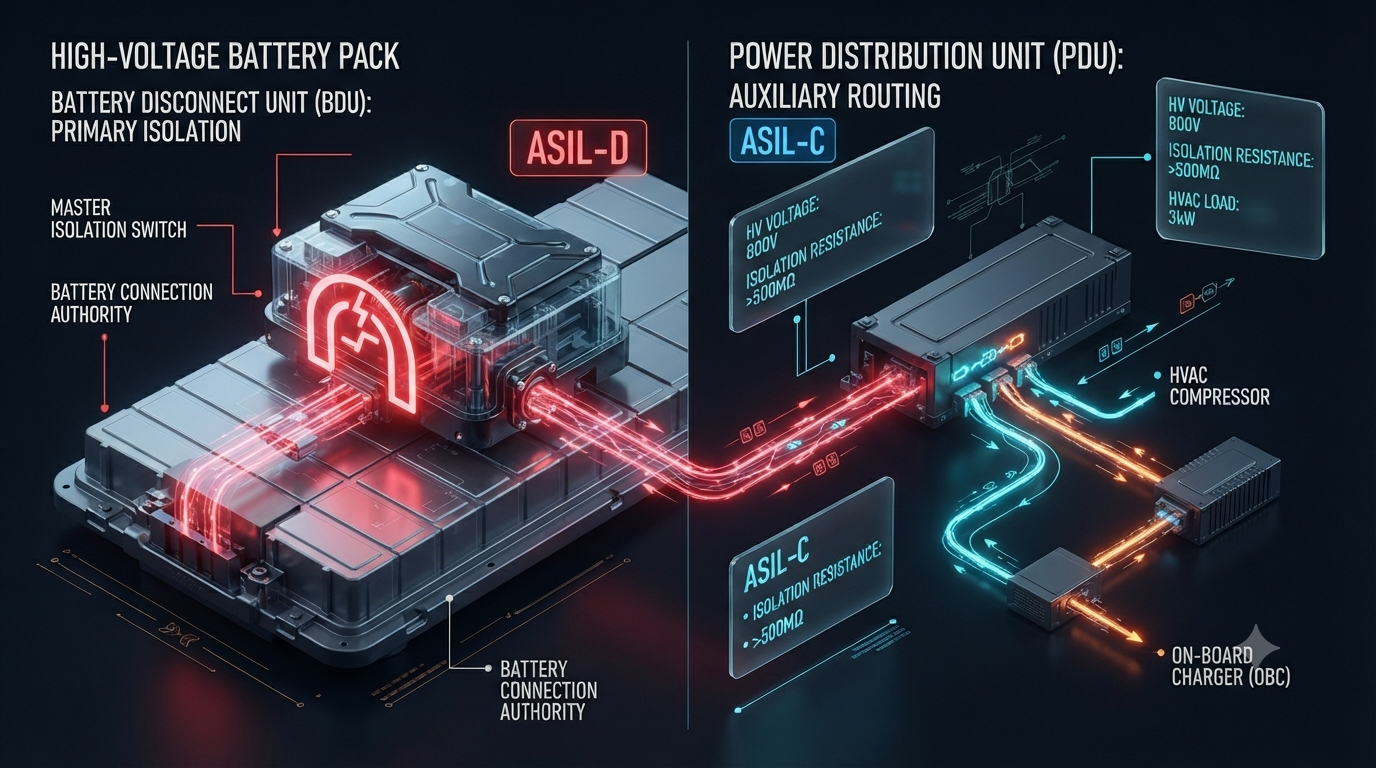
In the hierarchy of functional safety (ISO 26262), the BDU holds a unique and uncompromising status. While a Power Distribution Unit (PDU) acts as a distribution hub—routing power to auxiliary subsystems like HVAC or the motor control unit—the BDU is the ultimate authority on battery isolation. The BDU is the only component in the vehicle capable of providing complete physical isolation of the battery from the rest of the car. Because of this, BDUs are frequently designed to meet ASIL-D standards—the most stringent risk level in automotive engineering—whereas PDUs typically fall within ASIL-B or ASIL-C. This “safety gate” performs critical monitoring, activation, and deactivation of the high-voltage system. Without it, there is no safe way to transition between driving, high-speed charging, and standby modes. “In electric vehicles, the Battery Disconnect Unit (BDU) acts as the safety gate that connects or isolates the high-voltage battery… ensuring safe, efficient, and reliable high-voltage power management.”
The Death of the Click: The Rise of Solid-State Relays and Arc Suppression
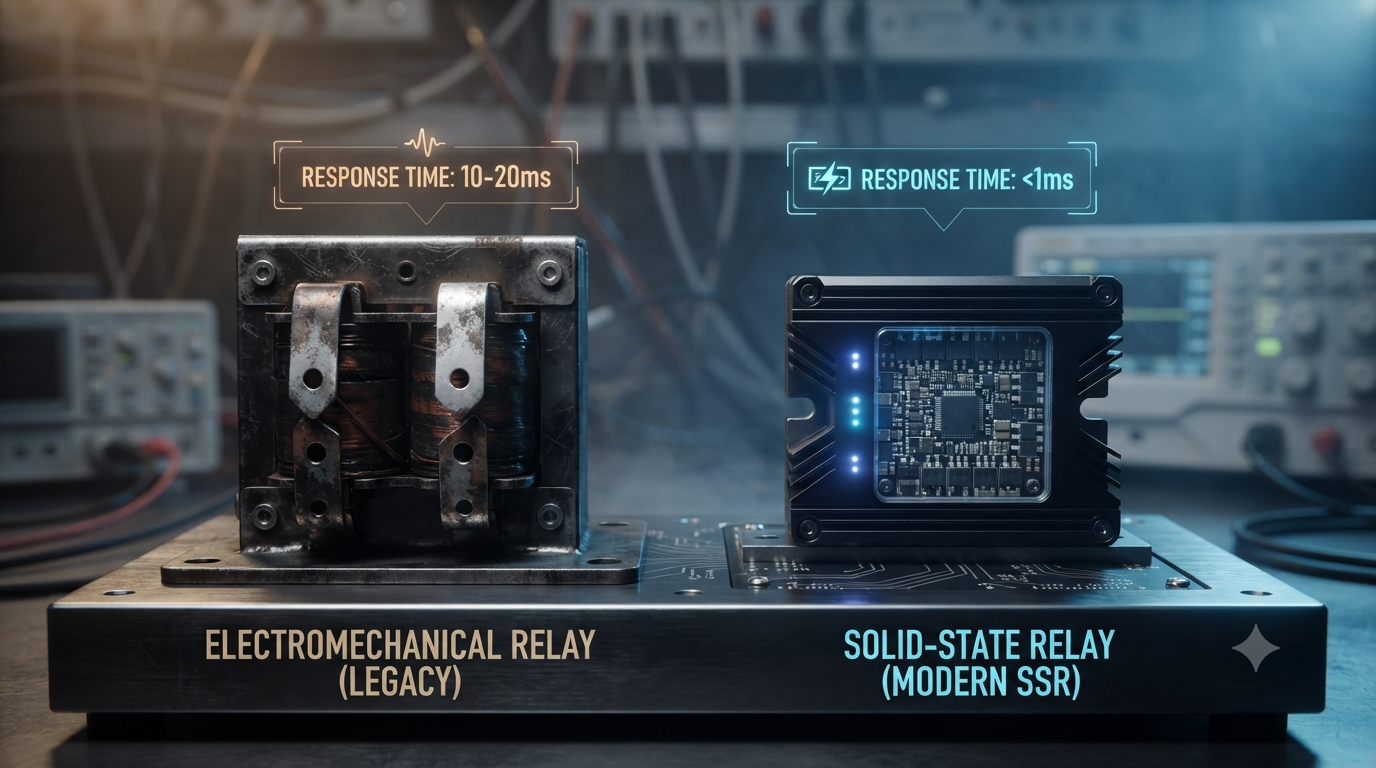
For years, the “click” of electromechanical relays was the sound of an EV coming to life. However, we are witnessing the rapid obsolescence of mechanical switches in favor of Solid- State Relays (SSRs). This shift is driven by the need for DC arc suppression —a massive engineering challenge in high-voltage DC systems where current does not have a “zero-crossing” to naturally extinguish an arc. SSRs offer faster response times and higher voltage tolerance, which is vital for the 400V/800V dual-string architectures becoming common in the industry. For example, Eaton’s Battery Configuration Switch (BCS) was recently developed to allow 800V vehicles to charge on 400V infrastructure seamlessly. This move toward “miniaturization” via SSRs allows BDUs to be lighter and more compact, directly boosting vehicle efficiency and range by reducing parasitic weight within the battery enclosure.
Proactive Safety via AI and Integrated Sensing
Modern BDUs are no longer “dumb” hardware; they are becoming intelligent nodes in the vehicle’s data network. The integration of advanced sensors—such as the LEM Single Monitoring Unit (SMU) launched in late 2024—enables the BDU to provide precise feedback to the Battery Management System (BMS).
These smart units now monitor critical metrics beyond simple voltage:
● SOC (State of Charge) & SOH (State of Health) Estimation: Delivering real-time accuracy to the BMS.
● Isolation Resistance Monitoring: Detecting potential leaks to the chassis before they become safety risks.
● AI-Driven Diagnostics: By utilizing AI and IoT connectivity, manufacturers can now predict a BDU failure before the vehicle is even in use. This shift from reactive to proactive maintenance significantly increases vehicle service availability and long-term reliability.
The Hidden Danger of “Welding” and the Pyrotechnic Solution
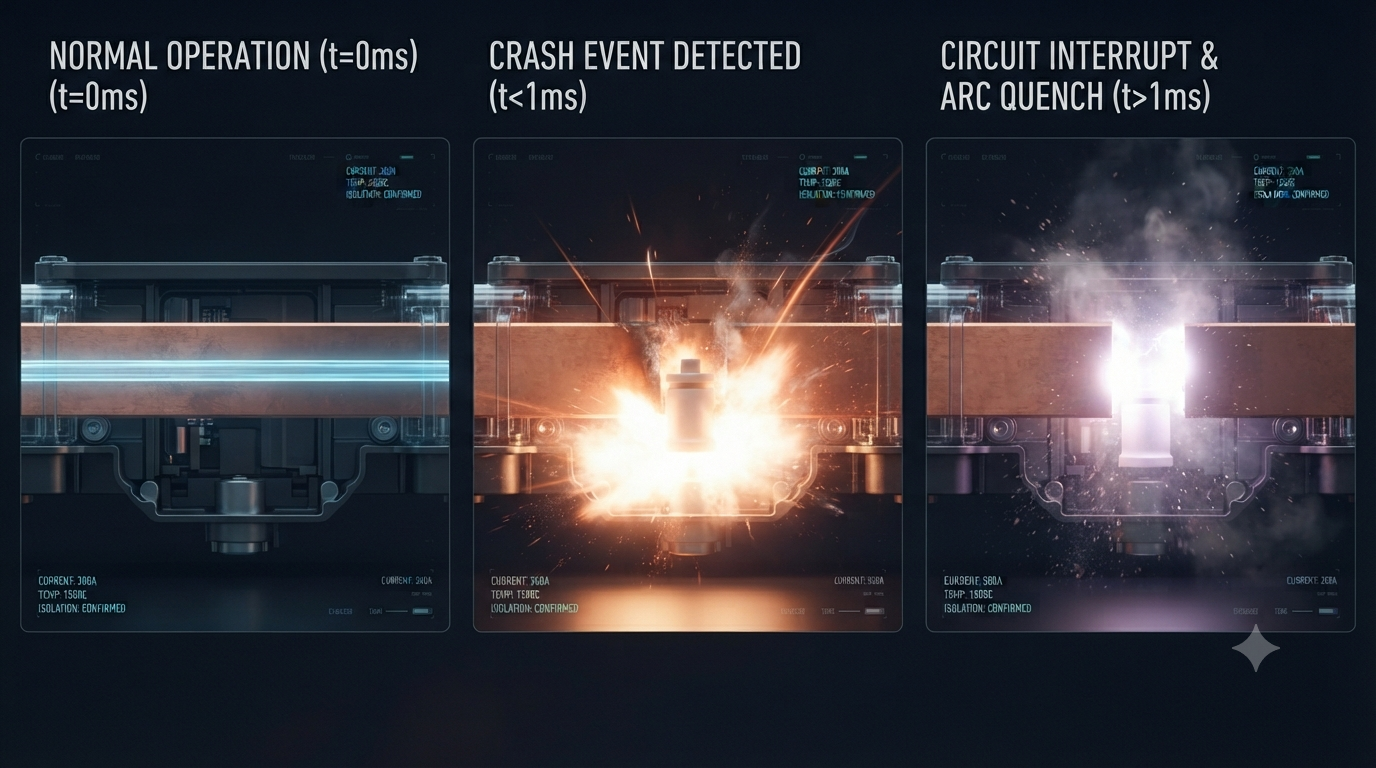
Connecting a high-capacity battery directly to a DC bus is a technical recipe for disaster. If the main contactors were to close instantly, a massive “inrush current” would surge into the system’s capacitors. This surge is powerful enough to physically weld the metal contacts of the contactors together, rendering the safety system unable to disconnect during an emergency. To prevent this, BDUs employ a pre-charge circuit with specialized resistors to ramp up voltage gradually. However, for extreme fault conditions or crash detection, engineers rely on the Pyrotechnic Disconnect (Pyrofuse) . These components use a controlled explosive charge to sever the circuit in milliseconds—faster than any mechanical relay—providing the “last resort” safety layer required to prevent thermal runaway or high-voltage exposure to first responders.
A 9.4% CAGR: The Market Shift to the Asia-Pacific

The commercial landscape for power management is undergoing a massive expansion. The BDU market is projected to grow from $1.4 billion in 2024 to $3.3 billion by 2034, representing a 9.4% CAGR . While the related PDU market is headed toward $15 billion by 2035, the BDU remains the high-stakes sector, dominated by OEMs who hold a 70.8% market share. Innovation is currently following the manufacturing volume in the Asia-Pacific region, particularly in China and India. Analysts see a strategic shift as manufacturers modify BDUs to balance “cost and bulk” for emerging middle-class markets. These units must be adaptable to diverse climatic conditions and varying infrastructure development programs while maintaining strict compliance with UNECE R100 safety standards. High-profile contracts, such as Lear Corporation’s exclusive agreement to supply BDUs for GM’s Ultium platform through 2030, highlight how critical these components have become to the global OEM supply chain.
Comparison Summary: BDU vs. PDU
Primary Function, Vehicle Location, Critical Safety Level “BDU: Primary isolation, battery connection, and full system protection, Internal to or on the upper side of the high-voltage battery pack, High (ASIL-D): Critical for full battery isolation and crash safety.
PDU: Branch-level power routing and load management for subsystems, “Between the battery and HV loads, typically in the high-voltage electrical compartment”, Medium to High (ASIL-B/C): Protects individual circuits like HVAC or DC-DC.
Conclusion: The Future of High-Voltage Intelligence
The Battery Disconnect Unit has completed its evolution from a simple mechanical safety switch into the “intelligent brain” of the high-voltage system. By integrating faster solid-state switching, predictive AI diagnostics, and robust pyrotechnic protection, the BDU has become the gatekeeper of the EV’s most expensive and dangerous asset: the battery. As we look toward the next decade of mobility, the question for engineers and analysts is no longer just about energy density: Will the next major breakthrough in EV range come from a breakthrough in battery chemistry, or will it come from the increasingly intelligent and efficient management of the power itself?